

Huge thanks to my sponsor for March, the splendid Professor Pongoo.
 “Four weeks after my extrapolation, we are still on track to reach an ANNUAL average Global Sea Surface Temperature above the pre-2023 DAILY record! The annual average will be higher than the daily Super El Niño peak of 2016!
“Over the next two months the uncertainties about this year’s El Niño will decrease.”
[Leon Simons]
https://x.com/LeonSimons8/status/2023043124516491344
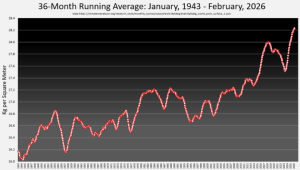 “Breaking News! Code UFB!!!
“The February, 2026, data for total column precipitable water was just released by ECMWF, and once again a new record high was set for the 36-month running mean. The Climate 8-Ball says: “Even more car soup!” [Prof Eliot Jacobson]
https://x.com/EliotJacobson/status/2031418206288814510
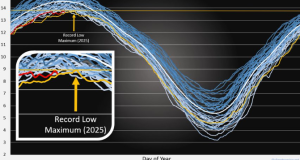 “For those on tenterhooks:
“Arctic sea-ice extent is still below the record low maximum set just last year and is falling again. Will a new record low maximum for Arctic sea-ice extent be set this year? The Climate 8-Ball is busy learning to juggle.” [Prof Eliot Jacobson]
https://x.com/EliotJacobson/status/2031373914304294978
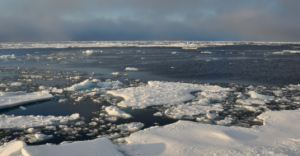 “Retreating Arctic ice shifts the source of Atlantic ocean currents.
“A newly exposed stretch of Arctic Ocean has begun making more of the heavy, salty water that keeps Atlantic currents moving. As sea ice retreats, that new source appears to be offsetting losses farther south, which changes where this climate engine gets its power.”
https://www.earth.com/news/retreating-arctic-ice-shifts-the-source-of-atlantic-ocean-currents/
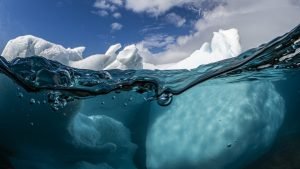 “Arctic’s ‘keystone’ fish faces collapse as melting ice floods ocean with light…
“Under the Arctic sea ice, fish and plankton live in complete darkness, even in midsummer. Ice floes stop the sun’s rays, especially if they are covered by snow. But as the ocean heats up, the sea ice thaws, new regions are exposed.”
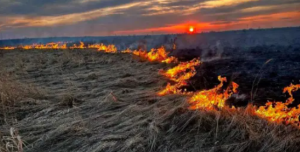 “Ukraine Battles Wildfires Across Regions as Flames Engulf Vast Areas.
“Since the start of the year, Ukraine’s ecosystems have suffered from fire activity: according to official data, 660 fires have been recorded in natural environments. According to the State Emergency Service, only in the last day there were 175 fires…”
https://mezha.net/eng/bukvy/ukraine_battles_wildfires/
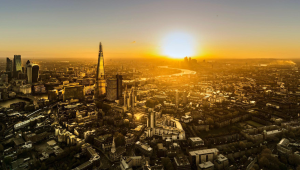 “London homes ‘overheating due to climate change’.
“Londoners face a unique overheating risk in their own homes due to climate change affecting a densely built environment and an outdated planning and design system, the London Assembly has heard… City Hall is currently drafting London’s Heat Risk Delivery Plan, which could include “cool spaces” around the city.”
https://www.bbc.co.uk/news/articles/cedzj2dp6llo
 “It was the wettest February since records began in 1894, Jersey Met has confirmed.
“Data shows 182.7mm of rain was recorded throughout the month at the Maison St Louis Observatory in St Saviour – more than double the 30-year average of 78.2mm… Despite the rain, February 2026 was the second mildest since records began, with an average temperature of 9.5C (49F), Jersey Met said.”
https://www.bbc.co.uk/news/articles/ce947dkrj00o
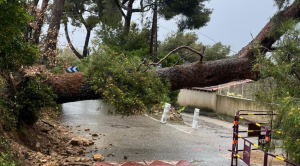 “Roads closed, schools in lockdown: the Var region due to winds and torrential rain [France]…
“Downed trees, flooded roads, and schools closed: a deluge hit the Var region on Monday, with up to nearly 100 mm of rain, according to Météo Express.”
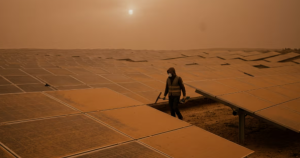 “Saharan Dust Storms Paralyze European Solar Grids and Skies…
“What began as a meteorological curiosity in North Africa has rapidly evolved into a significant economic and infrastructure challenge, forcing European energy regulators to confront the vulnerability of an increasingly fragile renewable energy network.”
https://streamlinefeed.co.ke/news/saharan-dust-storms-paralyze-european-solar-grids-and-skies
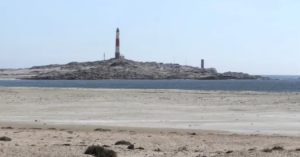 “ABSOLUTE INSANITY IN SOUTHERN AFRICA – DAWN WITH 37C [98.6F] at 5am at Luderitz Point NAMIBIA…
“…In world climatic history, there has never been such a difference between an old and a new record of a long time station as at Port Nolloth [South Africa], which stood all night between 34C and 35C. Before it had never had a tropical night (Min >20C).
https://x.com/extremetemps/status/2031445346816249945
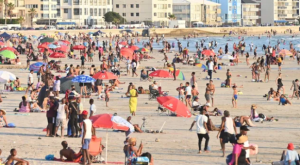 “Record heat in Cape Town: Residents seek relief during the heatwave.
“Capetonians were hot and bothered in the stuffy 42.1°C [107.8F] heat on Wednesday, with many making a beeline for beaches, pools and air-conditioned shops just to cool down… the metro’s dams water levels continued to drop, so much so that they are now 17.5% lower than this time last year.”
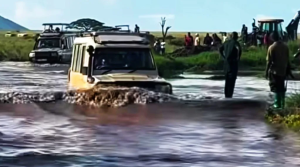 “Uganda: Landslides in Rubanda Leave One Dead, Homes and Roads Destroyed…
“The destruction of several roads has cut off residents from accessing essential services such as markets and health facilities. Byaruhanga appealed to government leaders and relevant authorities for urgent support to assist affected communities and reopen the damaged roads.”
https://allafrica.com/stories/202603110020.html
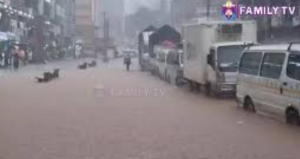 “Heavy rains disrupt transport, flood homes across Tanzania.
“Heavy rains currently falling in several parts of Tanzania have caused flooding, damaged infrastructure and disrupted transport, with authorities urging residents in vulnerable areas to take precautionary measures.”
https://dailynews.co.tz/heavy-rains-disrupt-transport-flood-homes-across-tanzania/
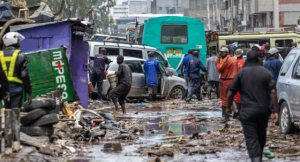 “Following Months of Drought, Floods in Kenya Kill More Than 40 People…
“…research shows that global warming is causing “climate whiplash”—making droughts more severe and longer lasting, while fueling wetter storms. At the same time, cities across East Africa are developing rapidly, often in areas that expose communities to greater flooding.”
https://insideclimatenews.org/news/10032026/todays-climate-kenya-floods-climate-whiplash/
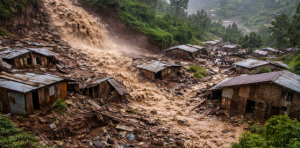 “At least 30 people have been killed in floods and landslides triggered by heavy rainfall in the Gamo Zone of southern Ethiopia, local officials have said.
“Authorities reported that most people had died in highland areas, where saturated slopes gave way after days of intense rain.”
https://www.bbc.co.uk/news/articles/ce947x4m0e1o
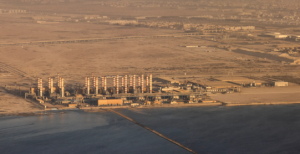 “War could push Middle East water crisis to breaking point…
“The Middle East is confronting a rapidly intensifying water crisis as climate change, population growth and regional conflict put unprecedented pressure on already scarce freshwater resources.”
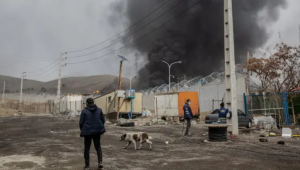 “Experts warn that the Middle East’s ‘saltwater kingdoms’ are at risk as vulnerable desalination and oil plants become targets…
“As the pollutants settle on buildings and seep into waterways, they could persist long after the fires are extinguished, threatening marine life in an already stressed ecosystem.”
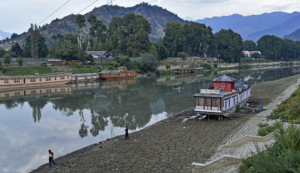 “Dry winter and rising temperatures leave Kashmir’s lifeline Jhelum river at historic low.
“The Kashmir Valley is witnessing one of its most unusual early springs in decades, with the river Jhelum, its lifeline, dropping below the zero-gauge level while temperatures surge to record highs.”
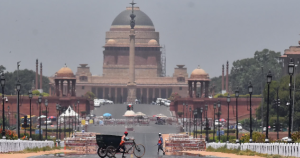 “ASIA ON FIRE:
“Monthly records are being trashed in India, even if it’s the “coolest” part of March: 41.3C [106.3F] Diu, Gujarat today smashes its March heat record. Another 42C day in INDIA and MYANMAR; 42.4 Nandurbar, 42.3 Vidyanahar, 42.0 Minbu. 36.8c Delhi, a record for the first half of March… “
https://x.com/extremetemps/status/2031417033808921039
 “CHINA WARM SPELL. Record heat is relentless in CHINA.
“Records broken every single day for weeks. Today 27.6C [81.7F] at Zhangye broke its March highest temperature record plus 5 more mid March records.”
https://x.com/extremetemps/status/2031754313169768455
 “Super El Niño could bring severe drought to ASEAN and push 2027 to record heat.
“Lower-than-normal rainfall will directly affect food security and agricultural output, particularly in countries such as Indonesia, Vietnam and Papua New Guinea, which have previously suffered heavy damage from El Niño events.”
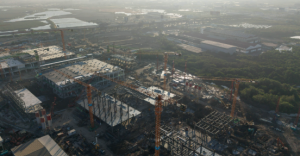 “Thai data center boom sparks fears of water shortage, air pollution.
“Thailand is experiencing a rapid data center boom, with more than 70 projects planned or underway, many clustered in the industrial Eastern Economic Corridor. Residents and farmers in Chonburi and Rayong provinces say they fear the facilities will intensify water shortages and pollution…”
 “SE ASIA ENDLESS RECORD HEAT; record heat never ends in INDONESIA.
“Tonight the Minimum temperature at Ternate was 27.0C [80.6F], its hottest March night in history. Ternate has never recorded a colder than average month in 9 years.”
https://x.com/extremetemps/status/2031626175857176840
 “Mass stranding kills 21 protected pilot whales in Indonesia…
“A total of 55 long-finned pilot whales (Globicephala melas) became stranded in Indonesia’s waters off Mbadokai Beach in Rote Ndao regency, East Nusa Tenggara, with nearly half of the animals later dying as rescuers struggled to return them to the sea.”
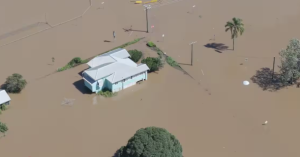 “The scale of northern Australia’s record-breaking floods revealed in data and maps.
“Dozens of sites across northern Australia have been subjected to major flooding over the past couple of days, with some river levels still increasing after parts of Queensland recorded their highest three-day rainfall totals between Sunday and Tuesday.”
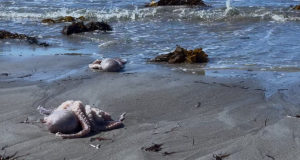 “Algal bloom disaster sinks millions of dollars, new report reveals [South Australia].
“A new report reveals the cost of the state’s devastating algal bloom, with the blow to the tourism industry in excess of $46.8 million, fisheries losing more than $100 million, and the state government shelling out around $102.5 million.”
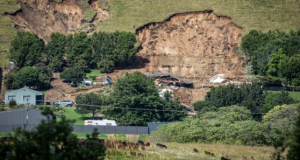 “After a summer of weather disasters, will Kiwis make climate an election issue?
“Anyone who has watched climate politics and coverage over time may have noticed a pattern: once the extreme weather passes, the news moves on to more immediate concerns and discussions about climate change fade.”
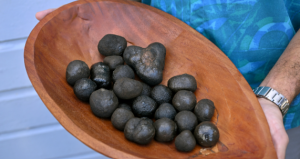 “Trump Explores Deep Sea Mining in American Samoa.
“Last month, the National Oceanic and Atmospheric Administration began mapping more than 30,000 square nautical miles of the territory’s seabed, surveying the ocean floor for deposits of manganese, nickel, cobalt and copper found in potato-sized, rock-like formations called polymetallic nodules.”
https://insideclimatenews.org/news/11032026/trump-noaa-american-samoa-deep-sea-mining/
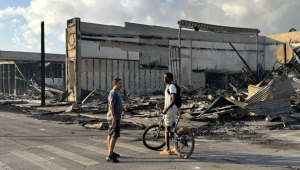 “Maui’s Mental Health Crisis Goes Far Beyond the Wildfire Burn Zone…
“A paper published Wednesday by researchers from the University of Hawai‘i found that Maui residents—both directly and indirectly impacted by the wildfires—experienced high levels of psychological distress in the first year and a half after the disaster.”
 “Let’s talk about Hawaii. We are looking at a relentless rain event there due to a stalled atmospheric river.
“This movie has 3 parts, each spanning 10 days. The first two parts are precipitable water showing the atmospheric river in which the islands are 200%+ the majority of the time.” [Jeff Berardelli]
https://x.com/WeatherProf/status/2031856490600972647
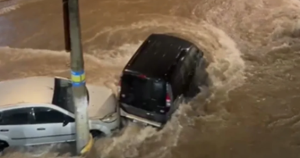 “Heavy rains in Greater Belo Horizonte leave children stranded in a school in Itabirito, prompting an urgent rescue operation. [Brazil]
“Rescue teams acted quickly to rescue students surrounded by water in Itabirito, MG, while they continue to search relentlessly for a young man swept away by unexpected currents in the neighboring region.”
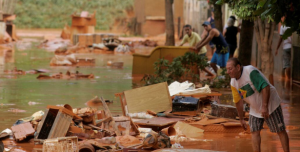 “Quit fossil fuels to stem deadly floods in Brazil’s coffee heartland, say scientists.
“The record floods that have brought death and destruction to the heartland of Brazil’s coffee industry are expected to intensify if people continue to burn fossil fuels, analysis has shown.”
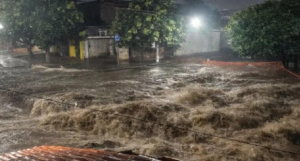 “Storm floods hospitals: Calle’i pavilions, clinics and IPS Ingavi filled with water [Paraguay].
“The storm not only flooded streets and homes in Asunción and surrounding cities, but also several of the main medical care centers in the Central Department, such as the San Lorenzo General Hospital.”
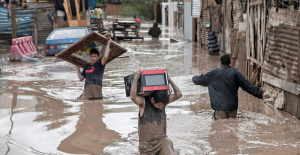 “Peru: Government monitors rain emergencies, deploys brigades and machinery nationwide.
“Prime Minister Denisse Miralles on Wednesday reported that the Executive Branch is carrying out continuous monitoring of emergencies caused by intense rainfall and mudslides in several Peruvian regions through the National Emergency Operations Center (COEN).”
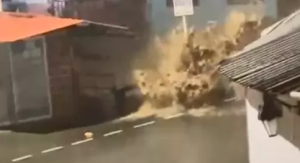 “Heavy rains cause rivers to overflow and flooding in El Oro, Ecuador.
“In the Salvias parish, heavy rains caused the Salvia and Amarillo rivers to overflow, flooding the streets between homes and businesses in the area. Videos circulating on social media show the force of the water sweeping away everything in its path.”
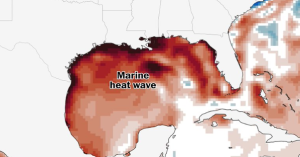 “A marine heat wave has recently developed in the Gulf of Mexico, with sea surface temperatures rising as much as 10 degrees Fahrenheit above-average in immediate coastal waters.
“This is probably providing extra fuel for severe storms in the Plains and Midwest.” [Ben Noll]
https://x.com/BenNollWeather/status/2031346835273441420
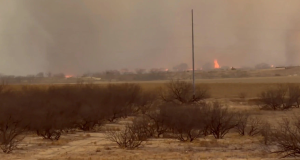 “Yellow Fire grows to estimated 14,200 acres in Texas Panhandle…
“Voluntary evacuations began in the early hours Wednesday, March 11 for Ady, Chuck Wagon, Trail End, Pond, Broken Spur and parts of Tascosa Road, as well as Valle de Oro and the LIT headquarters, with Tascosa Road being closed.”
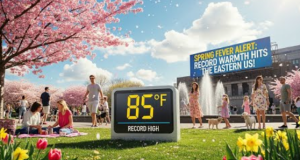 “HISTORIC – DOZENS OF MARCH RECORDS [Eastern US]:
“93 Mc Entire SC, 92 Beaufort SC, 92 Metter GA, 91 Seymour NC, 91 Mackall NC, 91 Claxton GA, 91 Hunter GA, 90 Kinston NC, 90 Fort Bragg NC, 90 Pope NC, 90 Shaw SC, 90 Columbia MS, 90 Farmville VA, 99 Wilson NC, 89 Chesterfield VA, 88 Florence SC, 85 Teterboro NJ.”
https://x.com/extremetemps/status/2031926901636465019
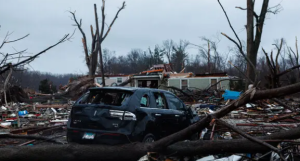 “Tornadoes hit Illinois, Indiana and Texas as severe storms sweep US.
“A series of tornadoes hit parts of Texas, Illinois, and Indiana late Tuesday and overnight, as forecasters warn that the threat of severe weather, including flooding, will continue on Wednesday for tens of millions of people from Texas to Michigan.”
https://www.theguardian.com/us-news/2026/mar/11/tornadoes-illinois-indiana-texas-storms
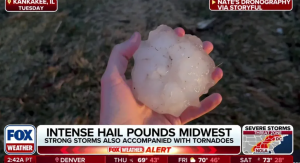 “Massive hailstone from Tuesday’s storms could be the largest in Illinois history…
“Though the record is not officially declared, there were several reports of hailstones that fell Tuesday that were larger than the 4.75 inch hailstone from Minooka in June 2015 that currently holds the state’s record, NWS said.”
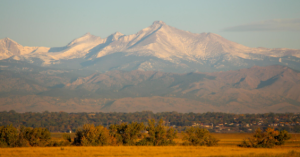 “Colorado’s warm winter broke the previous record for highest average temperature by nearly 2 degrees Fahrenheit, researchers at Colorado State University confirmed Tuesday.
“The record-shattering heat makes Colorado one of nine states in the West to have experienced their warmest winter on record in 2025-26.”
https://coloradonewsline.com/briefs/colorado-warmth-shatters-records/
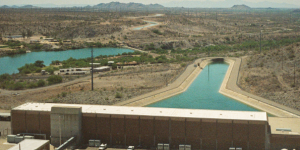 “Arizona delegation unites against plan that could cut state’s Colorado River water.
“Negotiations among the seven Colorado River basin states have continued for two years without a final agreement as water levels at lakes Mead and Powell have fallen to roughly one-third of their capacity.”
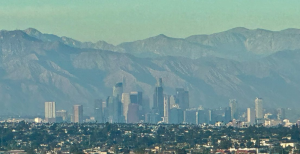 “Record Heat Set to Roast Los Angeles and the Southwest…
“It’s March, but someone didn’t tell that to the weather in the western US. The region is about to be hit by an intense heat wave with summer-like temperatures that will break [March] records and cut into California’s already-dwindling snowpack.”
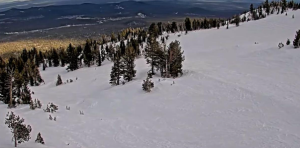 “Central Oregon snowpack hits record lows as drought concerns grow.
““The forecast we have now for spring and summer flows is generally poor or below normal. If we look out in the Ochocos, we see a little bit more extreme low flow predictions for the Prineville and Ochoco Reservoirs.” Matt Warbritton, supervisory hydrologist said…”
 “Widespread ecological responses and cascading effects of the 2021 western North American heatwave…
“Streamflow from snow and ice melt increased 40% during the heatwave… wildfire activity surged 37% during the heatwave and 395% the following week. Our results underscore the urgent need for enhanced coordinated approaches to predict, detect and manage increasing heatwaves.”
https://www.nature.com/articles/s41559-026-02987-6
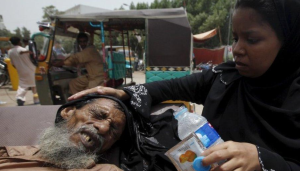 “‘A sobering preview’: extreme heat now affects one in three people globally, study finds…
“On average, the report finds that people over 65 now experience about 900 hours each year when heat severely restricts safe outdoor activity, compared with 600 hours in 1950. This is equivalent to more than a month of daytime hours.”
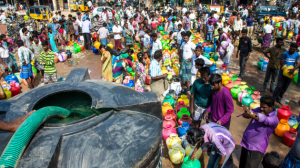 “Water crisis looms for cities as drought and growth collide…
“Around the world, many urban areas already struggle with water shortages. Since 2000, more than 80 major cities have experienced extreme droughts. Cities such as Cape Town, São Paulo, and Chennai have all faced serious water crises.”
https://www.earth.com/news/water-crisis-looms-for-cities-as-drought-and-growth-collide/
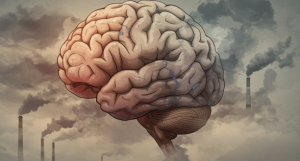 “Air pollution harms brain health – existing standards may fall short…
“Air pollution is widely recognised as a major threat to human health. For decades, research and regulation have focused on its role in respiratory and cardiovascular disease, and rightly so. But there is another, less visible consequence of polluted air that deserves urgent attention: its impact on the human brain.”
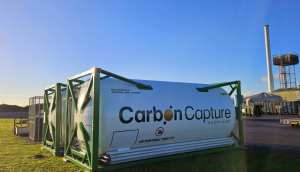 “Centuries of net-negative emissions are required to secure a safe climate future, two studies suggest…
“Approaching the problem from distinct perspectives—legal and technological feasibility on the one hand, and economic optimization under uncertainty on the other—the research converges on a consistent message: reaching net zero is not enough.”
https://phys.org/news/2026-03-centuries-net-negative-emissions-required.html
I rely on donations and tips from my readers to keep the site running. Every little bit helps. Can you chip in even a dollar? Buy me a coffee or become a Patreon supporter. A huge thank you to those who do subscribe or donate.
You can read the previous “Climate” thread here. I’ll be back tomorrow with an “Economic” thread.

These are emotional times. It’s one thing to anticipate collapse, another to watch it real time. Meh…
This article looks at Toronto’s toxic snow piles but of course it’s true in lots of cities. Maybe you can find your lost keys, har har:
https://www.theguardian.com/world/2026/mar/11/toronto-snow-salt-environment-health
“Toronto has so far used more than 130,000 tonnes of salt this season and local governments are grappling with a shortage – even though the world’s largest salt mine sits less than 150 miles west of the city.”
Flippr, my poor Lab singed her paws on the rock salt, or whatever de-icing chemical they use up here, during a recent cold snap. Very unhappy to be off her walks she was. I had to alleviate her boredom by hiding little morsels of cooked chicken around the house for her to find.
Trump is now mentioning Iranian sleeper cells in the US.
IMO, this will be used for a false flag attack and will justify boots on the ground, insurrection act, martial law and nukes.
https://www.usatoday.com/story/news/politics/2026/03/10/what-are-iran-sleeper-cells/89082249007/
Yikes. Thanks for coming over to my channel too 🙂
I value your insight!
This is Truth Wizard’s channel for those who haven’t come across it:
https://www.youtube.com/@TruthWizardX
“…this will be used for a false flag attack…”
This seems to be a popular theory on the internet today. Unfortunately, the Trump administration’s moral credibility is now so damaged that even if an attack were genuine, many people would still assume it wasn’t.
Trump says they know where the sleeper cells are. I guess they’ve been too busy rounding up roofers and nannies.
Quark’s latest w/o the graphs, google translated:
For any impartial observer, the economic and financial system has been floundering for many years. A succession of minor crises, almost always resolved by taking on more debt, precedes the major crisis. When resorting to central bank intervention or issuing more debt proves insufficient due to the onset of inflation, we will witness a rapid collapse, followed by a massive injection of money, ultimately culminating in the destruction of the fiat system.
This description suggests the existence of three distinct phases that should be explained in detail. The dates are only indicative, since the processes have their own internal development and no one can predict the future.
1st) Inflation phase (2026-2027).
We are immersed in the middle of a war in the Middle East (apart from the Ukraine-NATO-Russia conflict), whose absurdity is preventing the supply of oil and LNG from leaving the area, reducing the supply of fertilizers, oil, condensates, LNG and its derivatives, limiting petroleum products such as diesel or kerosene, even helium suffers a sharp cut due to the stop in the production of gas and LNG.
Oil prices have started to rise, as have its derivatives and fertilizers, and the pressure on prices (which never fully fell after the 2021-2022 energy crisis) is becoming unsustainable, even though we are in the first part and it has not been reflected in a real increase in the current data.
Yesterday I was discussing the historical cycles of interest rate hikes associated with variations in inflation, and it is quite clear that we are at the beginning of a major upward movement.
Until now, Iran had responded to every attack with a counter-attack, but since yesterday, its message has changed. Now it has a single objective: to prevent the US, Israel, and their allies from profiting from Middle Eastern exports. Therefore, it has stated that no “artificial” measures (which could refer to desperate attempts to lower oil prices through rumors, the release of reserves, or manipulation of oil futures) will be able to prevent the oil supply restrictions resulting from its control of the Strait of Hormuz. It has even put a price target on the oil it expects to reach with these controls: $200 per barrel .
Rising oil prices will undoubtedly push inflation upwards, but in addition, fertilizers are also suffering from lockdown restrictions, so if this continues, food prices could easily be affected by the decrease in those fertilizers.
And price changes come quickly, as can be seen in jet fuel .
“ In the United States, the cost of refining crude oil to produce jet fuel exceeds $85 per barrel , almost as much as the price of oil. From February 17 to March 5, less than three weeks passed, and the price of jet fuel rose from $2.28 per gallon to $3.95 .”
There’s no need to make a detailed list of the impact of the closure of the Strait of Hormuz to know that inflation could reach double digits in the next four or five months.
This rise in prices will also affect the bond market, where market interest rates have been rising for five years since the 2020 low. Some, like the Japanese bond, have even broken 2007 highs, marking a dangerous trend, as they are applied to a gigantic debt, forcing excessively high interest payments.
The USA case is paradigmatic and does not bode well.
If we add inflation and rising interest rates to the bubble in several markets, we get a diabolical combination.
In recent days, there has been talk of the AI bubble, the housing bubble, the stock market bubble, and now a possible collapse in the private credit market is starting to emerge. The latest is affecting Morgan Stanley , adding insult to injury.
Morgan Stanley joins the private equity fund crisis. The firm has limited redemptions in one of its largest funds, the North Haven Private Income Fund. Faced with disproportionate withdrawal requests, the firm was only able to process 45.8% of them. From then on, withdrawals were blocked using the standard formula: only 5% of the total portfolio can be withdrawn from these funds to avoid jeopardizing liquidity and forcing sales at a loss.
Private lending funds are experiencing a period of absolute upheaval. These vehicles are dedicated to lending money through non-bank credit. In recent years, in the context of low post-pandemic interest rates, they were flooded with retail investors who flocked to them as if they were equities. However, they are a very delicate business model that sits poorly with the panic and stressful situations brought about by this ‘democratization’ of debt funds. Recently, BlackRock and Blue Owl Capital have halted redemptions from some funds in response to massive outflows. JP Morgan has also done so (according to Bloomberg).
The authorities’ desperate attempts to prevent a sharp stock market decline will undoubtedly continue. But sooner or later, the impact of oil prices will cause a reduction in consumption and, likely, a severe economic crisis, with repercussions for the stock markets, whose fall will trigger the response mechanisms of the protection team. That will be the beginning of the second phase.
2nd) Phase of the massive monetary injection (2027-2030) .
In 2008-2009 and in 2020, we saw how, to counteract stock market crashes and declines in economic activity, central banks boosted a huge monetary issuance.
This issuance, which increased the balance sheets of central banks, contributed not only to the recovery of the economy, but also to pushing global stock markets upwards, especially the American stock market, as reflected in this graph .
Yes, the balance sheet grew significantly, but it also fueled the growth of global debt by lowering interest rates to zero or negative. Combined with excessively lax conditions, as can be seen in the chart below, lending grew unchecked.
In 2025, global debt soared to unprecedented levels, losing control of debt growth, in a year without a crisis.
Fueled by unlimited liquidity, global stock markets have hit record high after record high.
Speculation has also reached record highs, reflected in the margin debt index (margin debt is the total amount of funds investors have borrowed from the broker, and the higher it is, the more optimistic retail investors are). Each peak in this index has preceded a decline in the stock market.
Therefore, we expect that after a sharp decline in global stock markets, in response to rising prices and a consumer crisis triggered by restrictions on oil, LNG, and fertilizers, central banks will resume issuing new money. However, the level reached suggests that this time, monetary injections will far exceed anything seen before.
A contribution that should be measured in tens of trillions of dollars, to defend against the unparalleled economic destruction expected after the Persian Gulf crisis and its aftermath.
Not only will they have to provide funds to recover the economy (in the West, deficits can be colossal, since in times of prosperity we have a deficit of 6% in the case of the USA), but they will also have to provide money to finance the public debt increased as a consequence of the crisis and to restore the expected collapse of the banking sector, which after many years of plenty, has incurred unnecessary risks due to the expansion of hazard morale.
This time, this unprecedented injection of funds is facing a challenge that didn’t exist before. The rise in the price of gold reflects a nascent distrust. Only the most astute investors have begun to question the policy of endless monetary expansion. The latest data for 2025 indicates that an additional $28 trillion in debt has been created to generate a mere $3.5 trillion in global GDP growth. And this in 2025, when global economic growth hovered around 3.3%, with no appreciable crises anywhere in the world.
The systematic deviation of debt from GDP growth is increasing exponentially. This graph, referring to the USA, is the best example and can be extrapolated to the rest of the world.
This is a very important graph because it demonstrates that natural growth no longer exists and that all the growth we can generate comes almost exclusively from debt. But if monetary expansion is several times greater than the increase in real goods and services, we are creating the perfect environment for a sharp rise in prices, or something similar, a massive dilution of purchasing power per unit of currency.
Inflation will not only be caused by the scarcity of certain raw materials, but will also be driven by uncontrolled monetary expansion. Therefore, a spectacular injection of funds to address the economic crisis and refinance the system will undoubtedly create widespread distrust, reflected in the prices of solid assets, which may increase to levels never before imagined.
This is the genesis of the third phase.
3rd) Phase of the destruction of the fiduciary system (2030-2033).
As seen in the second part, the gigantic influx of monetary mass will amplify the initial distrust in all sectors when prices begin to rise.
After a period of rising inflation, there will be an accelerated loss of purchasing power of wages, and when that perception reaches ordinary people, nothing will be able to prevent an indiscriminate rise in prices.
Money will burn in your hands, because with each passing day, you’ll feel like prices are multiplying, forcing you to get rid of your money in exchange for basic necessities.
This is the seed of hyperinflation and the destruction of the fiat system in which we have lived since the end of the Bretton Woods agreements, where the convertibility of gold into dollars or vice versa was decoupled.
————————————————
Attempts at a solution .
Naturally, the authorities will not stand idly by in the face of an expected event and already have a possible solution in mind.
Following the oil crisis, widespread rationing could be implemented, taking advantage of the scarcity of certain basic goods. If, at the same time, a digital system is rapidly developed, where cash disappears and is replaced by digital currency, rationing and spending can be controlled through digital accounts, assigning each account a restriction on the purchase of specific products.
This method allows for redirecting consumption to align demand with current supply. Inflation is also controlled through two processes: limiting consumption through rationing and implementing a new tax system to drain excess money. The justification might be the common good or any environmental measure, such as restricting air travel or long journeys, thus minimizing the impact of tourism and allocating fuel to priorities determined by each government.
Another characteristic will be moderate autarky. Instead of consuming expensive and hard-to-obtain foreign products, the consumption of local products will be promoted.
It is too early to describe this process, so I will only give a brief overview, as there will be time to analyze the phases as we move forward in time.
What is clear is that nothing will ever be the same again, without even considering the kind of economic decline and drop in quality of life that awaits us.
Thanks, Flippr. Good stuff there from Quark as always.
I guess the deeper risk is that the system stops working altogether if the nascent distrust he mentions turns to panic, credit flows dry up and just-in-time logistics collapse.
“The Middle East is confronting a rapidly intensifying water crisis as climate change, population growth and regional conflict put unprecedented pressure on already scarce freshwater resources.”
But no one actually cares about this, because there is no solution to it within the current or any other economic system characterized by the rule of alienated wealth (or capital, as some call it), which includes Russia-China-Iran as much as US-NATO-OECD. Decision makers can be perfectly aware of how serious this is, how catastrophically it can unravel, while at the same time being concerned only with second-order, temporary mitigation of the consequences for themselves and imposing the costs of such mitigation upon others (while attempting to put maximal socio-economic distance between themselves and the bloody process of cost-imposition).
Calling the US-Iran instawar stupid, evil, religiously motivated, or heaping blame upon specific factions of the ruling classes on either side of it, will not change reality. This instawar and many future ones are inevitable. All shall feature remote destruction or political disruption at various levels of symmetry and intensity, causing cascading economic and climatic/ecological devastation that no one will care about mitigating beyond their “local” aka short-term, self interest, while trying to make the other side suffer even more. Life, after all, must go on, even if we know it won’t.
Babe We’re Gonna Love Tonight.
Ahh, that is a splendidly cheesy track, Jupiviv. 🧀
“Calling the US-Iran instawar stupid, evil, religiously motivated, or heaping blame upon specific factions of the ruling classes on either side of it, will not change reality.”
It is quite tempting to do that though. 😂
Thanks Pan.
I love Eliot’s “car soup” references and have been borrowing it for my own variations like “pickup stew.”
I just remembered there’s an online auto sales website bearing the unfortunate but increasingly apt name “carsoup.”
Leaf
Let’s dress it up a bit Leaf, how about car consomme and pickup pot-au-feu?
You’re welcome, Leaf. Prof Eliot is certainly a character. We share a mentor in the late and much missed Gail Zawacki.
The odds on a rapid collapse are shortening every day. At current rate four more El Ninos would be 2036/37 – I think that might be the end. Oil crash looks likely to be faster than anticipated given the collapse in discoveries and steeper natural decline rates highlighted in recent articles. Any use now of strategic storage reserves is unlikely to ever be replaced so they won’t be available the next time they’re needed. Collective response to the emergency is being shown at the absolute worst case end of any human behavioural expectations and part of that is going to be the coming mother and father of all economic crashes.
Here is some music: A northern soul classic and (still?) the most expensive vinyl ever auctioned for its original recording.
https://www.youtube.com/watch?v=xwvpeYiQwss
And blues by a guitarist who played a right handed guitar upside down and pretty much made up tuning and chords as he went along.
https://www.youtube.com/watch?v=790ggx1NM5Q
Two questions:
1. This draining of the SPR of 172M barrels will take it down to 243M left which would represent around 33% of capacity. It has been as low as 347 right around 50%. It is said that anything under 50% can lead to permit damage of the storage.
2. Read in a couple of places that shutting down oil wells can damage the wells and cut production by up to 20% once they restart. Fields with alot of infill drilling are more prone to this reduction.
Anyone got anything better than heard on the internet for this info?
Thanks
Watching Alex Krainer. The way they get the oil out is flood the salt taverns with water and the oil rises. Problem is the water dissolves the salt. Going to be a very slow dangerous process
“The odds on a rapid collapse are shortening every day.”
It does feel as though the madness of the human experiment is close to reaching its crescendo, George. I’m usually pretty inured to the news I aggregate here but this past week has been causing me anxiety.
Those are both excellent tracks. A bluesy favourite of mine:
https://www.youtube.com/watch?v=WcF8Aos4XDA&list=RDWcF8Aos4XDA&start_radio=1
ME: 35 minute video interview of Luke Gromen
————————–
https://www.kitco.com/news/video/2026-03-11/luke-gromen-says-gold-could-reach-6-000-as-u-s-faces-suez-moment-
Luke Gromen says gold could reach $6,000 as U.S. faces “Suez moment”
Mar 11, 2026 – 11:30 AM
Luke Gromen, Founder and President of Forest for the Trees, says the closure of the Strait of Hormuz could trigger significant stress in global financial markets as energy costs rise and sovereign balance sheets weaken.
Speaking with Kitco News anchor Jeremy Szafron, Gromen argued that the bond market is now the key battleground, explaining that energy-importing nations may be forced to sell U.S. Treasuries to finance higher fuel costs. He compared current conditions to the 1956 Suez crisis, when geopolitical pressure exposed vulnerabilities in the global monetary system.
Gromen said the combination of rising oil prices and declining trust in sovereign debt is accelerating a shift toward hard assets. He warned that the global economy remains tied to what he described as a century-long sovereign debt cycle and outlined risks from private credit and consumer leverage tied to the artificial intelligence boom.
Gromen said institutions increasingly view gold as a settlement asset and projected that prices could reach $6,000 by midyear if current geopolitical and energy disruptions persist.
——————————–
ME: Luke has also been with Nate Hagens on The Great Simplification many times in the past. I like how Luke brings a wide boundary, longer term ‘buy-and-hold’ viewpoint to the Kitco Precious Metals [PMs] discussion versus the sometimes-narrow boundary focus on short-term speculative trader interviews.
In reference to the posting discussions above from Quark and Jupiviv: Central Bank Digital Currency [CBDC] and electronically controlled rationing will only be possible as long as the WWWeb is strong & viable. Any material shortage from supply chain collapse that asserts a Liebig Law of the Minimum upon the electric grid infrastructure will quickly make CBDC transactions impossible.
Conversely, if CBDC can be implemented: they sure as hell will electronically forbid most of us ‘useless eaters’ from buying PMS. It will be only available for select insiders to purchase. Expect a black market to arise that will be very lucrative for these insiders to profit from.
My worthless fiat currency two cents.
Bob Shaw Are Humans Smarter than Yeast?
Thanks, Bob. The algos have sent the odd Luke Gromen tweet (are they even still called that?!) my way on X, but I hadn’t realised he was hip to energy and resource-constraints. I’ll pay closer attention to him now.
“Luke Gromen joins Nate to discuss how the availability of cheap energy has underpinned our current financial architecture and expectations – and what peak cheap oil implies for the future. A central part of this story is the rise of the US dollar as a global reserve currency tightly linked with the ability to purchase oil – subsequently leading to the US becoming a major exporter of debt.”
https://www.thegreatsimplification.com/episode/91-luke-gromen
Yep, Pan, that interview is a classic–> I watched it about four times myself since its debut.
Just as daylight savings time doesn’t change when it’s actually noon, calling March 1’st “meteorological spring” doesn’t change the fact that it isn’t just the “coolest part of March”, it’s technically still winter, which has more than another week before it’s officially over. So we’re not just seeing summer temperatures in early March, we’re seeing summer temperatures while it’s still winter.
Meanwhile, the Commandeerer & Thief of the US has stated that he was not worried about Iranian attacks on American soil. When asked if he was concerned, the president told reporters, “No, I’m not.”
The Furor and his dept. of War had previously stated that, despite actual statements from Iran that, should Israel strike their country, they would attack the nations of the GCC, specifically the US assets installed there, the attacks came as a total shock.
Hence, the Furor’s lack of concern has absolutely zero bearing on the actual likelihood of such attacks occurring.
When the Furor was elected, my one certainty, seeing as he’s following the arc of the GW regime, was that likewise, during his tenure, there would be an attack on American soil; his stated lack of concern is the surest indication that my prediction’s probability of being vindicated has just markedly increased.
Rob, there is indeed over another week of astronomical winter left. That is one hell of a heatwave brewing:
“Almost every major city in the West has a shot at shattering its all-time March temperature record: Los Angeles, San Francisco, Phoenix, Las Vegas, Denver, Salt Lake City, San Jose. Many of these cities won’t just edge past old records by a degree or two, they could obliterate them.
“Phoenix could reach 105°F next weekend. That would not only break its previous March record by a full five degrees, but would also tie its all-time April record.”
https://x.com/US_Stormwatch/status/2031968001151680819
Heat wave, drought in the western half of the United States. Detailed perspective from a climate scientist. Dr Daniel Swain
https://www.youtube.com/live/Kww_WjCG-HI?si=wSI-g6MZCf8krFKv
https://www.king5.com/article/weather/severe-weather/strongest-recorded-wind-gusts-western-washington-march-11-storm/281-d2ad0b8e-26a2-4a56-b855-1f5dcaafa022
High wind events last night our power went out for 2 hours and things are still a mess this morning . Gas prices down the block are now 4.60 and rising.
Thanks for the heads-up on that wind storm, Heather:
“It’s a little late in the year for a windstorm, but don’t tell Mother Nature… To give an idea of how strong that jet stream is slamming into the region Wednesday night, the wind gauge atop the Alpental Ski Resort Summit at 5,200 feet recorded a gust of 134 mph Wednesday evening!”
https://emeraldcityweather.com/134-mph-wind-alpental-summit-seattle-windstorm-march-2026/
The lightest gas… yet indispensable – a few remarks on helium as a “by-product” of LNG
Everyone is watching oil prices, but meanwhile the lightest gas, helium, is escaping our attention. Qatar, responsible for about a third of global helium production, has halted its output after installations at the enormous LNG complex in Ras Laffan were affected by the war situation in the Gulf region. Helium is not produced there as a primary product but as a by-product of natural gas processing. When the gas installations stop, helium production automatically stops as well.
Helium, of course, is not just about party balloons; it is a strategic resource. It is particularly essential in the medical sector. MRI scanners – also known in many European countries as IRM scanners – use powerful superconducting magnets that can only operate at extremely low temperatures. Liquid helium is required to cool these magnets. Without helium, these scanners simply cannot function. Almost everyone has had an MRI or IRM scan at some point, or knows someone who relies on one for diagnosing tumors, brain injuries, or other serious medical conditions.
Beyond the medical sector, the semiconductor industry in Taiwan is also highly dependent on helium from Qatar, with roughly 40 percent of its supply linked to that source. The gas is used in computer chip manufacturing and in cooling extremely sensitive equipment. Taiwan, which produces more than ninety percent of the world’s most advanced chips, requires a stable supply. Just imagine trying to compensate for such a disruption.
There is an additional complication. Helium can hardly be stored. The gas is so light that it easily escapes from tanks and pipelines. As a result, the global market functions almost like a continuous chain of production, transport, and immediate use.
As soon as a major producer drops out, shortages appear almost immediately.
Thank you, Zip.
It is amazing the amount of supply-chain mayhem emanating from this conflict – a salutary reminder, not that we needed one, of how brittle and vulnerable the complexity that sustains our modern way of life is. Bromine supply also a concern:
“The Middle East crisis is casting a pall over Asia’s chip supply chain as concerns mount that the de facto closure of the Strait of Hormuz could drag on, making it difficult for South Korea and Taiwan to procure helium… Worries also are growing about stable supplies of bromine, used in semiconductor circuit formation, production of which is concentrated in Israel and Jordan. South Korea relies on Israel for 98% of its imports.”
https://asia.nikkei.com/business/tech/semiconductors/iran-war-sparks-helium-supply-concerns-for-south-korea-chip-sector
Thank you Pan for the link…
Yes — bromine, helium, the Dead Sea, the Gulf and Iran. That is really the paradox of our species.
On the one hand it is almost unbelievable what humans manage to achieve technically. We can: etch structures only a few nanometers wide into silicon, separate a gas that occurs only in trace amounts in natural gas (helium), extract chemicals from a hypersaline sea (bromine from the Dead Sea) and build wafer fabs where thousands of processes run simultaneously with almost perfect precision
That is truly an astonishing level of organization, science and cooperation.
But at the same time something else emerges: a system that is so complex and so tightly interwoven that it becomes extremely vulnerable. One war, one strait that closes, one raw material that stops flowing — and immediately the gears start grinding everywhere.
That is essentially what you reveal again and again in the links you post every day: the modern world looks robust, but in reality it runs on a series of narrow, fragile nodes.
And everything is connected to everything else.
Human intelligence is enormous, but our ability to organize that complexity in a stable way lags behind. Technology grows exponentially, but political systems, economics and cooperation often trail far behind.
We are remarkably good at building systems —
but far less good at preventing ourselves from breaking them.
Good job to Zip & Pan–>excellent discussion!
So well said, Zip.
Perhaps not many, if any, on this site are military hardware nerds, & watching how these vile things operate in effing up the planet on top of “normal” FF use is probably a weird acquired taste…
but if there are closet bomb nerds here, I recommend Jon Elmer’s reports:
I do have a toy-boy sorta crush on Jon 🙂
https://youtu.be/Fd7Zg63rsNU?si=lXluWkMArzCEkXC4
I’m loving every minute of it, because this species deserves every minute of it.
Anytime I read “population growth” I know we are kicking the can down the road to avoid the fact that 8 billion are excellent dis-tractors from ever having to speak the forbidden word, overpopulation.
I’m so proud of us.
Just saw this.
“I need to get my life together but I’m kind of waiting to see if the world is going to end before I put any real effort in.”
TR, those two brief postings are excellent–kudos!