“Climate crisis disasters are happening at the rate of one a week, though most draw little international attention and work is urgently needed to prepare developing countries for the profound impacts, the UN has warned.
“Catastrophes such as cyclones Idai and Kenneth in Mozambique and the drought afflicting India make headlines around the world. But large numbers of “lower impact events” that are causing death, displacement and suffering are occurring much faster than predicted, said Mami Mizutori, the UN secretary-general’s special representative on disaster risk reduction. “This is not about the future, this is about today.””
“An “all-time high” temperature record has been set in the US state of Alaska, despite much of the country sitting in the Arctic circle. Temperatures peaked at 32.22 Celsius (90F) on 4 July at an airport in Anchorage, the state’s largest city… Other local records were set across southern Alaska and come after five weeks of above average temperatures.
“Shawn King, who has lived his entire life in Anchorage, said he had never seen a stretch of similar hot weather.”
“The northwestern region [of Ontario, Canada] currently has some 19 fires burning, five of which are raging out of control.
“Aside from the remoteness of the fires, firefighters are struggling to contain the flames due to ongoing dry and hot conditions, with Ontario’s Ministry of Natural Resources and Forestry describing fire weather in the region as “extreme” in a Friday night bulletin.”
“With the recent heatwave across our region [New Brunswick, Canada] bringing record high temperatures with it, many are staying indoors with air conditioning to beat the heat. But some people don’t have that option.
“The sizeable homeless community in Moncton, who generally sleep in tents, say warm weather like this can be very dangerous for them, with few options of places to cool down.”
“A landspout tornado briefly touched down in New Jersey on Saturday and the high winds flipped over a car.
“The tornado moved across a warehouse parking lot in Mount Laurel Township about 2 p.m. ET before overturning the car, the National Weather Service said.”
“All of Mississippi’s Gulf Coast beaches have been closed for swimming as the expanding bloom of toxic blue-green algae blankets the state’s waters.
“On Sunday the Mississippi Department of Environmental Quality announced the closures of Pascagoula Beach West and Pascagoula Beach East, the final two state beaches that were open for swimming.”
“France’s vineyards could be forced to move to more northerly climes because of searing summer temperatures. In the final days of last month, when temperatures of up to 114.6F (45.9C) were recorded, the vines in wine-producing areas such as Coteaux du Languedoc were severely burnt.
“Some estates have lost 80 per cent of their grapes.”
“A huge thunderstorm has bombarded the French region of Auvergne-Rhone-Alpes with hailstones the size of tennis balls, and included a record number of lightning bolts, providing for a deluge of impressive content on social media…
“Auvergne-Rhone-Alpes, located on the border with Switzerland and Italy, was hit the hardest.”
“The Balearic Met. office confirmed yesterday that, since 1975, a total of 17 heatwaves have hit the Balearics and eight of those have been over the past ten years…
“During the most recent heatwave, the highest registered temperature was 40.7ºC in Montuiri… “What this data indicates is that not only are heatwaves are becoming more common, they are lasting longer.”
“Firefighters are still battling a stubborn wildfire on the Greek island of Evia, as high winds and soaring temperatures continued to stoke the flames.
“Several villages close to the blaze were pre emptively evacuated and support, including additional firefighters, fire engines, planes and helicopter, was drafted in from across the country.”
“As reported last night on TCN, parts of Croatia were given a severe and sudden change in the weather after the recent hot spell. In Rijeka, just after midday, for example, the temperature dropped 8 degrees Celcius in 20 minutes, during which time there was a torrential downpour.
“Things were a lot worse in other parts of the country, as Index reports, particularly in the east, where large hail stones damaged roofs in Vukovar and several windscreens of cars in Osijek.”
“India’s water crisis is far from even-handed – the elite in Delhi and most other parts of the country remain unaffected while the poor scramble for supplies every day.
“Prime Minister Narendra Modi’s official residence and those of his cabinet are in central Delhi, as are those of most lawmakers.”
“According to a press release by the Save the Society & Thunderstorm Awareness Forum, at least 126 people were killed by lightning strikes Bangladesh in the months of May and June. Additionally, 53 people were injured. Of the injured, 21 were women, seven were children and 98 were men.”
“Heavy rain has wreaked havoc in Nanping city in eastern China’s Fujian province, causing massive floods, turning roads to small rivers and trapping many locals in their homes.
“After two hours of torrential rain on Saturday, parts of Nanping were overwhelmed by significant flooding.”
“The national sheep flock is forecast to fall to 65.8 million head this year, according to Meat and Livestock Australia, one of the lowest numbers since the early 1900s.
“It is news that comes as no surprise for the industry — years of ongoing drought across all key production areas is now forcing producers to offload breeding stock to slaughter.”
“The regrowth of centuries-old mosses suggests that glaciers and permafrost are not merely graveyards for multicellular life, but they could instead help organisms withstand ice ages.
“And as human-caused warming peels away ice cover in the Arctic and Antarctic, whoever makes it out of the ice alive is poised to dominate the budding polar ecosystems.”
“A tornado swept through the north-eastern Chinese province of Liaoning on Wednesday (July 3), killing six and injuring 190, the state broadcaster said, amid a series of “extreme” weather events that government forecasters have linked to climate change.
“The tornado damaged nearly 3,600 homes and affected more than 9,900 residents in Kaiyuan, a city of around half a million people, according to China Central Television.
“Footage posted by CCTV on its official Weibo account shows dozens of flattened buildings in an economic development zone in Kaiyuan…
“The country’s weather bureau on Tuesday said that climate change could cause more extreme weather events, following floods, drought and extreme high temperatures in some regions this year.
“It said rainfall had broken records in some areas and that as many as 40 weather stations registered their hottest temperatures ever this year.
“The northern Chinese province of Hebei issued an extreme heat “red alert” on Thursday, with temperatures set to soar beyond 40 deg C in its major cities and putting the area’s corn crop at risk, the local government said.”
“According to the national standard on the division of seasons in China, it marks that Lhasa entered summer on June 23, the first time since the city’s meteorological data was first collected in 1981. Cold drinks and fans have become popular products, a rare scene in Lhasa. Tibet had seen high temperatures and little rainfall since the beginning of June…
“On June 24, six observatories in the region registered record-high temperatures…”
“…researchers found that the limits of survivability would be exceeded in a few locations in India’s Chota Nagpur Plateau, in the northeast of the country, and Bangladesh.
“And they would come close to being exceeded in most of South Asia, including the fertile Ganges River valley, India’s northeast and eastern coast, northern Sri Lanka, and the Indus Valley of Pakistan.”
“Iraq is in a fragile state. The country is trying to rebuild itself after thirty years of near constant war. But a new crisis has emerged that could undermine its recovery – Iraq is running out of water.
“Iraq gets the vast majority of its water from two rivers; the Euphrates and the Tigris… It’s hard to imagine Iraq existing without these rivers. But today, they are in peril.”
“Greece’s summer heats continues. Temperatures reach 41 degrees Celsius. Heavily affected by the heat are Northern Greece, Thrace and Thessalia, the BNR reports.
“Authorities constantly inform about precautions against high temperatures. A lot of water, light food, no alcohol, and a trip in the late evening hours, doctors recommend.”
“Around 180 sheep were killed after slipping off a steep Alpine cliff edge, said German authorities – linking the deaths to the heatwave gripping much of Europe.
“An official in Germany’s southern state of Bavaria said the accident happened on Sunday when around 300 sheep struggled on a trail with soil completely dried out in the recent hot weather.”
“Lithuania declared an emergency on Wednesday as a severe drought hit the Baltic EU state, threatening to slash this year’s harvest by up to half. Apart from jeopardising crops, scant rainfall has also drastically reduced water levels in some rivers, threatening fish stocks and shipping activities.”
“Jamaica did not experience the normal “May rains” this year, and is currently going through a period of drought which is affecting everyone, especially those who farm or sell in markets for a living.
“Some vendors and farmers in the Coronation Market in downtown Kingston shared with the Jamica Observer just how the dry season has been affecting them.”
“At least five people were killed and three are missing in Haiti after a torrential downpour buffeted the capital of Port-au-Prince, the country’s civil protection agency said on Wednesday (Jul 3)…
“”There are unstable weather conditions prevailing in the Caribbean basin, and rain and thunderstorm activity could hit the country over the next two days,” Haiti’s civil protection agency said.”
“We’re only two and a half weeks into summer, and a common theme of South Florida small talk is “it’s never been this hot.” Tuesday afternoon’s record-breaking 98 degrees reading beat a 1998 high of 95 in Miami, according to the National Weather Service. And we’ve been a few degrees above average for weeks now.
“Think Alaska is always cold and snowy? Think again. Most of the nation’s biggest state is forecast to bake under record-breaking heat over the next few days, with Anchorage poised to reach its hottest temperature ever recorded…
“In general, high temperatures across the state will be as much as 20 degrees above normal for early July, according to AccuWeather.”
“The Arctic is on fire. Dozens of wildfires of an unprecedented intensity have been burning across the Arctic circle for the past few weeks, releasing as much CO2 in just one month as Sweden’s total annual emissions.
“Fires in the region are not unknown but the scale of the blazes, predominantly in boreal peatlands across Siberia, is surprising.”
“The torrential rains battering southwest Japan were triggered by a body of warm, humid air sweeping up from the south and smashing into a seasonal rain front extending over central Kyushu and into the Pacific Ocean, according to experts…
“…the JMA forecasts that it will continue to rain at least until July 6, indicating that the total amount of rainfall may exceed that of the July 2018 disaster.”
“Waimate and Oamaru [New Zealand] have just recorded their driest-ever June, while Timaru was not far off.
“Monthly climate summaries from the National Institute of Water and Atmospheric research (Niwa) reveal from June 1 to 30, only 1mm of rain fell in Waimate and Oamaru which is the driest June in both locations since records began in 1898 and and 1941 respectively.”
“This week we learned that there has been a “precipitous” fall in Antarctic sea ice since 2014. That won’t increase sea levels, but it’s still bad because white ice reflects more of the sun’s heat back away from Earth than dark water. As the ice melts, more heat will be absorbed, which will melt more ice.
“This vicious feedback is known as the “albedo effect”.”
“About 1.12 million people in south-western Japan were urged to flee to safety on Wednesday (July 3) as heavy rain continued to lash the region, bringing waist-deep floods in many areas and threatening deadly landslides…
“Kagoshima bore the brunt of the torrential rain on Wednesday morning, when the entire cities of Kagoshima, Kirishima and Aira in the prefecture were ordered to evacuate, affecting nearly 800,000 residents…
“Another 1.44 million people have been told to “prepare” to evacuate, based on a new five-tier disaster warning system dedicated to heavy rain. It was launched by the Japan Meteorological Agency (JMA) this year after deadly rains last year killed about 225 people…
“The deluge, which began last Friday and is forecast to continue until at least Thursday, has dumped in some areas more rain in a single day than the typical precipitation for the entire month of July…
“Record-breaking rainfall has also been observed in the cities of Kirishima and Hioki, with 241.5mm [nearly 10 inches] and 233mm respectively recorded in just six hours.”
“Extreme weather in China is becoming increasingly frequent, with temperatures in some regions hitting record highs this year…
“While average rainfall in Yunnan and Tibet has been the lowest since 1961, other regions have been facing “extreme precipitation events”, with rain in parts of Jiangxi, Hunan and Guizhou “breaching historical extremes”, Liao told reporters.”
“Eighteen people have died in severe floods in Russia’s East Siberian region of Irkutsk, regional Governor Sergei Levchenko wrote on his Instagram page on Tuesday….
“Floods in the Irkutsk region started after torrential rains at the end of June.
“A state of emergency was introduced in the flood-affected areas. The water level in the Iya River has raised seven meters above the critical mark.”
““Even if we look at the best case scenario, which means limiting global warming by 1.5C, we are looking at a 36% loss of glaciers,” said Mukherjee, whose fellow editors of this seminal study are Phillipus Wester, Arabinda Mishra and Arun Bhakta Shreshtha.
“The four work at the Integrated Centre for Integrated Mountain Development (ICIMOD), based in Kathmandu, Nepal.”
“The EU’s satellite agency says global-average temperature recorded 0.1C higher than in June 2016. The report comes shortly after the weatherman warned Kenyans of low temperatures.
“Forecast by the weatherman has predicted the cold will be as low as 10C.”
“A recently documented long-term drying trend over the Congo Basin could have important implications on the future of the world’s second largest rainforest, according to a study published today in Nature Climate Change…
“”…these changes could also accelerate global warming, as the Congo serves as a carbon sink, absorbing CO2 emissions from the atmosphere,” he added.”
“The month of June 2019 has been the hottest month of all times in Hungary, at least since the beginning of statistical record-keeping (1901), according to official sources here on Tuesday.
“According to OMSZ, June 2019 proved to be the hottest month ever since the beginning of official record-keeping.”
“People in Slovakia experienced two strong heatwaves during the month. Because of this, we recorded an extremely high number of tropical days this June,” SHMÚ climatologists Pavel Paško and Jozef Pecho said.”
“Heatwaves and ski resorts rarely make it into the same sentence, but with hot weather blasting parts of Europe last week, several destinations better known for snow have been baking in record temperatures.
“The French ski resort of Val d’Isère recorded an all-time high of 31C – almost unheard of at an altitude of 1,850m.”
“Man-made climate change probably made last month’s European heatwave, in which southern France experienced a national record 45.9 degrees, 4 degrees hotter than it would otherwise have been, scientists said on Tuesday.
““Climate change is no longer an abstract increase in global mean temperature, but a difference you can feel when you step outside in a heatwave,” said Geert Jan van Oldenborgh, Senior Researcher at the Royal Netherlands Meteorological Institute and one of the paper’s authors.”
“Temperatures in the first half of 2019 were the coldest in decades across parts of the Plains because of a stubbornly persistent jet stream pattern in winter and spring. The northern Plains region, which includes the Dakotas, had temperatures that were the farthest below average in 2019’s first six months. Some cities had an average temperature that was 4 to 6 degrees below average for the entire period spanning Jan. 1-June 30, according to data from the Southeast Regional Climate Center.”
“Record-breaking heat across Alaska is pushing tourists to beaches, and sending flames across the unseasonably hot, dry state.
“Anchorage experienced higher than average temperatures nearly every day of June, reaching a balmy 80 degrees Fahrenheit on days that once maxed out at a mild 67. The weather is forecasted to heat up further through and after the Fourth of July…”
Hawaii already set a multitude of heat records in June with a heatwave that was remarkable for both its duration and intensity…
“”The first record heat for July was recorded Monday at Kahului Airport, 92 degrees, which tied the mark set in 2015, the national weather service said.”
“Hurricane Barbara rapidly intensified into a Category 4 hurricane in the eastern Pacific early Tuesday.
“Barbara became a major hurricane, Category 3 or higher on the Saffir-Simpson Hurricane Wind Scale, after strengthening from a tropical storm with 70-mph winds Monday morning to a hurricane with sustained winds of 140 mph Tuesday.”
“Shocking new photos have revealed the devastating aftermath of a cold-season tornado that ripped through a Victoria town on Saturday.
“The Bureau of Meteorology confirmed the damage was brought on by a winter tornado, also known as a ‘coldie’, caused by cold fronts coming from the Southern Ocean.”
“Data provided by the Copernicus Climate Change Service (C3S), implemented by the European Centre for Medium-Range Weather Forecasts on behalf of the EU, showed that the global average temperature for June 2019 was the highest on record for the month.”
“… on Sunday afternoon [Cuba recorded] the highest temperature in its history…
“The Institute of Meteorology of Cuba (IMC) reported that at 2:30 pm on Sunday a measure of 102.38 degrees Fahrenheit was taken that broke the mark of 101.84, dating from 1999.”
“Several locations around the country [New Zealand] have experienced the driest first half of the year on record, and Watercare is calling on Aucklanders to use water wisely.
“Watercare said the Hūnua and Waitākere ranges, where its storage dams are located, had about 40 percent less rainfall than normal between January and June.”
“Australia’s hottest start to any year extended to a sixth month for day-time temperatures even as conditions moderated in June, while rainfall continued to be very much below average for large parts of the country.
“Average maximum temperatures for the first half of 2019 were 1.78 degrees above the 1961-90 baseline used by the Bureau of Meteorology.”
“The water dropped to critical levels last week at the Angat Dam reservoir in Bulacan, north of Manila [Philippines], Agence France-Presse reported yesterday, as the drought left residents with water shortages for up to 17 hours a day.
“Fisherman now pick up their catch from the shallow, muddy slosh of the depleted reservoir which feeds Manila… The dam provides 97 per cent of the city’s water.”
“Two people were hurt, several houses were destroyed and more than 7,000 households were left without power in two villages in southern Taiwan after a tornado ripped through the area… Big tornadoes are extremely rare in Taiwan, and people in the area had never seen a tornado as strong and powerful as this one.”
“Parts of the Kyushu region have been inundated with more than 700mm [27.5 inches] of rain since the torrential downpours began, with the weather agency warning that thunderstorms and intense torrential rain could lead to an increasing risk of mudslides.
“Warnings have also been issued for people to be vigilant for possible lightening strikes as well as tornadoes.”
“A state of emergency has been declared in Siberia’s Irkutsk region, where river levels have risen to flood and destroy dozens of villages.
“A regional emergency has been declared, with at least 14 lives lost and 13 people missing since the rains began last week. Some 33,000 residents in 83 villages have been affected. and 40 villages were still under water on Tuesday.”
“June 2019 in Kyiv became the warmest in 139 years of modern record-keeping, according to the Central Geophysical Observatory named after Borys Sreznevskyi.
“”The average monthly air temperature in June in Kyiv was +23.6 °C, which is 5.4 °C higher the climate normal.”
“The Czech Republic registered its hottest June since monthly averages have been compiled, with a peak of 38.9 degrees Celsius recorded on June 26, the weather service said Monday.
“The thermometer hit that level, the equivalent of 102 degrees Fahrenheit, in the northern town of Doksany, the Czech Hydrometeorological Institute said on its website.”
“Poland saw a record number of forest fires in June, the state firefighter service announced on Monday, as the country went through a major heatwave during the last week of the month. According to the state firefighter service, in June alone, over 1,500 forest fires had to be extinguished across Poland…”
“After suffering through the wettest 12 months since at least 1895, U.S. farmers have plans to adapt next year to what some forecasters say may be an increasingly soggy new normal for the nation’s midsection.
“The plans include bigger and faster tractors to speed up planting, quick-growing seeds and more extensive use of cover crops and drainage tiles to keep flooding fields intact.”
“Three of the five Great Lakes and Lake St. Clair are poised to set records for high water levels, a ranking U.S. Army Corps of Engineers expert confirmed Monday, continuing a rising trend weighing on business and property owners from Sault Ste. Marie through the east side of Metro Detroit to western New York.”
“Along [Alaska’s] northern coast, melting sea ice is the main worry because of extremely warm ocean temperatures. Though not tied into this specific heat wave in southern Alaska, unusual springtime heat along the north coast melted sea ice along northern Alaska. The ice disappeared far earlier than normal this spring, alarming coastal residents who rely on wildlife and fish.
“The early melting has been “crazy,” said Janet Mitchell of Kivalina.”
“…because of the erosive power of ice, there is a lot of sand in Greenland.
“And with climate change accelerating the melting of Greenland’s mile-thick ice sheet — a recent study found that melting has increased sixfold since the 1980s — there is going to be a lot more.”
“Nowhere on the planet is heating faster [than Svalbard]. This was the message of a report commissioned by the Norwegian Environment Agency, unveiled in February to a stunned audience in Longyearbyen, the archipelago’s de facto capital. People knew things were bad, but it was only when they heard the forecast that they realised how bad.
“A local reporter described how people at the meeting fell silent when they heard the statistics, which sounded like the “gloomy horror scenario of a bad thriller”.
“The amount of ice floating in the sea across Antarctica has fallen to a record low just three years after hitting an all-time high. Floating ice levels near the continent increased steadily from 1979 to 2014, when it hit 4.9m square miles, the highest amount on record.
“But by 2017 the amount of ice was at 4.1m square miles, its lowest ever mark, according to a Nasa study of satellite data. The amount of sea ice lost in those three years would cover an area bigger than the size of Mexico.”
“The fossil-fuel burning power plants, factories, vehicles, and buildings we’ve already built will, if operated normally over their full lifetimes, almost certainly warm the Earth more than the Paris Agreement climate target of 1.5 degrees Celsius (2.7 degrees Fahrenheit), a new study concludes.”
“Seven people have died in floods that have devastated the Russian Siberian region of Irkutsk. The water also drove several thousand people from their homes…
“Severe flooding has been caused by torrential rains that hit the region last week. Water levels of some rivers quickly rose to more than two meters. A state of emergency was declared with about 3,300 homes in 55 settlements flooded and nearly 10 thousand people affected so far, according to Russia’s Ministry of Emergency Situations.”
“Torrential rain pounded Japan’s southwestern major island of Kyushu on Monday, hitting 14 inches in 24 hours in one area and triggering landslides and highway closures, with more than 800,000 people urged to evacuate…
“Part of Satsumasendai city saw 361.5 mm (14 inches) of rain over 24 hours from Sunday afternoon, exceeding the average monthly rainfall of 291.5 mm for July, the Japan Meteorological Agency said.”
“As the worsening drought shows no signs of reprieve, the price of lamb and other meats are tipped to skyrocket even further.
“Cattle farms have been devastated by the worst drought on record, with stations around Armidale and Walgett in New South Wales [Australia] suffering through their driest two-year stint in history.”
“One Tasmanian farming region has seen its driest start to winter since 1930…
“Total rainfall across Tasmania is down by 9 per cent… Ross and King Island both had their coldest June night on record on the 24th, when the temperature fell to -6.7C at Ross breaking a 26 year record and dipped to 0.3C on King Island.”
“More than a dozen species of seabirds are in decline off Australia’s southeast coast – likely because of warming ocean temperatures, new research has found…
“Seabirds are critical in maintaining healthy marine ecosystems, acting as predators that feed on a range of prey.”
“The authorities say 200 homes have been damaged and dozens of vehicles swept away in the city and surrounding districts.
“State governor Enrique Alfaro [Guadalajara, Mexico] described it as incredible, according to AFP. “Then we ask ourselves if climate change is real. These are never-before-seen natural phenomena,” he said.”
“In all her years working at Bodega Bay [California], the marine reserve research coordinator Jackie Sones had never seen anything like it: scores of dead mussels on the rocks, their shells gaping and scorched, their meats thoroughly cooked.”
“Sea surface temperatures last week [off Alaska] were as high as 9 degrees (5 Celsius) above the 1981-2010 average, reaching into the lower 60s, he said, with effects on the climate system, food web, communities and commerce.
“Kotzebue and Norton sounds were warmest but the heat extended far out into the ocean.”
“It’s been a very warm year for Kotzebue [Alaska] and this summer is no exception.
“With its warmest May on record, its warmest April, by far its warmest March and a tie for its warmest February, past highs were already being surpassed before the community hit June.
“Now, most of the way through the month, it’s shaping up to shatter records, too.”
“After a brief cooldown Sunday night, a new wave of hot, dry weather is expected to stoke the Swan Lake wildfire burning on the Kenai Peninsula — with continued smoke and record-breaking temperatures forecast for the Fourth of July holiday week across Southcentral Alaska. And in Interior Alaska, a wildfire burned close to cabins and homes in the Fairbanks area Sunday.”
“Russia plans to tow a floating nuclear power plant 3,000 miles through the arctic circle.
“The Akademik Lomonosov, dubbed the ‘floating Chernobyl’ by its critics, has been under construction for almost two decades and is headed for the small Arctic port town of Pevek.”
“With an average temperature of 18.1 degrees Celsius on days and nights, June 2019 was the hottest June in the Netherlands since measurements began in 1901, the Royal Netherlands Meteorological Institute (KNMI) announced on Sunday.”
“Germany set its all-time highest June temperature on Sunday, with 38.9 degrees Celsius (102 degrees Fahrenheit) recorded in the western state of Rhineland-Palatinate.
“The country has been baking in an early summer heat wave…”
“Indian Prime Minister Narendra Modi on Sunday pushed for greater grassroots water conservation efforts amid concerns weak monsoon rains would push millions of drought-hit people to the edge and hammer agricultural production in Asia’s third-biggest economy.”
“National June temperature records have fallen in France, Germany, Poland and the Czech Republic while the scorching heat may not peak until Friday and Saturday. …
“The city of La Rochelle in southwestern France hit 104.9 (40.5 Celsius), topping 40 Celsius for the first time in its history.”
“Four départements in southern France were placed on emergency red alert on Friday, the first time the measure has covered such a large area.
“Temperatures could exceed 45C in inland parts of Vaucluse, Gard, Hérault and Bouches-du-Rhône, breaking the mainland France record of 44.1C set in the southern region of Montpellier and Nîmes in August 2003.”
“Bern and Sion had their hottest June days on record on Thursday as the heatwave continued its reign across Switzerland. Sion reached 36.6 degrees, surpassing its previous June record of 36.2 degrees in 2014, according to MeteoNews, while Bern reached 34.3 degrees, 0.1 degree hotter than the day before, which was also a record.”
“Authorities said the fire [Spain] likely began when an “improperly managed” pile of manure self-combusted in the heat, causing sparks.
“Spontaneous ignitions can occur when flammable materials, such as piles of hay, compost or manure heat up to a temperature high enough to cause combustion, according to the US National Park Service.”
“Firefighters are battling Thursday to contain a wildfire which broke out near an arms factory near the town of Lavrio, some 50 kilometers (30 miles) southeast of Athens [Greece].
“The fire service says the blaze is not directly threatening the arms plant, but it has evacuated a small refugee camp in the area as a precaution.”
“Kuwait City: The power consumption index hit a new record high at 14,280 megawatts; breaking the previous record by 20 megawatts…
“Sources attributed this consumption index record to rising temperatures which reached 49 degrees Celsius; so they expect the power consumption index to record 14,400 megawatts in the next few days.”
“…weather has significant influence on how fast a fire spreads. “In worst case scenarios, like under high wind and dry and hot conditions, the fire can spread faster than the speed of a running person (approximately 6.7 mph),” he told The Media Line.
“Additionally, record rainfall this winter led to increased vegetation growth, and therefore there is greater biomass available to burn, literally adding fuel to the fire, said COEBS’s Weir.”
“As the ice melts, it forms large glacial lakes, which can threaten local communities such as Hassanabad village with glacier lake outburst floods.
“In the short-term, experts predict more of this flooding, but less ice in the glaciers could ultimately lead to drought in the long term. In Pakistan, it is estimated that there are over 3,000 lakes as a result of melting glaciers in Gilgit-Baltistan and Khyber Pakhtunkhwa of which 36 are considered hazardous.”
“India is facing the worst water crisis in its history. A government report estimates that 21 cities will run out of groundwater by 2020. Chennai, the southern metropolis with a population of 10 million, is the first of them.
“Despite recent rains, the north-west monsoon has failed to fill the four main reservoirs – which are currently an expanse of cracked soil languishing under the sun…”
“Torrential rain and flash floods have wreaked havoc across southwestern China, with the severe weather blocking roads, destroying homes and forcing locals to evacuate…
“Shocking footage shows several parked vehicles being swept away like toys by raging floodwaters during a mudslide as helpless residents watched on.”
“…why are gray whales dying? Deaths along Mexico to Alaska total nearly 170 now. Five whales were reported in Alaska in just over a week, with three in Southeast, one in Bristol bay, and one near Kodiak.
“That brings the tally to at least a dozen this year in Alaska alone.”
“The South Island is on track to set a single-day record for rainfall Thursday in the midst of a historically dry June. The Victoria area saw 19.6 millimetres of rain before noon Thursday, with more expected to follow, according to Environment Canada.”
“Severe weather has continuously impacted Alberta for a number of days and particularly tough conditions have targetted southwestern regions through Thursday.
“The storm that is tracking throughout the province has brought flash flooding, blinding hail that brought traffic to pause along the Trans Canada Highway, funnel clouds, and the risk of tornadoes.
“See below for the damaging impacts of the latest summer storm.”
“Flooding along the lower Missouri River will likely worsen in the days ahead because the amount of water being released into the river is increasing because of the recent rain. The National Weather Service says nearly 3 inches of rain already fell on the Omaha area over the past two days, and the forecast calls for more than an inch of rain Tuesday night and Wednesday in eastern Nebraska and western Iowa.”
“An Arkansas hailstorm on June 19 produced giant hailstones larger than grapefruits, which were found to be just short of a state record.
“Severe thunderstorms pelted parts of Polk County, Arkansas, about 120 miles west-southwest of Little Rock near the Oklahoma border, last Wednesday evening.”
“Marine life along the Gulf of Mexico is not doing well. Vast numbers of oysters, blue crabs, shrimp, and fin fish off coastal Louisiana, Mississippi and bays of Alabama have been killed outright or driven from marshes.
“In Louisiana and Mississippi, the death blow was an unprecedented outflow of fresh water juiced, among other sources, by the opening of the Louisiana Bonnet Carre Spillway…”
“Miami set at least three daily record highs in a row. Keep in mind some of these spots, like Tampa, have never hit 100 degrees, so this heat is truly exceptional…
“Unlike the Plains and Southwest, where temperatures can top the century mark several times each summer, Florida has a much more difficult time getting there due to the additional humidity and the daily thunderstorms that roll across the state…”
“Seabirds nesting on the remote Farne Islands [UK] have been hit by heavy rain which killed many of their young, the National Trust has said.
“Arctic terns, puffins, guillemots and shags all suffered losses as chicks including pufflings – baby puffins – were battered by nearly five inches of rain in 24 hours on June 13 on the islands off the Northumberland coast.”
“The UK’s Met Office recently released “HadSST4”, the largest update since 2011 to its widely used sea surface temperature (SST) record. The new version provides more accurate estimates of SSTs in the period during and after the second world war, as well as over the past decade.
“It suggests that the world’s oceans have warmed by around 0.1C more than previously thought since pre-industrial times.”
“As far as I know, your work is unique in pulling together stories from all over the world. Very sobering but a better and more complete view. Terrific and necessary work. Thank you!” – Simon
“With the inundation of so much depressing news, Justin Panopticon presents it in a succinct format that one can quickly go thru and see the big picture of climate and economics/politics to stay current and if a particle topic is of interest one can delve into the details… I try never to miss any of his posts…I am a Patreon of his work.”
– Karina S.
Search
About This Site
Weekday updates on both climate change and the global economy. Stay current with what’s happening around the world with a quick scan of top news.

 “Climate crisis disasters are happening at the rate of one a week, though most draw little international attention and work is urgently needed to prepare developing countries for the profound impacts, the UN has warned.
 “An “all-time high” temperature record has been set in the US state of Alaska, despite much of the country sitting in the Arctic circle. Temperatures peaked at 32.22 Celsius (90F) on 4 July at an airport in Anchorage, the state’s largest city… Other local records were set across southern Alaska and come after five weeks of above average temperatures.
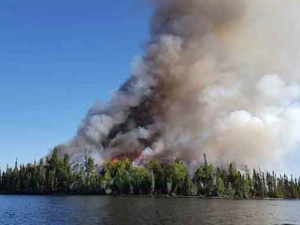 “The northwestern region [of Ontario, Canada] currently has some 19 fires burning, five of which are raging out of control.
 “With the recent heatwave across our region [New Brunswick, Canada] bringing record high temperatures with it, many are staying indoors with air conditioning to beat the heat. But some people don’t have that option.
 “A landspout tornado briefly touched down in New Jersey on Saturday and the high winds flipped over a car.
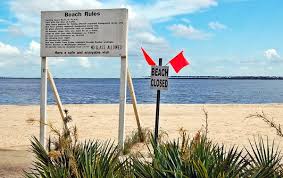 “All of Mississippi’s Gulf Coast beaches have been closed for swimming as the expanding bloom of toxic blue-green algae blankets the state’s waters.
 “France’s vineyards could be forced to move to more northerly climes because of searing summer temperatures. In the final days of last month, when temperatures of up to 114.6F (45.9C) were recorded, the vines in wine-producing areas such as Coteaux du Languedoc were severely burnt.
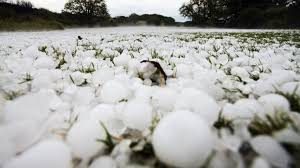 “A huge thunderstorm has bombarded the French region of Auvergne-Rhone-Alpes with hailstones the size of tennis balls, and included a record number of lightning bolts, providing for a deluge of impressive content on social media…
 “The Balearic Met. office confirmed yesterday that, since 1975, a total of 17 heatwaves have hit the Balearics and eight of those have been over the past ten years…
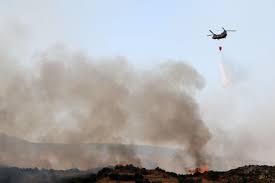 “Firefighters are still battling a stubborn wildfire on the Greek island of Evia, as high winds and soaring temperatures continued to stoke the flames.
 “As reported last night on TCN, parts of Croatia were given a severe and sudden change in the weather after the recent hot spell. In Rijeka, just after midday, for example, the temperature dropped 8 degrees Celcius in 20 minutes, during which time there was a torrential downpour.
 “India’s water crisis is far from even-handed – the elite in Delhi and most other parts of the country remain unaffected while the poor scramble for supplies every day.
 “Farming in the shadow of the world’s highest mountains [Nepal] has never been easy – and climate change is making it even more difficult.
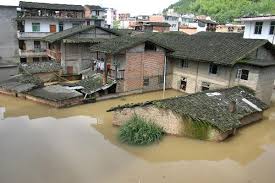 “Heavy rain has wreaked havoc in Nanping city in eastern China’s Fujian province, causing massive floods, turning roads to small rivers and trapping many locals in their homes.
 “The national sheep flock is forecast to fall to 65.8 million head this year, according to Meat and Livestock Australia, one of the lowest numbers since the early 1900s.
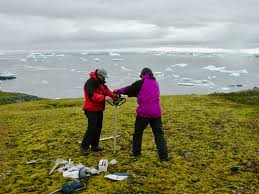 “The regrowth of centuries-old mosses suggests that glaciers and permafrost are not merely graveyards for multicellular life, but they could instead help organisms withstand ice ages.
 “A tornado swept through the north-eastern Chinese province of Liaoning on Wednesday (July 3), killing six and injuring 190, the state broadcaster said, amid a series of “extreme” weather events that government forecasters have linked to climate change.
 “The northwest of China is suffering a strong heat wave where they have reached 48 degrees Celsius.
 “According to the national standard on the division of seasons in China, it marks that Lhasa entered summer on June 23, the first time since the city’s meteorological data was first collected in 1981. Cold drinks and fans have become popular products, a rare scene in Lhasa. Tibet had seen high temperatures and little rainfall since the beginning of June…
 “…researchers found that the limits of survivability would be exceeded in a few locations in India’s Chota Nagpur Plateau, in the northeast of the country, and Bangladesh.
 “Iraq is in a fragile state. The country is trying to rebuild itself after thirty years of near constant war. But a new crisis has emerged that could undermine its recovery – Iraq is running out of water.
 “Greece’s summer heats continues. Temperatures reach 41 degrees Celsius. Heavily affected by the heat are Northern Greece, Thrace and Thessalia, the BNR reports.
 “Around 180 sheep were killed after slipping off a steep Alpine cliff edge, said German authorities – linking the deaths to the heatwave gripping much of Europe.
 “Jamaica did not experience the normal “May rains” this year, and is currently going through a period of drought which is affecting everyone, especially those who farm or sell in markets for a living.
 “At least five people were killed and three are missing in Haiti after a torrential downpour buffeted the capital of Port-au-Prince, the country’s civil protection agency said on Wednesday (Jul 3)…
 “We’re only two and a half weeks into summer, and a common theme of South Florida small talk is “it’s never been this hot.” Tuesday afternoon’s record-breaking 98 degrees reading beat a 1998 high of 95 in Miami, according to the National Weather Service. And we’ve been a few degrees above average for weeks now.
 “Think Alaska is always cold and snowy? Think again. Most of the nation’s biggest state is forecast to bake under record-breaking heat over the next few days, with Anchorage poised to reach its hottest temperature ever recorded…
 “The Arctic is on fire. Dozens of wildfires of an unprecedented intensity have been burning across the Arctic circle for the past few weeks, releasing as much CO2 in just one month as Sweden’s total annual emissions.
 “The torrential rains battering southwest Japan were triggered by a body of warm, humid air sweeping up from the south and smashing into a seasonal rain front extending over central Kyushu and into the Pacific Ocean, according to experts…
 “Waimate and Oamaru [New Zealand] have just recorded their driest-ever June, while Timaru was not far off.
 “This week we learned that there has been a “precipitous” fall in Antarctic sea ice since 2014. That won’t increase sea levels, but it’s still bad because white ice reflects more of the sun’s heat back away from Earth than dark water. As the ice melts, more heat will be absorbed, which will melt more ice.
 “About 1.12 million people in south-western Japan were urged to flee to safety on Wednesday (July 3) as heavy rain continued to lash the region, bringing waist-deep floods in many areas and threatening deadly landslides…
 “Extreme weather in China is becoming increasingly frequent, with temperatures in some regions hitting record highs this year…
 “Eighteen people have died in severe floods in Russia’s East Siberian region of Irkutsk, regional Governor Sergei Levchenko wrote on his Instagram page on Tuesday….
 ““Even if we look at the best case scenario, which means limiting global warming by 1.5C, we are looking at a 36% loss of glaciers,” said Mukherjee, whose fellow editors of this seminal study are Phillipus Wester, Arabinda Mishra and Arun Bhakta Shreshtha.
 “As Mumbai braved a five-day downpour that led to 23 deaths, in Punjab, where the rains show no sign of arrival, the temperature is a searing 50C.
 “The EU’s satellite agency says global-average temperature recorded 0.1C higher than in June 2016. The report comes shortly after the weatherman warned Kenyans of low temperatures.
 “A recently documented long-term drying trend over the Congo Basin could have important implications on the future of the world’s second largest rainforest, according to a study published today in Nature Climate Change…
 “The month of June 2019 has been the hottest month of all times in Hungary, at least since the beginning of statistical record-keeping (1901), according to official sources here on Tuesday.
 “Heatwaves and ski resorts rarely make it into the same sentence, but with hot weather blasting parts of Europe last week, several destinations better known for snow have been baking in record temperatures.
 “Man-made climate change probably made last month’s European heatwave, in which southern France experienced a national record 45.9 degrees, 4 degrees hotter than it would otherwise have been, scientists said on Tuesday.
 “The most extreme drought event in hundreds of years caused a catastrophic die-off of the Sierra Nevada’s mature trees in 2015-2016…
 “Record-breaking heat across Alaska is pushing tourists to beaches, and sending flames across the unseasonably hot, dry state.
 Hawaii already set a multitude of heat records in June with a heatwave that was remarkable for both its duration and intensity…
 “Hurricane Barbara rapidly intensified into a Category 4 hurricane in the eastern Pacific early Tuesday.
 “Shocking new photos have revealed the devastating aftermath of a cold-season tornado that ripped through a Victoria town on Saturday.
 “Data provided by the Copernicus Climate Change Service (C3S), implemented by the European Centre for Medium-Range Weather Forecasts on behalf of the EU, showed that the global average temperature for June 2019 was the highest on record for the month.”
 “… on Sunday afternoon [Cuba recorded] the highest temperature in its history…
 “Southeast Brazil’s Minas Gerais state is suffering from a prolonged drought, with 127 municipalities facing an emergency…
 “Several locations around the country [New Zealand] have experienced the driest first half of the year on record, and Watercare is calling on Aucklanders to use water wisely.
 “Australia’s hottest start to any year extended to a sixth month for day-time temperatures even as conditions moderated in June, while rainfall continued to be very much below average for large parts of the country.
 “The water dropped to critical levels last week at the Angat Dam reservoir in Bulacan, north of Manila [Philippines], Agence France-Presse reported yesterday, as the drought left residents with water shortages for up to 17 hours a day.
 “Parts of the Kyushu region have been inundated with more than 700mm [27.5 inches] of rain since the torrential downpours began, with the weather agency warning that thunderstorms and intense torrential rain could lead to an increasing risk of mudslides.
 “A state of emergency has been declared in Siberia’s Irkutsk region, where river levels have risen to flood and destroy dozens of villages.
 “The Maharashtra government declared a precautionary public holiday on Tuesday in Mumbai [India].
 “June 2019 in Kyiv became the warmest in 139 years of modern record-keeping, according to the Central Geophysical Observatory named after Borys Sreznevskyi.
 “The Czech Republic registered its hottest June since monthly averages have been compiled, with a peak of 38.9 degrees Celsius recorded on June 26, the weather service said Monday.
 “Three of the five Great Lakes and Lake St. Clair are poised to set records for high water levels, a ranking U.S. Army Corps of Engineers expert confirmed Monday, continuing a rising trend weighing on business and property owners from Sault Ste. Marie through the east side of Metro Detroit to western New York.”
 “…because of the erosive power of ice, there is a lot of sand in Greenland.
 “Nowhere on the planet is heating faster [than Svalbard]. This was the message of a report commissioned by the Norwegian Environment Agency, unveiled in February to a stunned audience in Longyearbyen, the archipelago’s de facto capital. People knew things were bad, but it was only when they heard the forecast that they realised how bad.
 “The amount of ice floating in the sea across Antarctica has fallen to a record low just three years after hitting an all-time high. Floating ice levels near the continent increased steadily from 1979 to 2014, when it hit 4.9m square miles, the highest amount on record.
 “The fossil-fuel burning power plants, factories, vehicles, and buildings we’ve already built will, if operated normally over their full lifetimes, almost certainly warm the Earth more than the Paris Agreement climate target of 1.5 degrees Celsius (2.7 degrees Fahrenheit), a new study concludes.”
 “Seven people have died in floods that have devastated the Russian Siberian region of Irkutsk. The water also drove several thousand people from their homes…
 “Torrential rain pounded Japan’s southwestern major island of Kyushu on Monday, hitting 14 inches in 24 hours in one area and triggering landslides and highway closures, with more than 800,000 people urged to evacuate…
 “As the worsening drought shows no signs of reprieve, the price of lamb and other meats are tipped to skyrocket even further.
 “One Tasmanian farming region has seen its driest start to winter since 1930…
 “More than a dozen species of seabirds are in decline off Australia’s southeast coast – likely because of warming ocean temperatures, new research has found…
 “The authorities say 200 homes have been damaged and dozens of vehicles swept away in the city and surrounding districts.
 “It’s been a very warm year for Kotzebue [Alaska] and this summer is no exception.
 “Russia plans to tow a floating nuclear power plant 3,000 miles through the arctic circle.
 “With an average temperature of 18.1 degrees Celsius on days and nights, June 2019 was the hottest June in the Netherlands since measurements began in 1901, the Royal Netherlands Meteorological Institute (KNMI) announced on Sunday.”
 “A wildfire that broke out on Friday afternoon in Almorox, in the Spanish province of Toledo, had razed 3,300 hectares of land by 8pm on Sunday.
 “Indian Prime Minister Narendra Modi on Sunday pushed for greater grassroots water conservation efforts amid concerns weak monsoon rains would push millions of drought-hit people to the edge and hammer agricultural production in Asia’s third-biggest economy.”
 “National June temperature records have fallen in France, Germany, Poland and the Czech Republic while the scorching heat may not peak until Friday and Saturday. …
 “Four départements in southern France were placed on emergency red alert on Friday, the first time the measure has covered such a large area.
 “Authorities said the fire [Spain] likely began when an “improperly managed” pile of manure self-combusted in the heat, causing sparks.
 “Firefighters are battling Thursday to contain a wildfire which broke out near an arms factory near the town of Lavrio, some 50 kilometers (30 miles) southeast of Athens [Greece].
 “Kuwait City: The power consumption index hit a new record high at 14,280 megawatts; breaking the previous record by 20 megawatts…
 “As the ice melts, it forms large glacial lakes, which can threaten local communities such as Hassanabad village with glacier lake outburst floods.
 “India is facing the worst water crisis in its history. A government report estimates that 21 cities will run out of groundwater by 2020. Chennai, the southern metropolis with a population of 10 million, is the first of them.
 “Torrential rain and flash floods have wreaked havoc across southwestern China, with the severe weather blocking roads, destroying homes and forcing locals to evacuate…
 “More than 2,300 houses were flooded due to heavy rains in Russia’s southeastern Siberian region of Irkutsk
 “…why are gray whales dying? Deaths along Mexico to Alaska total nearly 170 now. Five whales were reported in Alaska in just over a week, with three in Southeast, one in Bristol bay, and one near Kodiak.
 “Severe weather has continuously impacted Alberta for a number of days and particularly tough conditions have targetted southwestern regions through Thursday.
 “An Arkansas hailstorm on June 19 produced giant hailstones larger than grapefruits, which were found to be just short of a state record.
 “Marine life along the Gulf of Mexico is not doing well. Vast numbers of oysters, blue crabs, shrimp, and fin fish off coastal Louisiana, Mississippi and bays of Alabama have been killed outright or driven from marshes.
 “Seabirds nesting on the remote Farne Islands [UK] have been hit by heavy rain which killed many of their young, the National Trust has said.
 “The UK’s Met Office recently released “HadSST4”, the largest update since 2011 to its widely used sea surface temperature (SST) record. The new version provides more accurate estimates of SSTs in the period during and after the second world war, as well as over the past decade.
