

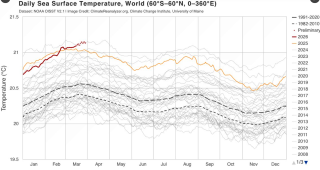
 “The Nino index (Nino3.4) has just reached Nino-neutral, but global SST (sea surface temperature) has matched the highest level for this date, which was achieved during the last El Nino.
“Super warming is clear. Look for a global temperature soon of at least +1.7C, even if the “Super” El Nino turns out to be half-baked.” [Prof James Hansen]
https://x.com/DrJamesEHansen/status/2038979587460551058
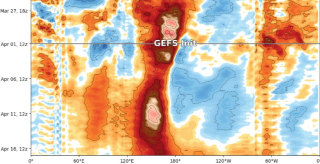 “A huge Kelvin Wave is loading up over the West Pacific. Some TAO Buoys have warmed 1-1.5C in just 3 weeks.
“Once the ocean fully integrates the latest round of intense westerly wind bursts, this Kelvin Wave will be absolutely gigantic, arguably rivalling 1997.” [Eric Webb]
https://x.com/webberweather/status/2039475090853966256
 “Ocean heat content in 2025.
“As of 2025, the global full-depth ocean heat content (OHC) has risen by 481 ± 48 ZJ since 1960, with a pronounced increase of 24 ± 6 ZJ from 2024 to 2025. The highest elevations in OHC were measured in the Southern and Pacific Oceans.”
https://www.nature.com/articles/s43017-026-00775-1
 “‘Fast-food ocean’: climate change is draining sea’s nutrition.
“MIT scientists have found that climate change is altering the nutritional composition of phytoplankton, shifting polar populations toward carbohydrate-heavy, protein-poor cells – a change already detectable in Arctic and Antarctic waters.”
https://oceanographicmagazine.com/news/fast-food-ocean-climate-change-is-draining-seas-nutrition/
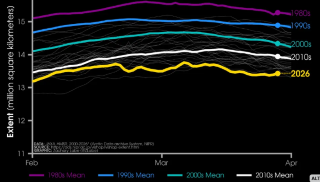 “Monday ice update – Arctic sea ice extent is currently the 2nd lowest on record (JAXA data).” [Zack Labe]
• about 510,000 km² below the 2010s mean
• about 910,000 km² below the 2000s mean
• about 1,460,000 km² below the 1990s mean
• about 1,840,000 km² below the 1980s mean
https://bsky.app/profile/zacklabe.com/post/3mibryep6422v
 “NOAA halts crucial dataset that helps measure Arctic sea ice.
“Researchers studying the long-term effects of climate change are warning that a recent NOAA decision to discontinue an atmospheric dataset will disrupt their monitoring of sea ice and create a gap in crucial observations of Arctic ice thickness.”
https://www.eenews.net/articles/noaa-halts-crucial-dataset-that-helps-measure-arctic-sea-ice/
 “Arctic ice loss brings dual heatwaves to Europe and eastern Asia.
“The Barents Sea, located off the northern coasts of Norway and Russia, might seem too far away to have an impact on our weather. But new research shows that ice loss on the sea is increasing the frequency of concurrent summer heatwaves across Europe and eastern Asia.”
https://www.theguardian.com/news/2026/apr/02/arctic-ice-loss-dual-heatwaves-europe-eastern-asia
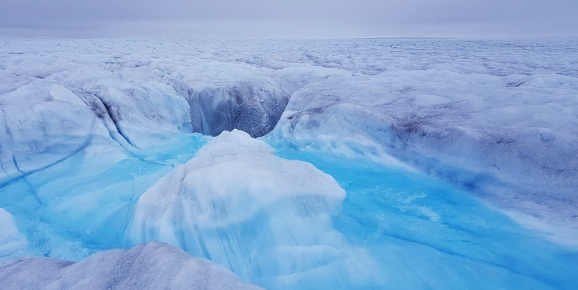 “Lakes forming next to Greenland’s melting ice sheet are speeding up glacier flow.
“A growing network of meltwater lakes at the edge of the Greenland ice sheet is accelerating the flow of major glaciers, potentially increasing the pace of global sea-level rise.”
https://phys.org/news/2026-04-lakes-greenland-ice-sheet-glacier.html
 “Finland sees record March temperatures nationwide.
“Finland recorded its warmest March since measurements began, with new temperature records set across almost the entire country, according to data from the Finnish Meteorological Institute.”
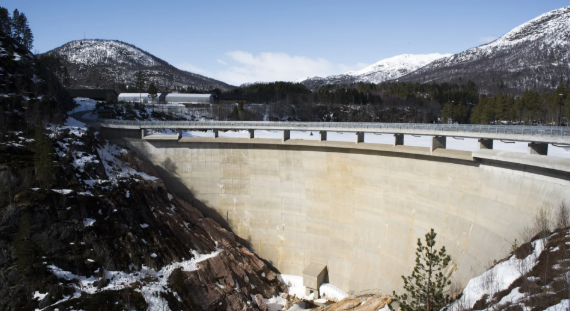 “A Winter Without Snow Depletes Europe’s Clean Energy Reservoir…
“With little precipitation, snow reserves have fallen to their lowest levels in two decades, creating a deficit of about 25 terawatt-hours of energy, according to Tuomo Saloranta, a hydrologist at the Norwegian Water Resources and Energy Directorate. That’s nearly a fifth of Norway’s total hydropower output last year.”
 “March breaks heat and sunshine records, despite wintry spell. [Belgium]
“The average temperature in Uccle was 9.1 C°, well above the normal 7.1 C°. With an average maximum of 15.0 C°, the first fifteen days were even the warmest since observations began back in 1892.”
https://www.brusselstimes.com/2056233/march-breaks-heat-and-sunshine-records-despite-wintry-spell
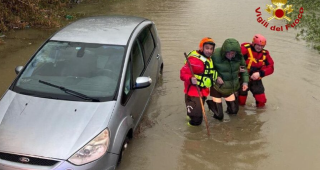 “Bad weather in Molise [Italy]: rivers in flood and evacuations. One and a half meters of snow at high altitude.
“To manage the high amount of water, the discharges from the Liscione dam have been increased, with a consequent rise in the level of the Biferno river and a greater risk of flooding in the downstream areas. The situation of the Trigno river is also critical…”
 “The Greek island of Crete has been cloaked in a choking Saharan dust storm as violent winds and a tornado battered the region, forcing Easter holiday flights from the UK to divert and turning the sky an eerie red-orange.
“Travel chaos unfolded as thick African dust smothered visibility, grounding aircraft and disrupting arrivals at Heraklion’s main airport.”
 “Dust storm creates apocalyptic red skies in Libya.
“A local state of emergency was issued for the city of Tobruk, Libya, after a dust storm turned skies a bright, eerie red. Video from Tobruk on Wednesday shows the world in a red hue as thick dust blocked the sun.”
https://www.foxweather.com/extreme-weather/see-it-dust-storm-libya-skies-red
 “EXCEPTIONAL CONTRASTS IN THE SAHARA – ALGERIA APRIL RECORD COLD -6.0C [21.2F] Assekrem Mts 2710m asl, +2.3C Tamanrasset 1377m.
“Unusually cool in Western Sahel (2C from records). Meanwhile, DEADLY HEAT – 45C in SUDAN (30C at night); 43C in EGYPT. Next days Sudan might reach 46C: war, famine and deadly heat.”
https://x.com/extremetemps/status/2039416417246994452
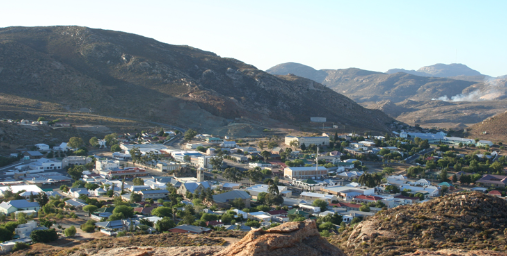 “EXTRAORDINARY HEAT IN SOUTH AFRICA – 42C on the lowlands, 37C in the highlands.
“36.6C [97.7F] at Springbok at 1006m asl: April record smashed. Minimums up to 25C. Record also in the REUNION ISLANDS – 32.8C St Denis. “
https://x.com/extremetemps/status/2039387032892707310
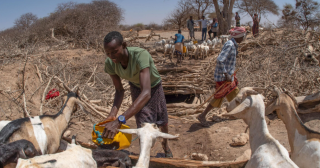 “‘Sharing is off the table’ as drought reshapes the culture of Ethiopia’s pastoralists…
“Pastoralists in Ethiopia’s Somali region say that worsening drought is eroding traditional systems of sharing that once helped communities survive.. Indigenous systems such as Gergar — a form of social insurance — and communal grazing are weakening as households struggle to sustain their own herds.”
 “Iraq ramps up water releases as flooding fills Diyala’s reservoirs.
“Water levels in the Iraqi Diyala province’s main reservoirs have surged after heavy rains, with some nearing or exceeding capacity, Governor Adnan Al-Shammari said on Tuesday. [picture of The Rub’ al-Khali oil desert turning into a floating sea; from Arab Storms].
https://shafaq.com/en/society/Iraq-ramps-up-water-releases-as-flooding-fills-Diyala-s-reservoirs
 “EXCEPTIONAL WARMTH – tons of March records smashed again in Russia and Central Asia, some by over 5C.
“April starts with record heat. HISTORIC 24.9C [76.8F] at Ak Bulak ASIAN RUSSIA (few steps into Asia!). Never been so hot in Asian Russia so early.”
https://x.com/extremetemps/status/2039364681568301233
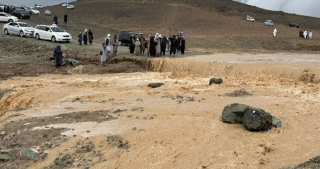 “Taliban: Six People Killed in 24 Hours of Heavy Rain and Flooding. [Afghanistan]…
“Hafiz Mohammad Yousuf Hamad, head of Information and Publications and spokesperson for the Taliban’s Disaster Management Authority, stated that 139 houses were destroyed and 394 houses were partially damaged in these provinces.”
https://8am.media/eng/taliban-six-people-killed-in-24-hours-of-heavy-rain-and-flooding/
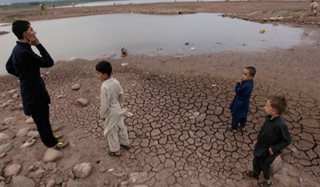 “Pakistan faces worsening water crisis as climate change, demand strain supplies…
““This is an alarming situation, because if we are having less than 1,000 cubic meters water per capita per year, so then the country is really under challenge,” Sohail Ali Naqvi, Director of the Freshwater Program at WWF-Pakistan, said.”
https://www.arabnews.com/node/2638379/amp
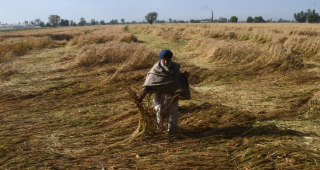 “Unseasonal rain, hailstorm damage wheat crop across Malwa region in Punjab [India]…
“According to Jagsir Singh, Chief Agriculture Officer, Muktsar, nearly 35,000 acres of wheat crop in the district have been affected, with losses ranging between 50 and 75 per cent.”
 “This small city has the world’s worst air.
“The city of Loni is less than one hours’ drive from Delhi, but this rapidly growing industrial base beats the Indian capital when it comes to one unenviable title. Last year, according to Swiss company IQAir, it had the world’s worst air quality.”
https://edition.cnn.com/2026/04/01/india/india-loni-world-most-polluted-city-intl-hnk
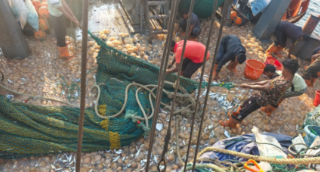 “Climate change-linked warming triggers jellyfish surge in Bay of Bengal, hurting deep-sea fishing.
“A prolonged dry spell coupled with climate change-driven ocean warming is disrupting marine ecosystems in the Bay of Bengal, triggering a spike in jellyfish and forcing fish away from Bangladesh’s traditional deep-sea fishing grounds.”
 “HISTORIC HEAT IN SE/EAST ASIA:
“43C [109.4F] in MYANMAR; 39.2C in VIETNAM; 40.7C in CHINA (five Monthly records broken)… 36.8C in TAiWAN. Records also in Laos, Thailand, India, Koreas…”
[Extreme Temps]
https://x.com/extremetemps/status/2038971285661999452
 “‘My six-year-old has nosebleeds’: Chiang Mai air pollution sparks health fears [N Thailand]…
“Smoke from raging fires have choked parts of northern Thailand this past week, with Chiang Mai ranking among the world’s most polluted cities, according to monitoring group IQAir… Satellite data showed a record number of 4,750 hotspots across Thailand on Tuesday, mostly in forested areas.”
https://www.bbc.co.uk/news/articles/c0le03ne05ro
 “HISTORIC HEAT IN JAPAN:
“30.5C [86.9F] at Hateruma Island today, hottest day ever recorded in Japan so early. If it was one day earlier, it would have been a March national record (30.4C Nago the record). Some stations are already close to their April records. Extraordinary.”
https://x.com/extremetemps/status/2039241228391514155
 “‘Harrowing’: Cyclone Narelle leaves graveyard of turtles, dolphins and seabirds in Western Australia…
““The sheer amount of animals was just disturbing. I’m a pretty positive person, but it was so bad. I just rescued whatever I could,” Davies said. The state government said there had been similar scenes across hundreds of kilometres of beaches along the world heritage-listed Ningaloo coastline since Narelle passed over.”
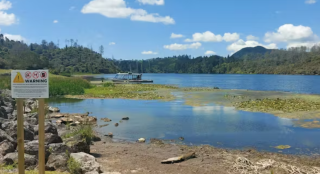 “Toxic blooms and invasive clams are forcing a rethink on the Waikato River.
“The Waikato is New Zealand’s longest river, central to the identity and practices of Waikato River iwi and a source of drinking water for nearly half of the country’s population. It is also becoming a case study in what happens when very different environmental pressures hit the same system faster than authorities can respond.”
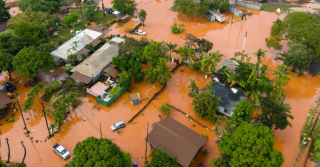 “More than two trillion gallons of water poured onto the Hawaiian islands throughout the month of March, officials at the University of Hawaiʻi confirmed.
“Enough water to fill three million Olympic-sized swimming pools poured onto the islands over a two-week-long period; as high as 3,000 percent of levels usual for this time of the year.”
https://www.khon2.com/local-news/hawaii-rainfall-trillions-gallons/amp/
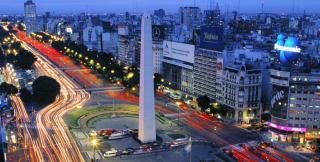 “HISTORIC HEAT WAVE IN SOUTH AMERICA:
“40.2C Sombrero Hovy PARAGUAY 0.6C from April National record, which can fall tomorrow. 39.3 Puerto Suarez, 37.3 Bermejo BOLIVIA records. Min 24.1C 75.4F] Buenos Aires is highest Minimum ever recorded in April.“
https://x.com/extremetemps/status/2039531418934804677
 “ENDLESS RECORD HEAT IN ECUADOR:
“March broke heat records, April starts with records: 36.2C [97.2F] at San Francisco de Orellana ties its record of April highest temperature which was set last year. More records on the way.”
https://x.com/extremetemps/status/2039525258320121895
 “Stark photos show quest for profit cutting swathes through the Amazon.
“…climate scientists and activists have long been sounding alarms about protecting the rainforest. Yet the Brazilian government has recently relaxed environmental controls on several large industrial developments in the region, opening the door to even more harmful changes.”
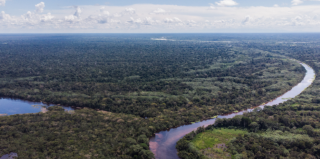 “Peru-Brazil Bioceanic Railway brings too much risk to the Amazon, experts warn.
“Experts warn about the consequences within and around the proposed routes of the Bioceanic Railway between Peru and Brazil, potentially harming Indigenous communities as well as the native Amazonian ecosystem… In July 2025, Brazil and China signed a cooperation deal to conduct feasibility studies on the railway corridor.”
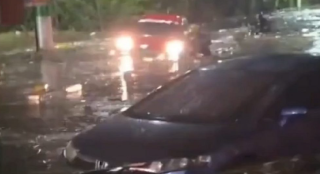 “Villa Hermosa underwater; Streets turned into rivers drag vehicles [Guatemala]…
“According to preliminary reports, the water currents reached such strength that they dragged parked vehicles, generating scenes of chaos and concern among the inhabitants. Neighbors documented in videos how the water level rose rapidly, covering sidewalks, driveways and cars.”
 “RECORD AGAIN IN MEXICO – ALL 31 DAYS OF MARCH, monthly records were smashed in hundreds of stations.
“Some stayed over 2 weeks above their previous records. March Highest Minimums broken again! 23.0C [73.4F] Loreto and 21.6C Mexicali.”
https://x.com/extremetemps/status/2039010567311233392
 “‘God squad’ waives animal protections to expand oil drilling in Gulf of Mexico.
“A US federal panel has voted to exempt oil and gas drilling in the Gulf of Mexico from a decades-old law to protect endangered species. A vote by a committee known as the “God Squad” – because of its ability to influence the future of certain species – followed a request by Pete Hegseth, US secretary of defence.”
https://www.bbc.co.uk/news/articles/cre19zrg5dxo
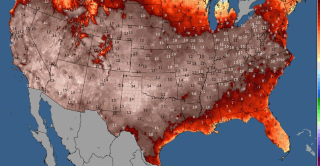 “MARCH 2026 WAS MOST ANOMALOUS MONTH IN US HISTORY – PREVIOUS RECORD WAS MARCH 1910 8.5F above 1881 – 1910 baseline.
“That considering EACH OWN previous 30yrs baseline for every month. So GW is already discounted here. March 2026 wins anyway.” [Extreme Temps]
https://x.com/extremetemps/status/2038916428833927288
 “To have an idea of the exceptionality of this March 2026 in USA, for several stations in the West, March 2026 is being hotter than ANY April on record.
“Monthly anomalies are up to +16F vs 1991/2020 (Flagstaff). Some records exceeded by as much as 4F those of April (Flagstaff again).” [Extreme Temps]
https://x.com/extremetemps/status/2039179957918937334
 “Number of 80°+ days in March in Denver:
“1972-2025: 7 days
2026: 8 days” [Chris Bianchi Weather]
https://x.com/BianchiWeather/status/2039382158020661629
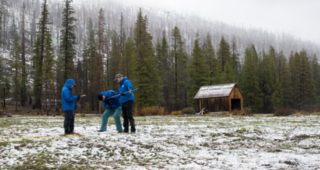 “‘On a whole other level’: rapid snow melt-off in American west stuns scientists…
“Experts warned that even as the heat begins to subside, the stunning pace of melt-off over the past month has left key basins in uncharted territory for the dry seasons ahead.”
https://www.theguardian.com/us-news/2026/apr/01/snowmelt-american-west
 “Warming winters lead to more nitrate pollution in the drinking water near farms [Midwest].
“When pollution gets bad enough in the rivers supplying Iowa’s largest city with drinking water, it costs Des Moines around $16,000 a day to run a special system to filter out dangerous nitrates. It’s a fact of life in the agriculture-dependent state — and climate change is making the water quality problem even worse.”
https://www.independent.co.uk/news/iowa-des-moines-illinois-raccoon-experts-b2950103.html
 “RECORD COLD! QUEBEC -40.4°C [-40.7F] Schefferville = NEW APRIL PROVINCIAL RECORD, breaking -40.0°C in Bonnard in 1994.
“NEWFOUNDLAND & LABRADOR – 35.3°C Wabush Lake, 1.9°C from its monthly record (and April provincial record).” [Thierry Goose]
https://x.com/ThierryGooseBC/status/2039350077265998037
 “March closes as the coldest on record for Anchorage.
“March has officially left the building, with many areas of the state seeing a bitter cold March. While most of the state remained below seasonal values, portions of the Slope have seen above-average warmth for March. The Slope is one of the fastest-warming areas of the state.”
https://www.alaskasnewssource.com/2026/04/01/march-closes-coldest-record-anchorage/
 “How declining cloudiness is accelerating global warming.
“For the past two decades, low-level cloud cover has been declining, increasing the amount of sunlight absorbed by Earth and amplifying global warming… We find that, since 2003, the decrease of cloudiness has been responsible for half of the increase of Earth’s energy imbalance.”
https://www.carbonbrief.org/guest-post-how-declining-cloudiness-is-accelerating-global-warming/
I rely on donations and tips from my readers to keep the site running. Every little bit helps. Can you chip in even a dollar? Buy me a coffee or become a Patreon supporter. A huge thank you to those who do subscribe or donate.
You can read the previous “Climate” thread here. I’ll be back on Monday with an “Economic” thread.

“Our scientific power has outrun our spiritual power. We have guided missiles and misguided men.”
– Martin Luther King, Jr.
Pete “Crusades are Cool” Hegseth must be drooling over the thought of an escalation on Easter, meh…
Wow, I’ve never heard that quote before but it brilliantly and succinctly articulates what I have thought for a long time. Thanks for another keeper!
The Paytriot Missile is a Projectile for the New American Century (PNAC).
https://en.wikipedia.org/wiki/Project_for_the_New_American_Century
>>> The Paytriot Missile is a Projectile
LOL, your wordplay and sense of humor are fantastic rob!
Keep ’em coming – dark gallows humor still works for me.
Quark’s latest is titled “The problem of sulfur (sulfuric acid) puts limits on the energy transition”
https://tinyurl.com/msjjdrrz
Google translated, missing two images:
The price of sulfur (in yuan) has skyrocketed. Since March 2026 it has risen by 50%, but since the beginning of 2024 (in just two years) its price has increased sixfold.
The supply-demand analysis (before the interruption of passage through the Strait of Hormuz) in 2025 makes things very clear.
“ The factors driving this market rally are fundamentally different from those of the two previous cycles (which were dominated by the agricultural chemicals cycle):
1. Supply side:
Global sulfur production capacity is concentrated, with Middle Eastern resources primarily supplying emerging markets such as Indonesia. Meanwhile, Russia, due to force majeure events affecting its refineries (expected to impact 1 million tons of supply in the fourth quarter of 2025), has shifted from a net exporter to a net importer and implemented an export ban, leading to a significant reduction in globally available resources.
2. Demand side:
The impact of demand for traditional agricultural chemicals (phosphate fertilizers) on prices has weakened. This has been replaced by explosive growth in demand from the emerging energy industry. According to reported data, sulfur demand in the energy sector is projected to reach 8% by 2025, a 3 percentage point increase compared to last year.
China’s lithium ferrous phosphate production has exceeded expectations, reaching 2.66 million tons from January to September 2025, with a projected annual total exceeding 3.6 million tons. Based on an estimated consumption of approximately 1 ton of sulfur per ton of lithium ferrous phosphate, this represents a significant increase in sulfur demand.
Indonesian nickel hydrometallurgy (MHP): As a key raw material for power batteries, its production continued to increase, leading to greater demand for sulfur (used in acid leaching), thus diverting international sulfur resources.
The fundamental contradiction : The main reason is that China, as the world’s largest sulfur importer (with an import dependency of almost 50%), lacks pricing power, and domestic prices directly reflect the balance of international supply and demand. The market situation in 2025 is a manifestation of the intense competition for sulfur resources between global supply factors and emerging demand countries (China and Indonesia).
Outlook for 2026: The gap between supply and demand is widening, leading to significant upward pressure on prices
Based on a comprehensive analysis of the report, the sulfur market in 2026 will enter a new stage characterized by a profound interaction between “rigid supply constraints” and “the release of concentrated demand.”
1. The supply side: limited incremental supply, facing a long-term structural contraction
Sulfur is a byproduct of oil refining and natural gas processing. According to IEA forecasts, in the context of the energy transition, global refining capacity and processing volume will peak after 2035 and then gradually decline, fundamentally limiting the long-term ceiling for sulfur supply.
In 2026, China is expected to add approximately 400,000 tons of supply, and the Middle East is expected to increase production by approximately 2.1 million tons. However, the recovery of Russian refinery capacity remains uncertain (it is expected to be difficult to recover in the first half of 2026), and the global sulfur supply remains tight.
2. The demand side: New energy demand is accelerating with a “dual engine” approach
Chinese demand for lithium ferrous phosphate remains strong: with a penetration rate above 80%, lithium ferrous phosphate production is expected to remain high, providing firm support for sulfur demand.
Indonesia’s MHP production is nearing peak: this is the most critical demand variable for 2026. The report predicts that approximately 658,000 tons of new MHP production capacity will come online in Indonesia in 2026. Based on the industry standard of 10 tons of sulfur consumed per ton of MHP, this will generate an additional demand of approximately 6.58 million tons of sulfur. This massive demand will have a significant impact on already strained international trade flows.
3. Supply and demand balance and price outlook
Large supply-demand gap: The report’s model predicts that between 2025 and 2027, the global sulfur market will face supply and demand gaps of -300,000 tons, -5.13 million tons, and -4.05 million tons, respectively. 2026 is projected to be the year with the largest gap and the most pronounced imbalance.
Driven by a large gap between supply and demand, the average price of sulfur is expected to rise further in 2026. The market will test and potentially break the historical price range of 4,000-6,000 RMB/ton, and the magnitude and duration of the upward trend may exceed market expectations.
Looking further ahead, if sulfur solid-state battery technology is commercialized, the demand for high-purity sulfur will be several times greater than that for traditional lithium-ion batteries, potentially opening up new strategic growth opportunities for sulfur.”
The growth in demand for sulfur-sulfuric acid is therefore driven by leaching and hydrometallurgical processes related to the energy transition, while supply is constrained by the reduction in the production of “sour” oil and gas (fossils with a high sulfur content). Global oil production has been dependent on increased shale oil and gas production, but these light products are also sweet (i.e., with a low sulfur content) and therefore contribute less sulfur in the refining-desulfurization process.
AI tells us…
Sulfuric acid ( H2SO4 ) and elemental sulfur are critical inputs in modern mining and hydrometallurgy, primarily acting as leaching agents to dissolve valuable metals from their ores, especially in the production of copper, lithium, zinc, and nickel. Global demand for these metals for clean energy is increasing the need for sulfuric acid from the current 246 million tons to an estimated 400 million tons by 2040.
The following details the sulfur/sulfuric acid requirements for each process:
1. Copper (Cu)
It is the largest consumer of sulfuric acid in mining.
Oxide leaching: Dilute sulfuric acid is used to dissolve oxidized minerals (malachite, atacamite) in leaching heaps.
Solvent Extraction and Electrowinning (SX-EW): The acid leaches the copper, forming copper sulfate, which is then purified and electrolyzed to obtain pure copper cathodes.
Self-production: Many copper mines obtain the acid from the sulfur dioxide (SO2) generated during the smelting of copper sulfides, creating a reuse cycle.
2. Lithium (Li)
Spodumene Processing: Sulfuric acid is essential in the “hard rock” route. After roasting the spodumene, it is mixed with sulfuric acid at high temperature (approx. 250°C) to convert the lithium oxide into water-soluble lithium sulfate (Li2SO4).
Consumption: Between 300-400 kg of sulfuric acid are used per ton of processed spodumene concentrate.
Precipitation: Acid is used to adjust the pH and precipitate impurities such as iron and aluminum.
3. Zinc (Zn)
Calcine leaching: The zinc concentrate is roasted to form zinc oxide (ZnO). This is then leached with dilute sulfuric acid (usually from recycled electrolyte) to form zinc sulfate (ZnSO4).
Recovery of by-products: Acid is key to extracting associated valuable metals such as gallium and germanium.
4. Nickel (Ni)
High-Pressure Acid Leach (HPAL): Sulfuric acid is used in high-pressure and high-temperature leaching processes to extract nickel and cobalt from lateritic minerals.
Separation: It is essential to separate nickel from other elements in the ore.
Strategic Importance of Sulfur
Acid Production: Sulfuric acid is produced mainly by burning elemental sulfur (S), which is a byproduct of oil and gas refining.
Supply risk: Dependence on this acid makes metal production sensitive to sulfur availability and energy prices.
In summary, sulfuric acid acts as the “universal solvent” in hydrometallurgy, facilitating the energy transition by enabling the extraction of these strategic metals from their ores .
On the other hand, we must remember that phosphoric fertilizers require sulfur, as I mentioned the other day .
“ The phosphate chain hides a dependency that barely makes the headlines: sulfur. Manufacturing DAP or MAP requires treating phosphate rock with sulfuric acid, and producing one ton of these fertilizers consumes around 0.4 to 0.5 tons of sulfur —closer to 0.4 in the case of DAP and slightly more for MAP . Without sulfur, there is no soluble phosphate, and that is why the closure of Hormuz doesn’t just affect urea; it also disrupts the phosphate chain .”
The distribution of consumption by sector in 2026 .
The fertilizer sector still consumes most of the sulfur, but the energy transition boom is increasing demand far above the growth in the fertilizer sector, while supply remains restricted to an increase in gas and oil production far below the growth in demand, creating a structural deficit in the sulfur and sulfuric acid market.
To clarify the current situation, a January 2026 HDIN Research report quantified a projected deficit of 5.13 million tons before the closure of the Strait of Hormuz. Market tensions had quadrupled sulfur prices in 2024-2025.
“ While the phosphate fertilizer industry remains the cornerstone of sulfur consumption, the report identifies the new energy sector as the primary driver of future growth. The industrialization of Indonesia’s nickel resources is reshaping the demand landscape.
The rapid expansion of high-pressure acid leaching (HPAL) projects in Indonesia, which require significant quantities of sulfuric acid to process nickel ore, is creating exponential growth in consumption. The report estimates that by 2026, the global sulfur supply deficit could reach approximately 5.13 million tons, driven largely by the battery materials sector, including lithium iron phosphate (LFP) chains .”
And right at this moment, the biggest disruption in history occurs.
What we are witnessing is only the beginning. Sulfur stockpiles have remained relatively stable, but as time goes on, we will move from soaring prices to shortages, with multiple problems affecting phosphorus fertilizers and the metals needed for electric vehicle batteries, not to mention the impact on copper mining.
The paradox is that the more oil and gas we eliminate due to the energy transition, the greater the deficit we will find in sulfur-sulfuric acid production, halting some nickel-copper production. This is a real and significant problem, unaffected by whether or not the closure of the Strait of Hormuz is prolonged.
Why isn’t this problem being discussed?
Of course, sulfur is very abundant in the Earth’s crust, but changing the way we obtain it would take decades, and we don’t have that time, not to mention the associated price increase.
That makes my head spin. It’s a miracle I passed chemistry in high school. The hypercomplexity of industrial civilization boggles my mind. All sooooo unnatural. All soon to be over.
As Bob Shaw said earlier this year:
“What will be crystal clear in the far future geological & fossil record will be how jagged & rapid the Seneca Descent will have affected our present numbers of 8 billion plus…A thin sedimentary layer highly infused with radioactive nanoplastics & other forever chemicals with distorted DNA in all fossilized lifeforms.”
A THIN SEDIMENTARY LAYER
🤯
No one really believes any more in a solution to humanity’s problems. That category itself is spurious because it either straightforwardly means “avoiding the consequences of structural problems for myself and my identity group” or is a means to the end of building or advancing a career in industries/fields that involve public/social work (which is the same thing with more steps).
Technically all industries/fields are “social work”, because all economic activity is highly socialized (interconnected) at a global scale. The contradiction between the essence of that economic activity being violent surplus accumulation and its development towards a highly socialized form which simultaneously demands global cooperation/coordination, is what manifests practically as irrationality and incoherence in every sphere of political and social life.
Seems the only “transition” Homo collossus, the superorganism, techno-industrial civilization (whatever you want to call it – Earth won’t remember or care once it finally rids itself of us) will undergo is from its late stage to its end stage.
Perhaps we are living (so far 🤞🏻) through the era of techno-terror-industrial barbarism?
Hi Rob. I like it – techno-terror-industrial barbarism is a mouthful, but I’ll try it out and see if it sticks.
40% of a doubling in the earth energy imbalance due to temperature to cloud feedback means an exponential effect is dominating and will lead to an almost inevitable runaway to hot house conditions no matter what green house gas emissions do from now on.
Should be 40% of half of the doubling, but it’s still the same effect, an exponential feedback will always eventually dominate over everything else, and almost always much more quickly than you’d expect.
This came to my mind, since in my youth, I directly learned of the nitrogen cycle keeping tropical fish in aquariums.
Critically crucial in maintaining a balanced healthy aquatic ecosystem.
So, found this paper and would like to share here today.
Alteration in nitrogen cycle and its contribution to climate change: a review
Review Article
Published: 26 September 2025
Human activities have disrupted the global nitrogen cycle, fundamentally altered Earth’s biogeochemical processes and accelerated climate change. Reactive nitrogen in the environment has increased 400% since pre-industrial times. In contrast, nitrous oxide (N2O), a greenhouse gas 265 times more potent than CO2, has risen 20% in atmospheric concentrations due to agriculture and fossil fuel use. This comprehensive review analyses natural and anthropogenic nitrogen sources, showing how synthetic fertilizers, livestock operations, and industrial emissions create cascading environmental impacts across terrestrial, aquatic, and atmospheric systems. Nitrogen pollution triggers water body eutrophication, soil acidification, biodiversity loss, and disrupted carbon sequestration. Complex feedback loops between nitrogen and carbon cycles amplify climate impacts, while agricultural runoff creates hypoxic dead zones threatening ecosystem stability. Evidence-based mitigation strategies include precision agriculture, enhanced fertilizer management, emission controls, and policy interventions, emphasizing urgent need for integrated approaches to restore nitrogen cycle balance.
Understanding the Crucial Role of the Nitrogen Cycle in Sustaining Ecosystems
https://bicyclepotential.org/blog/understanding-the-crucial-role-of-the-nitrogen-cycle-in-sustaining-ecosystems
Well, someone suggested purchasing nitrogen fixing plants while they still can. All I know when I kept tropical fish was when the water was crystal clear and sweet with the fish very active and healthy my nitrogen tank water was in balance.
Much appreciated, VPK.
That is very close to what Sam Carana has been saying on his Arctic blog for more than a decade now, George, and the timeframe for the curve to start going exponential begins this year. Meanwhile, the CO2 levels on the NOAA webpage, after being suppressed by the 50” of rain over several days, have been > 5ppm above last year’s for > week (today’s is 4.8ppm) … it’s usually ~2.5ppm.
A short lesson in chemistry… The by-product factory 🙂
We have told ourselves that the modern economy runs on energy.
That is only partially true. What we have actually built is a system that runs on the by-products of energy production.
Refining is not a combustion process, but a separation process. Crude oil is not simply turned into fuel, but split into dozens of fractions. Each fraction finds its way into an application. What was once waste has, over time, been systematically transformed into a resource.
Sulfur is the purest example of this.
Once an unwanted residue, removed to make fuels cleaner. Today, it is the basis of sulfuric acid, the most widely used industrial acid in the world. Without sulfuric acid, there is no large-scale mining of copper, nickel, and cobalt. Without those metals, there is no electrification.
And it doesn’t stop there. Sulfuric acid is also essential for the production of phosphate fertilizers. This means that the same process directly underpins food production. What begins as a by-product of fossil refining ends up as a prerequisite for both agriculture and the energy transition.This is not a detail. This is structure.
The modern economy is not an oil system, but a by-product system.
And that is where the fault line lies.The availability of these by-products is not autonomous. They follow the main production stream. Less oil and gas processing means less sulfur. Less sulfur means less sulfuric acid. That translates directly into constraints in mining, agriculture, and the chemical industry. This is exactly the kind of shift that is missing from conventional analyses. The focus remains on primary energy flows, while the derived flows—often more critical—remain out of sight.
On top of this comes a second layer: water.
Sulfuric acid does not exist without water. It is not a dry substance, but a liquid medium that enables reactions. In mining, it is used in hydrometallurgical processes that require large volumes of water to dissolve ores, separate metals, and transport residues. Every ton of extracted metal is not only an energetic achievement, but also a hydrological one. This makes the system doubly dependent: on fossil production (for sulfur) and on water availability (for processing).
In both domains, pressures are increasing. Fossil production is stagnating or shifting geographically. Water is coming under stress due to drought, agriculture, and competition between sectors.
No sulfur means less acid. No water means no process. And without process, there are no resources.
The problem thus shifts from energy to chemistry, and from chemistry to water. That is the underlying logic that often remains invisible in the debate on the energy transition. The turbine, the battery, and the grid are in the spotlight. But the real limits lie elsewhere.In the by-products. In solubility. In water. That is where it is decided what can still be made — and what no longer can.
T
here is one reaction that summarizes the entire chain:
S + O2 + H2O -> H2SO4
Sulfur + oxygen + water -> sulfuric acid
That’s all it is. But also nothing less. And then this happens:
Ca3(PO4)2 + 2 H2SO4 -> Ca(H2PO4)2 + 2 CaSO4
Insoluble phosphate rock + sulfuric acid -> soluble fertilizer
This is the moment when stone becomes food.
Without this step, phosphate remains inert in the ground. Unavailable to plants. With this reaction, it becomes accessible, transportable, industrially usable. This same chain connects three worlds: refining (sulfur), mining (metals), agriculture (fertilizers)
And in all three, water plays the silent central role.
Sulfur comes from fossil processing. Water enables the reaction. Acid unlocks the resources.
Remove one element and the chain breaks. No sulfur -> no acid. No water -> no reaction. No reaction -> no fertilizer, no metals.
What remains is no longer an energy problem. It is chemistry.
And chemistry does not negotiate.
Zip, thank you for the explanation and easily understood by someone who barely past high school chemistry also.
Water, Purity of Essence, P.O.E. , from the movie “Dr. Strangelove”
https://www.youtube.com/watch?v=m4BBZ4h1Ll4
A little bit of comic relief here today. Hope you dont mind
Not at all — this is actually perfectly chosen 🙂
That scene from Dr. Strangelove or: How I Learned to Stop Worrying and Love the Bomb is brilliant because, in an absurd way, it touches exactly on what we’ve been discussing: water as something fundamental… but completely misunderstood.
In the film, “Purity of Essence” becomes a paranoid obsession. What we’re dealing with here is far more prosaic, but arguably more fundamental: water as an industrial prerequisite. Not ideological, but physical. Not a conspiracy, but a constraint.
And there’s a nice irony in that.
While General Ripper fears “contaminated water” as a threat to the human body, we are dealing with a system that depends on vast quantities of water just to function — chemically, agriculturally, industrially.
The issue is not purity.
The issue is availability.
So yes, a bit of Dr. Strangelove in the middle of sulfuric acid and hydrometallurgy… it actually fits surprisingly well 😄
Thank you, all, as ever, for your splendid comments. My apologies that I don’t have time to reply this evening. I must head off now to attend a high school production of Romeo and Juliet.
Parting is such sweet sorrow, that I shall say good night till it be morrow. 🙋♂️
Sure will be a fine performance and enjoy . They grow up so fast. Remember my school time play, very nice
Easy to understand. Thanks, Zip.
😱