

Special sponsor for March 2026 is [you?]. Contact me here if you fancy helping me to keep cranking these threads out and spending a month atop the C&E wall of fame.
 “Carbon dioxide overload, detected in human blood, suggests a potentially toxic atmosphere within 50 years.
“Studies indicate that, after this time, elevated atmospheric carbon dioxide, leading to CO2 accumulation in the body, has the potential to cause a range of adverse health effects. These findings highlight the urgent need for significant reductions in anthropogenic CO2 emissions to safeguard public health.”
https://link.springer.com/article/10.1007/s11869-026-01918-5
 “End-of-century Arctic Ocean phytoplankton blooms start a month earlier due to anthropogenic climate change.
“…climate change is altering Arctic phytoplankton bloom phenology. We use an ensemble of Earth system model simulations to isolate the impact of climate change on the timing, duration, and importance (relative contribution to total net primary production) of the bloom.”
https://www.nature.com/articles/s43247-025-02807-y
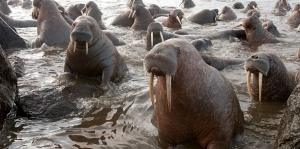 “Climate Change Drives Walruses Northward.
“The Arctic is warming faster than any other region on Earth. What appears in scientific diagrams as a simple temperature curve represents a profound upheaval for the animals of the North. The fate of the Pacific walrus is particularly striking.”
https://polarjournal.net/climate-change-drives-walruses-northward/
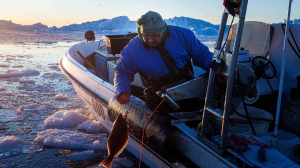 “‘It’s too warm’: Greenland’s traditional fishers pushed towards polluting practices as ice melts…
“Traditional ice fishermen who make up half the local industry are seeing the most dramatic changes to the way they fish. “My father was fishing from the sea ice” one and a half metres thick, recalls Karl Sandgreen, head of the Icefjord Center that documents climate change in the region and is based in the town of Ilulissat.”
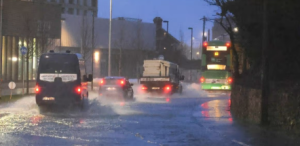 “Dublin Airport recorded its wettest February ever, with rainfall 255% above average.
“Parts of Dublin received 2½ times their normal rainfall in February, Met Éireann’s analysis of last month’s deluge shows. Rain at Dublin Airport was 255 per cent of the average expected for the month, which was its wettest on record…”
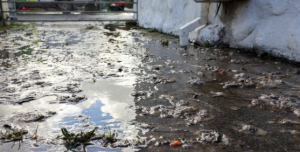 “‘Horrendous’ sewage issue turns residents of Cornwall village into ‘shells of people’…
“Since the start of the year and a series of storms, Stithians has been plagued by raw sewage, with parents having to dodge what has been described as “lakes of poo” as they take their children to school, with passing cars splashing the foul fluid.”
https://www.cornwalllive.com/news/cornwall-news/horrendous-sewage-issue-turns-residents-10846210
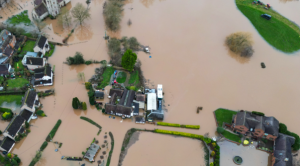 “Wet winter, hot summer? What ‘climate whiplash’ means for the UK.
“After a dry 2025 with the UK’s warmest summer on record, winter 2026 delivered something very different: rain for 50 days in a row in parts of Devon and Cornwall, one of the rainiest seasons on record and only 80% of average sunshine.”
https://theconversation.com/wet-winter-hot-summer-what-climate-whiplash-means-for-the-uk-277353
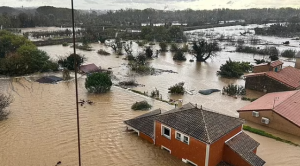 “France experiences an ‘unprecedented’ winter, with a series of storms, major floods and record rainfall.
“In the words of Christine Berne, a climatologist at Météo-France, February shifted the season into the “unprecedented.” With rainfall totals equivalent to twice the seasonal norm, it became the wettest February ever recorded since measurements began in 1959, surpassing 1970.”
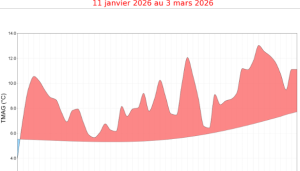 “It has now been 51 consecutive days, since January 12, that the national thermal indicator over France has been above the 1991-2020 normals, a record-breaking streak still ongoing and far from over!
“Previous record: 46 days from October 30, 1994 to December 14, 1994.” [Mystere Meteo]
https://x.com/MystereMeteo/status/2029202125301936161
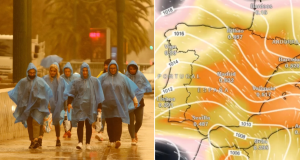 “March looks set to bring further bad weather to Spain, with Storm Regina forecast to be accompanied by so-called ‘blood rain’ from North Africa.
“Storm Regina storm marks the start of a wet March with storms forecast across much of the country. Strong wind will also affect large areas, bringing gusts and coastal storms.”
https://www.thelocal.es/20260303/storm-regina-to-bring-blood-rain-and-strong-winds-to-spain
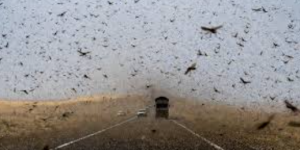 “Algeria’s gambit amid a locust invasion.
“A full-to-the-hilt government mobilisation against desert locust spread in Algeria’s southwest comes as massive agricultural investments in the region face persistent structural risks.”
https://apanews.net/algerias-gambit-amid-a-locust-invasion/
 “Rising temperatures pose a threat to tropical insects.
“In a single lowland area of forest the number of insect species can exceed 25,000, according to current estimates. However, writing in Nature, Holzmann et al.3 provide disconcerting evidence that this remarkable diversity could be threatened by climate change, particularly in the tropical lowlands.”
https://www.nature.com/articles/d41586-026-00377-3
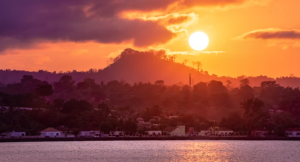 “EXTRAORDINARY HEAT ALL OVER THE TROPICS…
“The tiny island nation of SAO TOME AND PRINCIPE [Gulf of Guinea] has been with no-stop record heat for years. On 1 March with 34C [93.2F] had its MARCH HOTTEST DAY IN HISTORY.”
[Extreme Temps]
https://x.com/extremetemps/status/2029089131205423612
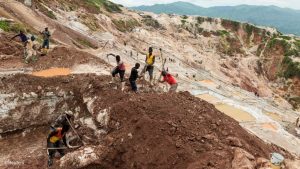 “A landslide triggered by heavy rains has killed more than 200 people at the Rubaya coltan mine in the eastern Democratic Republic of the Congo, authorities said.
“DRC’s Ministry of Mines said on Wednesday that about 70 children were among the victims, and others who were injured were evacuated to medical facilities in the city of Goma…”
https://www.aljazeera.com/news/2026/3/4/more-than-200-killed-in-landslide-at-drc-coltan-mine
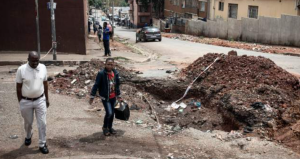 “South Africa: Making sense of a water crisis after historic floods.
“Some of our city’s suburbs have experienced disruptions to domestic water supply for weeks at a time, and city officials warn of even worse times ahead. It is hard to imagine that taps are running dry in the country when just a month ago, the region experienced one of the worst floods in its recorded history.”
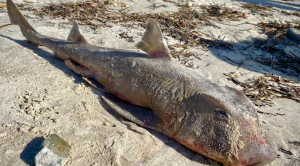 “Toxic residues endanger coral reefs in South Africa’s marine protected areas.
“Transported hundreds of kilometres by rain, rivers and ocean currents, toxic chemicals are finding their way into the Indian Ocean and building up in the fragile coral reefs between Lake St Lucia and Kosi Bay.”
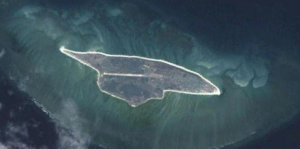 “Record heat wave continues in Southern Africa.
“Brutally hot night in JUAN DE NOVA ISLAND with a minimum of 29.6C [85.3F] – HOTTEST MARCH NIGHT IN FRENCH SOUTHERN TERRITORIES. A shower later caused a drop in temperature. New severe heat wave on the weekend.”
https://x.com/extremetemps/status/2028767137360499044
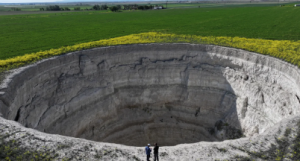 “‘I live in constant fear’: surge in giant sinkholes threatens Turkey’s farmers…
“…the land is drying up. Turkey is on the brink of a major drought crisis, with almost 90% of the country at risk of becoming desert. Sinkholes are appearing in farmland in the region at an increasing pace. Experts say there are now almost 700, causing uncertainty and devastation for the farmers who live and work there.”
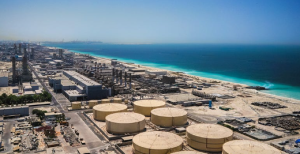 “Iran war: Water shortages emerge as strategic risk…
“A leaked 2008 US diplomatic cable from Riyadh stated that the Jubail desalination plant supplied over 90 per cent of Riyadh’s drinking water and warned that the capital “would have to evacuate within a week” if the plant, its pipelines, or associated power infrastructure were seriously damaged or destroyed.”
 “RECORD HEAT WAVE IN SOUTH ASIA:
“A heat never seen been before this time of the year in India, Pakistan and Afghanistan. Temperatures already close to 40C in Rajastan north of 30N, 2C/3C above the early March records.”
[Extreme Temps]
https://x.com/extremetemps/status/2029234395442495987
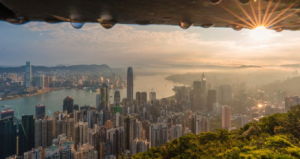 “Hong Kong has just experienced its warmest winter on record, the city’s observatory has confirmed.
“February, which saw “unseasonably warm” weather and mean temperatures 3C above the normal, marked the end of the city’s hottest winter since records began in 1884.”
https://earth.org/hong-kong-sees-warmest-winter-on-record/
 “Record heat never ends in CHINA.
“Temperatures up to 35C [95F] and some records of early March highest temperature broken. Expect more records throughout the month.”
https://x.com/extremetemps/status/2028835689090126334
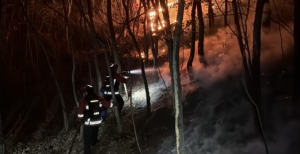 “South Korea faces record dry winter for second consecutive year…
“Winter precipitation for 2025, tallied from December 2025 to February 2026, was recorded at half the average level, continuing the dry winter trend for the second consecutive year. This January, the national average humidity hit a 53-year record low.”
https://www.dongascience.com/en/news/76636
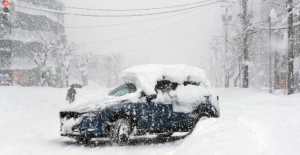 “Study: Global warming boosts snow 7% in northern Japan…
“In Aomori, the snow accumulation exceeded 180 centimeters, prompting a request for the Self-Defense Forces to provide disaster relief. In the Takanosu district in Kita-Akita, Akita Prefecture, the highest snowfall on record was reported.”
https://www.asahi.com/ajw/articles/16399008
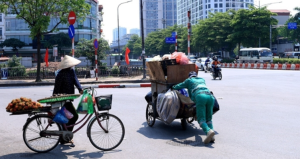 “Vietnam’s Future Under A Warming World: The Growing Challenge of Heat Stress.
“…extreme heat exposure will be a significant threat to health and labor productivity in Vietnam and could have severe socio-economic consequences. We emphasize the urgent need for proactive planning and targeted adaptation measures.”
https://www.afd.fr/en/resources/vietnams-future-under-warming-world-growing-challenge-heat-stress
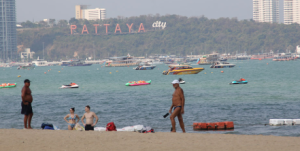 “Thailand is boiling.
“Minimum temperatures up to 29C, extreme moisture and max. temperatures up to 40C [104F]. Nearly half of the stations in the Central-South are at record hot levels. Monthly records keep falling…”
https://x.com/extremetemps/status/2028813794403586110
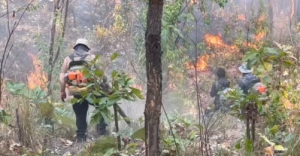 “Multiple districts across Chiang Mai are stepping up efforts to contain forest fires, with authorities determined to prevent flames from spreading overnight.
“Forest fire control teams in affected districts have been deployed at full capacity following reports of increasing hotspots, as the province’s wildfire situation shows an upward trend.”
https://www.chiangmaicitylife.com/citynews/general/chiang-mai-ramps-up-firefighting-efforts/
 “SE ASIA RELENTLESS RECORD HEAT.
“Over 1000 consecutive days of breaking heat records every single day in Indonesia and Philippines and Thailand… Indonesia: Min 28.5 [83.3F] Manokwari all time record hottest night.”
https://x.com/extremetemps/status/2029382531901198817
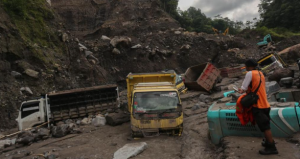 “Destructive cold lahar at Mount Merapi sweeps away vehicles following heavy rain, Indonesia.
“Heavy rainfall on March 3, 2026, triggered a destructive volcanic mudflow on Mount Merapi’s Kali Senowo channel in Magelang Regency, Central Java, Indonesia, sweeping away at least three trucks and one car.”
https://watchers.news/2026/03/03/merapi-lahar-volcanic-mudflow-indonesia-march-3-2026/
 “Tiny, lost and constipated: what a baby turtle told Australian scientists about warming seas…
“The baby turtle was found stranded in New South Wales’s Booderee national park last April, much further south than the usual hatching grounds. After days of feeding on squid, sardines and marine vitamins, BB, whose sex cannot be determined until it is fully mature, revived.”
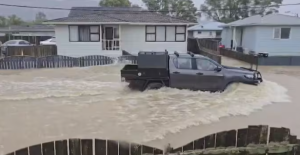 “‘Extremely active’ summer brought record rain, deadly storms [NZ].
“New Zealand’s summer was shaped by an “extremely active pattern across the country”, with lower than normal air pressure and a weak to moderate La Niña helping drive months of volatile weather…”
https://www.1news.co.nz/2026/03/05/extremely-active-summer-brought-record-rain-deadly-storms/
 “RECORD HEAT IN OCEANIA:
“Record heat in Oceania never ends… Today hottest March day in history in the MARSHALL ISLANDS with 34.4C [93.9F] at Majuro Atoll, after breaking records of all past months.”
https://x.com/extremetemps/status/2029092382982213738
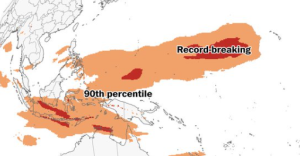 “Another high-end, locally record-breaking westerly wind burst is ongoing in the western Pacific.
“It’s still early, but this burgeoning El Niño appears to be built different and so far has characteristics similar to big events in the past.” [Ben Noll]
https://x.com/BenNollWeather/status/2029210270388895794
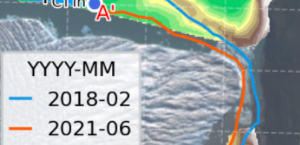 “Perito Moreno has been stable for over 100 years, but this is no longer the case [Argentina].
“Iconic Patagonian glacier has entered an unstable retreat phase since 2018, increasingly rapid in recent years. Retreat has been delayed until then by a morainal bank.”
https://x.com/subfossilguy/status/2028922695098724576
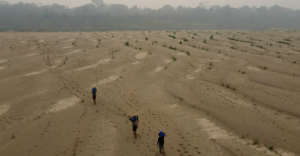 “Falling Amazon river flows trigger reality check at Belo Monte power plant.
“Brazil’s largest Amazon hydropower plants are becoming increasingly vulnerable to climate change, and Belo Monte may be the clearest warning sign yet… the mega-dam is facing a problem its planners could not solve with engineering: less water.”
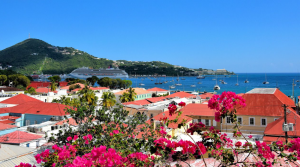 “HISTORIC HEAT IN THE CARIBBEAN – 90F/32.2C Charlotte Amalie US VIRGIN ISLANDS HOTTEST MARCH DAY IN HISTORY.
“After breaking all records of all months of 2023, 2024, 2025 and 2026 multiple times each month.”
[Extreme Temps]
https://x.com/extremetemps/status/2028907465728012660
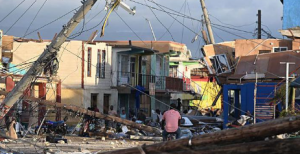 “The WMO Hurricane Committee has retired the name Melissa because of the destruction it caused in the Caribbean in 2025.
“It will be replaced by Molly on the list of rotating names.”
https://x.com/WMO/status/2029239901166735429
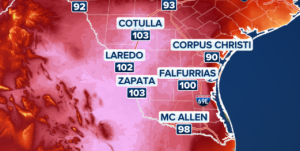 “Another 100F day [Texas]!
“Weeks with full summer conditions between February and early March – never happened anything remotely close to this. Next days absolutely insane heat wave with summer conditions in 2 dozens States and widespread 80s and several 90s.”
https://x.com/extremetemps/status/2029013353436414237
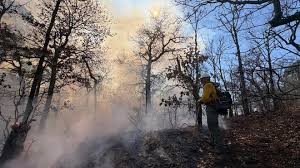 “Oklahoma’s warmest winter on record driving drought, wildfires.
“A report from the Oklahoma Mesonet shows climatological winter ended with an average statewide temperature of 44.3 degrees, about 4 degrees above normal. February also shattered previous records with an average of 51.1 degrees, which is 8.7 degrees warmer than normal.”
 “EXCEPTIONALLY MILD US WINTER.
“Winter 2025-2026 was the 2nd warmest winter on record for the Contiguous U.S. according to Prism climate data, just behind 2023-2024. The widespread record warmth in the west easily outweighed the cool temps in the east”. [Brian Brettschneider]
https://x.com/extremetemps/status/2028811367906419006
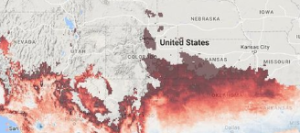 “It’s been so warm for cities like Denver, Colorado that even phenological spring has arrived there according to the first leaf out! Wow!”
[Zack Labe]
https://bsky.app/profile/zacklabe.com/post/3mg6ro3pptk2k
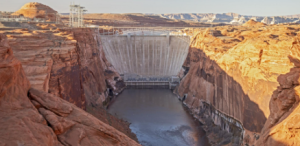 “California, Arizona and Nevada press Trump administration to rethink Colorado River water cuts…
“The three downstream states said in letters to the Interior Department this week that the agency’s preliminary outline of five options for cuts ignores the foundational “Law of the River” that has underpinned how seven western states operate for more than a century.”
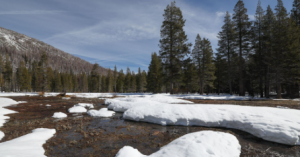 “The melt-off of California’s snowpack in the middle of winter has been nothing short of incredible in the last 2 weeks.
“Many areas that saw 4–7 feet of snow two weeks ago have barren ground today.”
[Colin McCarthy]
https://x.com/US_Stormwatch/status/2029448590423417065
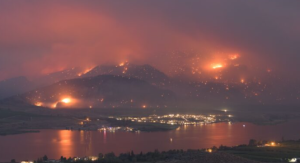 “Canadian drinking water at risk long after wildfires, UBC study warns.
“A UBC-led global review finds that wildfire-related pollution can threaten drinking water for years after flames are extinguished, highlighting long-term risks for Canadian communities and the need for coordinated monitoring and preparedness.”
https://news.ubc.ca/2026/03/canadian-drinking-water-at-risk-long-after-wildfires/
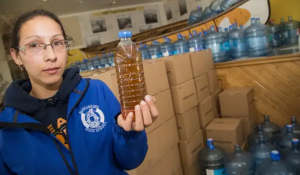 “Climate change is worsening water crisis for Canada’s largest First Nations population…
“On top of agriculture and climate factors, corporations like BlueTriton (formerly Nestlé) have a history of extracting water without consulting and securing consent from Six Nations.”
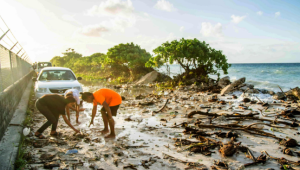 “Global sea levels have been underestimated due to poor modelling, research suggests…
“Globally, the research found ocean levels are an average of 30cm higher than previously believed, but in some areas of the global south, including south-east Asia and the Indo-Pacific, they may be 100-150cm higher than previously thought.”
I rely on donations and tips from my readers to keep the site running. Every little bit helps. Can you chip in even a dollar? Buy me a coffee or become a Patreon supporter. A huge thank you to those who do subscribe or donate.
You can read the previous “Climate” thread here. I’ll be back tomorrow with an “Economic” thread.

I translated and pasted in the text from Quark’s latest essay below. There are also some charts if you go to his substack here: https://tinyurl.com/2byt69w8
Nobody knows how the Iran-Contra war will end, but…
…we know the consequences if the situation continues, starting with the closure of the Strait of Hormuz.
We will describe the current situation and then what may happen depending on the extent of the conflict.
1st). Sixth day of war.
The passage through the strait has been gradually reduced until it has fallen to zero.
“ There was no tanker traffic through the Strait of Hormuz on March 3, the fourth day of fighting between the United States, Israel and Iran, due to threats of attacks from Iran and satellite interference, according to the Joint Maritime Information Centre (JMIC) of the global maritime security partnership.
That total on Tuesday compares to 50 tankers on February 28, the first day of fighting, and three tankers each on March 1 and 2, according to the JMIC in an advisory shared by UK Maritime Commercial Operations.
Cargo ship traffic dropped to a single vessel on March 3, down from 98 on February 28, 18 on March 1, and seven on March 2. The historical daily average for all vessels transiting the strait is approximately 138, according to the JMIC .
As you can see, no oil tankers and only one cargo ship passed through on March 3rd.
2nd). In Iraq, some oil fields have reduced production .
“ Iraq has begun cutting oil production at key fields in the south, including Rumaila, while West Qurna 2 is also reducing output by approximately 460,000 barrels per day, according to Iraqi oil officials. The cuts come after escalating regional tensions, which have paralyzed tanker traffic through the Strait of Hormuz .”
There was a general blackout in Iraq yesterday .
“ The Ministry of Electricity stated in a press release reported by the INA news agency that “the relevant authorities are working to determine the causes of the blackout and restore power to all areas.”
Initial reports indicate that the power grid collapse was caused by a sudden drop in gas supply to the Rumaila power plant, located in the Iraqi governorate of Basra .
3rd). Although ships cannot cross the strait, the oil fields continue to extract crude and store it.
Here is a chart showing the number of days of storage each country can support before proceeding to close the fields.
4) Qatar halts production of LNG and associated products, declaring force majeure.
“ Doha, March 4 (QNA) – QatarEnergy announced on Wednesday that it has declared force majeure for affected buyers following its earlier decision to halt production of liquefied natural gas (LNG) and associated products .”
Remember that the total production of liquids , including condensates (considered as oil) and HGLs, reached 1.9 million b/d.
5th). It’s not just ships in the strait area that are being attacked. A ship in Kuwaiti waters has been hit.
“ March 5 (Reuters) – An oil tanker anchored off Kuwait reported seeing a large explosion on its port side and was taking on water, the UK Maritime Commercial Operations Office (UKMTO) said.
The captain observed a small vessel leaving the area after the explosion, which occurred 30 nautical miles (56 kilometers) southeast of Kuwait’s Mubarak Al Kabeer port in the Gulf, UKMTO said .
6) Not only oil, NGLs, or food cross the strait. Fertilizers are a significant component and are being severely impacted .
“ Sulfur: around 44% of global exports depend on this route. Sulfur is essential for manufacturing sulfuric acid, which in turn is needed to produce phosphate fertilizers. Without sulfur, the phosphate chain breaks down.”
Urea: Approximately 31% of global trade passes through the Strait of Hormuz. In recent days, its price has risen by up to 20% in some markets, increasing from $485 to $550 per ton in Egypt. In Argentina, the theoretical import value is estimated to reach $683 per ton due to additional logistics and freight costs.
Ammonia: 18 % of global exports pass through the strait. It is the basis of all nitrogen fertilizers.
Processed phosphates (DAP, MAP, TSP): around 15% of world trade depends on this route .”
Be careful with this .
“ Unlike oil, fertilizer markets lack a significant strategic buffer. The United States maintains a Strategic Petroleum Reserve with hundreds of millions of barrels of crude oil. There is no equivalent reserve of nitrogen fertilizers ready to compensate for a prolonged disruption.”
The fertilizer trade operates primarily in real time. Seasonal demand peaks coincide with planting cycles, and inventories are not prepared to absorb major geopolitical shocks .
7th). Another important point is the damage to oil or gas infrastructure in the area.
“Saudi Arabia
It is the country most affected by precision attacks with drones and long-range cruise missiles.
Ras Tanura Refinery: The country’s most important terminal and refinery suffered direct attacks that caused massive fires on March 2nd and 3rd. Production has been completely suspended to prevent further damage, removing millions of barrels from the daily market.
Abqaiq Complex: Again targeted by preemptive and retaliatory attacks, affecting sweet crude processing plants.
East-West Pipeline (Petroline): Sabotage has been reported at key pumping stations, complicating the alternative route for exporting crude oil out of the Strait of Hormuz.
Qatar
For the first time in decades, Qatar’s gas infrastructure has been a direct target, triggering unprecedented panic in the Liquefied Natural Gas (LNG) market.
Ras Laffan Industrial Complex: The nerve center of Qatar’s LNG production was hit by drones on March 2. Qatar Energy halted all operations at the site for safety reasons, sending gas prices in Europe soaring by 40%.
Mesaieed Industrial City: Minor drone attacks against petrochemical and processing facilities.
United Arab Emirates (UAE)
Fujairah Oil Terminal: Fires were reported in storage tanks following drone attacks. Fujairah is critical because it is located outside the Strait of Hormuz, in the Gulf of Oman.
Jebel Ali Port and Refinery (Dubai): Explosions reported in industrial areas near the port, affecting the logistics of refined products.
Infrastructure in Sharjah: Massive smoke reported on March 1 after impacts on fuel storage areas.
Kuwait and Bahrain
Al-Zour Refinery (Kuwait): Although defenses intercepted several projectiles, activity has been reduced to a minimum due to the risk of direct hits.
Port of Manama (Bahrain): A docked tanker was hit by two projectiles on March 3, causing a fire on the dock.
8th). The Houthis are again threatening to attack routes and targets such as Israel .
“ The Iranian-backed Houthis in Yemen have resolved to resume missile and drone attacks against shipping lanes and Israel in support of Iran. The information comes from two senior Houthi officials, who requested anonymity due to the absence of an official announcement from the group’s leadership. ”
————————————-
As you can see, a lot has happened in just six days. Now let’s see what happens if the war continues, and especially if the Strait of Hormuz remains closed.
The transit time between Gulf ports and China-Japan-South Korea ranges from 30 to 45 days. Therefore, ships carrying oil and other goods continue to arrive, so there is no shortage or depletion of inventories.
There are already some problems in India , ahead of the closure of production in Qatar.
“ India began rationing natural gas on Tuesday, while Asian countries turned to the spot market to replace supplies, activated emergency plans and prepared to increase production, as the conflict in the Middle East reduced shipments and halted production in Qatar. ”
From the second or third week (perhaps earlier), if the conflict continues, all nations will begin to use strategic inventories to avoid shortages caused by panic.
In Thailand they haven’t waited that long .
“ In Thailand , officials urged the public to conserve energy, while motorists queued at gas stations as prices rose. ”
Oil prices are still contained.
In the second or third week of trading, oil will reach $100 a barrel. After a month, we’ll see widespread panic, prices of $150 or higher, and a stock market crash.
Beyond that, it’s impossible to guess anything at all.
What’s important to understand is that closing a waterway like the Strait of Hormuz would be a fatal blow to the supply of raw materials, especially oil. Although some alternative routes exist , they are small and insufficient. The scale of the disruption is so dramatic that we are headed for a global economic crisis, with consequences so disastrous they will last for many years.
Combining colossal debt with an energy shortage is the perfect recipe for an unprecedented crisis. Inflation will exceed double digits, and interest rates will have no choice but to rise, which, in an economy riddled with bubbles, is the necessary ingredient for one to burst after another.
The usual solution is to flood the entire system with debt-money, but if, as now, we have a saturation of debt, this “solution” seems incompatible with maintaining confidence in the fiduciary system.
We’ve mentioned many times that the system was on the verge of collapse and only needed a trigger to cause a synchronized explosion of each and every bubble. Well, we now have that trigger…
The risk we are running is incalculable, and once again, the world is ignorant of the risks involved, as if the system were eternally resilient. And it’s obvious that it isn’t, so beware of the biggest crisis in history if the closure of the Strait or the damage to infrastructure continues for a few more weeks.
On the other hand, wars are becoming more widespread. We not only have the Ukraine-NATO-Russia conflict and the Iran-Iraq War, but the Pakistan-Afghanistan conflict has just begun, and in Sudan, Ethiopia is becoming involved , with recent accusations of intervention .
It is clear that we are entering uncharted territory, with multiple wars, the threat of energy shortages, foreseeable market crashes, and the beginning of a widespread economic crisis.
Stay tuned…
Remain Calm. All is well.
https://www.youtube.com/watch?v=zDAmPIq29ro
George, I’ve just clocked that that is a very young Kevin Bacon in that clip. Never knew that was him.
Sucks that he feels he needs to do all those ads after he lost so much money to Madoff.
Just a minor point about the translation lol. “Nadie sabe como terminará la guerra de Irán, pero ”
I know enough Spanish to know that does not read “Nobody knows how the Iran-Contra war will end, but…”
Iran-Contra? 🤪 or maybe I’m missing something. It wouldn’t be the first time!
In last year’s AI training materials the most common term to follow Iran was Contra, followed by Iraq, followed by…
That would explain it.
Sadly that’s also how they’re explaining the bombing of Shajareh Tayyebeh (the girl’s school). https://bsky.app/profile/richterscale.bsky.social/post/3mgcy3gqoq22a
“Al Jazeera investigation: Iran girls’ school targeting likely ‘deliberate’.”
https://www.aljazeera.com/news/2026/3/3/questions-over-minab-girls-school-strike-as-israel-us-deny-involvement
PS thanks again for posting this, flippr.
I don’t think this will wind down like last summer and IC will go on as usual – to me, highly doubtful.
Stay calm, right, George? 😱
Obviously not, but when a set of the most repugnant, venal, cowardly, wilfully ignorant and inept slime balls every collected in one place are commanding, on a whim, the most destructive forces ever to have existed humour is all Ive got.
Here is quite a good lecture from Gresham College (set up by Charles II, I think, to provide popular science lectures, open to all).
Climate Risk and Insurance
https://www.youtube.com/watch?v=mXXToQCLIBE
I agree with everything Flipr just wrote.
Everything is insane and it’s about to hit terminal velocity in the next year in terms of cascading impacts on everyone on Earth.
Who knows what 2030 will even look like if we even make it.
We’re 85 seconds to midnight!
Objects in the mirror are closer than they appear.
Thank you, Flippr, and all above for your comments.
A US/Israel conflict with Iran and the de facto closure of the Strait of Hormuz is one of those economic/geopolitical worst-case scenarios that has long preoccupied the minds of doomers. Surreal to see it actually unfold:
https://www.bbc.co.uk/news/videos/cze004wywz3o
Thanks for the big belly laugh!
Yes humor is all I got left
Quark has some good commentors. Worth reading them.
What you are looking at is a graphic based on latest NOAA data. It is predicting a BOE Blue Ocean Event September of this year. Hansen had predicted a BOD by 2030 and NOAA had it by 2060. Enjoy its later than you think.
https://www.reddit.com/r/collapse/comments/1rl7z9m/models_are_highly_confident_on_a_blue_ocean_event/#lightbox
😬
Duke, that’s all we need. September is quite a long way off for forecasts to be highly confident but Arctic ice is low. Prof Eliot Jacobson reports:
For those on tenterhooks, yes, Arctic sea-ice extent is still below the record low maximum extent, set just last year.
Latest JAXA data
Mar. 2, 2026: 13,496,796 km²
Record low maximum
Mar. 21, 2025: 13,783,274 km²
https://x.com/EliotJacobson/status/2028848455960113595
The first article calling out “…the urgent need for significant reductions in anthropogenic CO2 emissions…” is like telling Wile E. Coyote when he’s halfway over the cliff to call his Acme rep and order a pair a flappy wings.
So many of us still think that if civilization would only “act now” and “get serious” it can magically reverse its unreversable damage AND still carry on business as usual.
Maybe the next COP meeting, or the latest “breakthrough” in Accelerated Insanity will do the trick…
“It is no measure of health to be well-adjusted to a profoundly sick society.” – Krishnamurti
I am not well-adjusted to the insanity of IC. A very heavy heart.
Including from Panopticon’s reporting of poor baby sea turtle who represents millions of innocent creatures and 70 kids (plus adults) dying in a collapsed coltan mine – used in cell phones.
APESTAMOS! (Translate that!)
“We stink!”
That Krishnamurti quote never fails to resonate, Cassandra. 💚
Leaf, at least COP31 will be good for gallows humour. They always are.
“COP31 host Türkiye ranked Europe’s worst nation for sustainable development. Türkiye, which is co-hosting the annual UN-convened climate summit this winter, is not making strong progress to deliver any of the body’s 17 Sustainable Development Goals.”
https://www.edie.net/cop31-host-turkiye-ranked-europes-worst-nation-for-sustainable-development/
“A leaked 2008 US diplomatic cable from Riyadh stated that the Jubail desalination plant supplied over 90 per cent of Riyadh’s drinking water and warned that the capital “would have to evacuate within a week” if the plant, its pipelines, or associated power infrastructure were seriously damaged or destroyed.”
The balance of the consequences of water infrastructure destruction for Iran versus the petro-monarchies has to be the focal point of negotiations I have no doubt are ongoing regardless of whatever flavor of propaganda slop both sides are flinging at the peasants.
The sad reality is that none of the directly involved parties of this instawar give a flying frack about the immediate/short-term damage to third-party states as a result of gas/oil supply disruptions. They probably believe production can be restarted/rebuilt without much hassle. Water is a different story – damage is much more likely to be irreversible, especially with climate change acting both as cause and multiplier.
Iran probably wants some sort of deal with Turkey, Iraq and the petro-sultanates over the Tigris-Euphrates by the end of this, and the US (and Turkey) probably wants to impose a cost for it on Iran that it has no intention of paying without some hardcore haggling. My guess – they’ll launch a final wave of strikes then lift the embargo just as it’s about to wreak devastation on downstream countries. That should light a fire under their figurative asses to try and ensure Iran gets a fairer bargain.
The nuclear thing is just a placeholder. Everyone knows nukes are political instruments not weapons, and Iran’s nuclear generation capacity is nugatory.
“Iran probably wants some sort of deal with Turkey, Iraq and the petro-sultanates over the Tigris-Euphrates by the end of this.”
The problem, as with the Colorado River dispute, is that there simply isn’t enough water to allow for a deal that is satisfactory to all parties. Let us hope this conflict does not escalate the point where desalination plants are targeted with missiles. There is also the risk that oil, either intentionally spilt or leaking from damaged tankers, enters their intakes.
“The centralized structure of Gulf water infrastructure means that damage to a single facility could trigger a rapid humanitarian emergency…
“There is historical precedent for environmental warfare in the region. During the 1991 Gulf War, Iraqi forces deliberately released as much as 11 million barrels of crude oil into the Persian Gulf, damaging about 800 kilometers of coastline.”
https://www.turkiyetoday.com/region/irans-possible-attacks-on-gulf-desalination-plants-may-devastate-the-region-3215639?s=4
From Naked Capitalism:
https://ctindale.substack.com/p/systemic-risk-a-12-order-cascading
“ Key parts of his executive summary:
A globalised Arab Spring.
In this framework, hyperinflation emerges as the social expression of real physical bottlenecks. When energy-importing states are forced to acquire dollarized fuel at any price, when currencies weaken, when fertilizer and transport costs reprice an entire harvest cycle, inflation ceases to be cyclical and becomes coercive.”
Thanks, Rob. What a great bit of analysis. He has more faith than David Korowicz that states can preserve a state of partial collapse for a while… I guess time will tell.
I posted last year about the apparent ‘ratchet’ effect that strong El Nino’s are having on global average temps. I speculated that, if the pattern repeats compared to the strong El Nino’s of 1997-98 and 2016-17, then this recent 2023-24 event should keep us elevated at the 1.5degC above pre-industrial level for a few more years until the next strong El Nino comes along. Then we can expect another big jump in global average temps along with all of the global chaos and suffering that implies.
Well, it seems to be happening much faster than expected…
There have been several reports of activity in the western Pacific indicating the likely development of a strong El Nino starting later this summer, and then peaking early next year. James Hansen et. al. recently published a paper calling out the same strong El Nino events and predicting a jump to 1.7degC above pre-industrial next year. Jennifer Francis recently did an interview with Nick Breeze of Climate Genn about the potentially catastrophic knock-on effects of a strong El Nino this year. I have seen at least one ‘oh shit’ moment being published by climatologists on x-twitter regarding the ongoing build-up of heat in the Pacific.
Anyway, if you think things are bad now, they may be set to get much worse. Even if you are not directly affected by wildfires, extreme floods, extreme droughts, or whiplashing between extreme heat and extreme cold, then your highly interconnected and just-in-time global economy may not be so lucky. Probably best to prepare accordingly.
https://www.reddit.com/r/collapse/comments/1rlo9d8/we_may_be_toast_by_this_time_next_year/
Ravi, thank you. A commenter makes the point that, “There has never been strong El Niño’s within a mere 3 years of each other – yet another indication that the climate catastrophe is accelerating.”
This is true. We’ve had a couple of instances where moderate El Nino’s followed 3/4 years after a strong one, but never two strong ones in three years. Usually it’s ten years or more between those.
Just in case you need more bad news to further spoil your day and the future lives of the yet unborn.
Elon Musk’s SpaceX, along with all the other space launches, may be enlarging the ozone hole which will kill us all.
———————
Satellite Mega Constellations Could Jeopardize Ozone-Hole Recovery
Pollution from skyrocketing numbers of satellites burning up in Earth’s atmosphere could threaten our planet’s protective ozone layer
…The study also modeled aluminum oxide’s atmospheric dynamics, showing the particles could take up to 30 years to drift down to the stratosphere to wreak havoc on the ozone layer. “While [the pollutant] accumulates in the atmosphere, it’s time that we are losing. By the time we see the results, it may be too late,” Ferreira says.
…Yet satellite launches continue, and as we slowly learn more about the process, “it keeps becoming a bigger issue,” Ross says. “We’re blind but keep driving down the road.”
https://www.scientificamerican.com/article/satellite-mega-constellations-could-jeopardize-ozone-hole-recovery/
—————-
ME: this article was published June 2024 so this un-intended geo-engineering has only gotten worse.
Makes me wonder if all the missiles being blown up by anti-missiles are contributing to this problem.
Bob Shaw Are Humans Smarter than Yeast?
ME: A more recent article about ongoing stratospheric pollution:
——————-
Metal pollution from a rocket reentry detected for the first time
Such pollutants could degrade the ozone layer as space debris accumulates and falls to Earth
For the first time, scientists have directly observed metal pollutants leaching from a piece of orbital junk: a SpaceX rocket as it burned in the atmosphere. Such pollutants can damage the ozone layer, meaning the findings will help monitor potential harms from space debris, researchers report February 19 in Communications Earth and Environment.
While humans have been launching metal things to orbit for nearly 70 years, the pace has skyrocketed in the past decade. Private companies plan to escalate this in the near future — for instance, SpaceX’s Starlink system, which provides internet to far-flung places, will eventually consist of more than 40,000 satellites in low-Earth orbit. Nearly 10,000 are currently orbiting Earth.
…Though there is a natural influx of metals into the atmosphere from meteorites, the combined load of all reentering space debris may one day boost metal pollution by around 40 percent.
https://www.sciencenews.org/article/rocket-reentry-metal-pollution-detected
—————————–
published Feb 2026
I see very little discussion about commodities being imported into the Persian Gulf. I’ve seen numbers that indicate 90% of food is imported. There is very little storage because they are so cheap. Its a complete just in time system. Kuwait was sourcing a lot of their food from Iran. We have always heard suggestions of what will happen when the trucks stop rolling and how long chaos on the ground will occur. Lots of migrant workers that might not be getting fed.
Duke, exactly .. everyone forgets that section of the southern Persian Gulf coast was historically sparsely populated for a reason, bugger all water or suitable soil for either herding or farming, and not sure it was ever considered much for marine life or fish stocks either. Ancient hunter-gatherers may have passed through on occasion, but permanent settlements below the mouth of the Tigris/Euphrates?
So all those glitzy high-rise cities are mostly modern artificial constructions and having to import most of its food via Iraq, Iran, India, South Asia etc for rice, grains etc and the Hormuz strait.
Food & commodities, like timber, paper, construction materials, steel electronics, almost everything needs to come via shipping, not on long-haul trucks across the Saudi desert. Not to forget, the up-market tourism industry …
So far, UAE (Dubai ) has been hardest hit, and on Day 3 .. MBZ was making personal phone calls to Presidents & Prime Ministers all over the planet, dozens of countries called in one day… Was reported in the Canadian press as Carney spoke about being approached.
I have read that the whole coast is starting to depopulate gradually and probably get faster as time goes on, people moving overland to Baghdad in Iraq or Riyadh… Or through to Oman for an airport still operating.
Things like this are being discussed, just not making headlines 🙂
Yet.
https://youtu.be/jIS2eB-rGv0?si=1AnX-hGQkMc3WAiE