

Huge thanks to Kimpton Bradford for being my monthly sponsor again. His words:
“During this early autumn month, let’s thank the intellectual giants who came before us and helped illuminate the path towards recognising the dramatic changes taking place in our environment. Henry David Thoreau, John Muir and Aldo Leopold form part of a remarkable intellectual throughline, laying the foundations for so many of the thinkers we listen to and lean on today.”
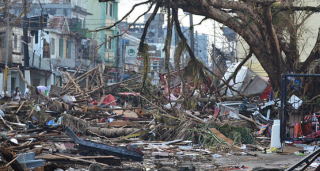 “Future catastrophic weather could be ‘far worse’ than history suggests…
“Dr Tom Matthews, Senior Lecturer in Environmental Geography at King’s College London and lead author said: “History is almost guaranteed to make us underestimate future risk. The events that have shaped our sense of what extreme weather can do are not the worst that can happen. They are the worst that have happened so far, in a short record, in a climate that no longer exists.””
https://www.kcl.ac.uk/news/future-catastrophic-weather-could-be-far-worse-than-history-suggests
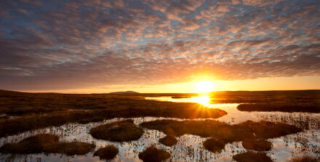 “The Breakdown of Natural Systems Could Intensify Warming by 30 Percent…
“…while the added warming from feedback loops will further hasten the rise in temperatures, emissions from the breakdown of natural systems are largely absent from the most influential climate models, those that inform climate negotiations.”
https://e360.yale.edu/digest/warming-induced-emissions
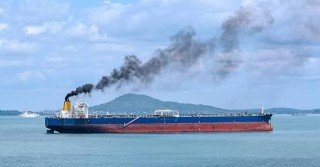 “How cleaning up the air is speeding up global warming – and revealing a bigger problem…
“Thanks to clean-air policies around the world… sulphur emissions are falling sharply while carbon dioxide emissions remain near record highs. Scientists increasingly believe the loss of that cooling effect is slightly speeding up global warming.”
https://www.bbc.co.uk/news/articles/c20917w25n4o
 “NOAA confirms August 2026 as the hottest on record – 0.14C hotter than 2023 and 2024 (exactly like Copernicus numbers).
“North America and Africa had their hottest August and summer on records. The chances 2026 will become the hottest year on record are increasing now above >50%.” [Extreme Temps]
https://x.com/extremetemps/status/2098135780724011432
 “Half the world is seeing extreme heat extend beyond summer…
“…the team compared the 1980s with 2015 through 2024. The extreme dry heat season grew longer across 50% of the world’s land area, and the humid heat season across 48%, by more than chance would explain. Nearly everywhere it happened, one side grew more than the other.”
https://www.earth.com/climate/half-the-world-is-seeing-extreme-heat-extend-beyond-summer/
 “A US research institute says the average global sea surface temperature has hit a daily record high for 100 straight days.
“Climate Central analyzes sea surface temperatures across the world, excluding polar regions in and around the Antarctic and the Arctic, based on data from the US National Oceanic and Atmospheric Administration, or NOAA.”
https://www3.nhk.or.jp/nhkworld/news/20260912de49883/
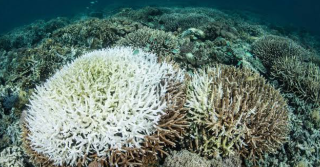 “Coral Reefs Can Recover But Relentless Marine Heat Waves Won’t Let Them…
““Coral reefs once had decades to recover after major bleaching events. Today, they’re lucky to get five or six years,” Manuel González Rivero, a research scientist at the Australian Institute of Marine Science, said in a statement…”
https://insideclimatenews.org/news/11092026/marine-heat-waves-drive-coral-decline/
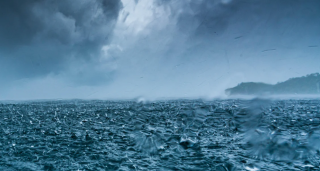 “‘There are no easy answers here’: New study forecasts a dire dip in food production if key Atlantic currents collapse.
“Weakening Atlantic Ocean currents could cripple agriculture in some of the world’s major breadbaskets, threatening global food security and raising the price of basic commodities, new research finds… the system is currently the weakest it’s been in more than 1,000 years, having lost 10% to 20% of its strength due to climate change, estimates show.”
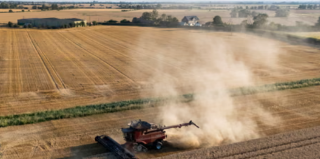 “Record heat and El Niño put farm insurance resilience to the test [UK].
“Three consecutive poor harvests have cost UK arable farmers an estimated £4.8 billion – and brokers advising farming clients now face compound risk scenarios where drought and flooding can strike in the same policy period, not in alternating years.”
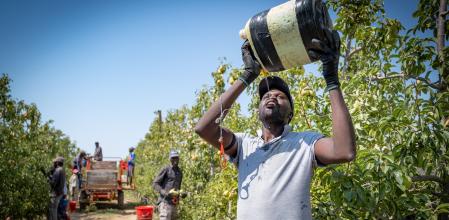 “[UK’s] Mediterranean food imports endangered by worker heat stress…
“France, Spain and Italy alone account for more than four-fifths (81%) of the value of UK food imports from the Mediterranean. Yet all three countries were seeing rising loses in working hours due to extreme heat…”
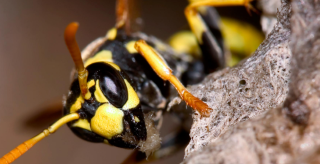 “Wasps are disappearing this summer, and scientists are worried [UK].
“Britain’s wasps have become mysteriously scarce this summer, and scientists suspect an unusual combination of temperature swings, heatwaves, and food shortages may be responsible. Even the wasps that remain appear unusually small…”
https://www.sciencedaily.com/releases/2026/09/260911003901.htm
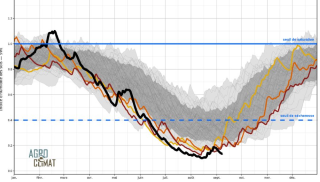 “After July and August, the 2026 drought becomes, by far, the most intense ever observed in France at this time of year. In the top two meters, the soils are now only at 17% of their capacity.
“And the situation is set to deteriorate even further: no significant rainfall on a national scale is forecast over the next two weeks.”
https://x.com/SergeZaka/status/2097939421181968837
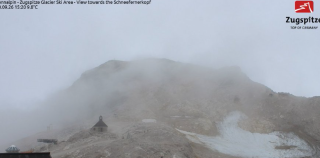 “This is what’s left of one of Germany’s remaining 4 glaciers: That of its tallest mountain Zugspitze.
“The glacier is agonizing and even its Northern part is expected to lose its glacier status in a matter of few years or earlier. This summer was a killer of Alpine glaciers.” [Extreme Temps]
https://x.com/extremetemps/status/2098039987841228838
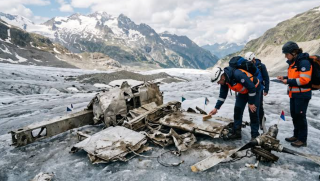 “Melting Swiss glacier reveals debris from 1963 plane crash.
“Around 250 kilograms of debris from an aeroplane that crashed in 1963 have been recovered from the Hüfifirn Glacier in canton Uri in central Switzerland. A mountaineer had informed the Uri cantonal police about the exposed wreckage.”
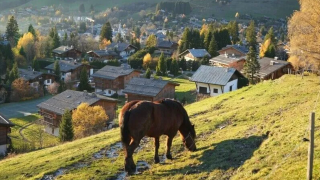 “Switzerland just had its hottest summer ever.
“Switzerland has endured its hottest summer since records began 162 years ago in 1864. Between June and August 2026 the national average temperature reached 17.2°C, MeteoSwiss said on Thursday, 0.4°C above the previous record set in 2003.”
https://lenews.ch/2026/09/11/switzerland-just-had-its-hottest-summer-ever/
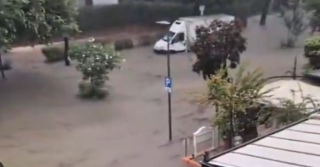 “Severe storms leave 2 dead, trigger flooding and evacuations across Italy, Slovenia and Croatia…
“Regional meteorological data showed 24-hour rainfall totals of 203 mm (8 inches) in Lignano Sabbiadoro and 177 mm (6.97 inches) in Latisana, with 135.4 mm (5.33 inches) falling in Lignano Sabbiadoro during the first three hours, according to the Friuli Venezia Giulia regional government.”
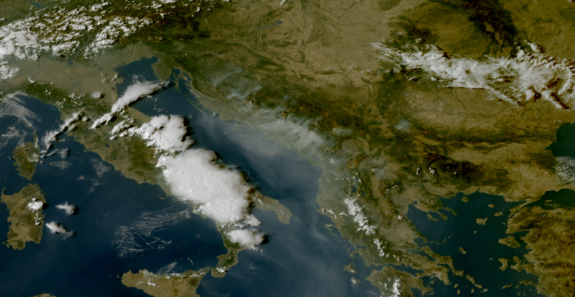 “Image of the week: Fires in the western Balkans.
“This week’s image is a view of smoke plumes from multiple wildfires in the western Balkans on 8 September. The image was captured by the Meteosat-12 satellite in geostationary orbit, 36,000km above the Earth. The recent wildfires have mainly affected Bosnia and Herzegovina, but also Montenegro, Albania and Serbia.”
https://www.eumetsat.int/image-week-fires-western-balkans
 “EXCEPTIONAL HEAT WAVE IN EASTERN EUROPE:
“Historic heat continues; Temperatures up to 38C in SERBIA. September records of Highest Temperatures: 37.9 Krusevac SERBIA and 36.7 Florina GREECE. Next days up to 40C [104F] in SPAIN.” [Extreme Temps]
https://x.com/extremetemps/status/2098483384792010849
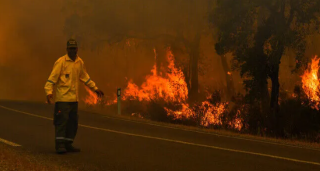 “Morocco on Friday issued extreme wildfire warnings for six provinces, urging residents near forests to exercise caution until Tuesday.
“The National Agency for Water and Forests issued red alerts for Fahs-Anjra, Tangier-Assilah, Taounate, Taza, Essaouira and Taroudant, indicating an extreme risk of fires breaking out.”
https://aa.com.tr/en/africa/morocco-issues-extreme-wildfire-warnings-in-6-provinces/4054342
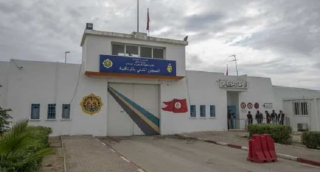 “NGOs sound alarm over Tunisia prison deaths due to heatwave.
“Authorities have yet to release figures for prison deaths this summer… Yet the Tunisian League for Human Rights (LTDH) documented 23 deaths based on information from doctors, lawyers and relatives of prisoners who died in jail from the heat…”
https://www.afp.com/en/ngos-sound-alarm-over-tunisia-prison-deaths-due-heatwave
 “Heavy rains cause flooding in Tunisia.
“On September 10, heavy rains flooded Tunis and several other regions, prompting Civil Protection teams to rescue residents and clear vehicles. The stormy weather is expected to continue, bringing risks of hail and strong gusts.”
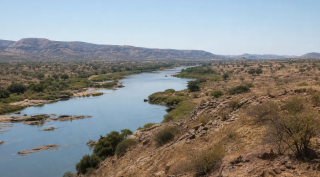 “Angolan communities return to seasonal migration amid severe drought.
““Southern Angola has experienced repeated severe droughts, extreme heat and environmental degradation for quite a number of years, leaving families without water, crops, or livestock,” said Victor Nyamori, an Amnesty International researcher and migration lawyer…”
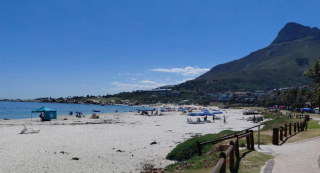 “RECORD HEAT AGAIN IN SOUTH AFRICA.
“SW Africa is like a fabric of heat waves one after another with strong berg winds rotating towards the coast and temperatures reaching again 40C. Last September records: Max. 34.9 Ceres, High Min. 22.5 Beaufort West, High Min. 14.8 Excelsior.” [Extreme Temps]
https://x.com/extremetemps/status/2098057226434842845
 “GERD: Ethiopia digs in as Egypt draws a red line on Nile dams.
“Amid the Grand Ethiopian Renaissance Dam’s anniversary celebrations, Abiy Ahmed’s government plans three more Nile dams, and Cairo is threatening to block them.”
https://www.theafricareport.com/430521/ethiopia-digs-in-as-egypt-draws-a-red-line-on-nile-dams/
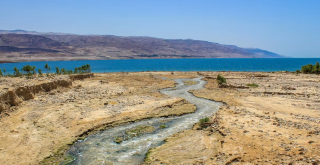 “Jordan’s water crisis amid growing tensions with Israel…
“Water became a key part of Jordan’s 1994 peace agreement with Israel, under which Israel agreed to supply 50 million cubic meters annually. In 2021, Israel agreed to provide an additional 50 million cubic meters a year from the Sea of Galilee, but that deal lapsed at the end of 2025.”
https://www.dw.com/en/jordans-water-crisis-amid-growing-tensions-with-israel/video-79219400
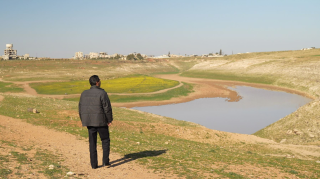 “In Syria’s Daraa, water is life – and today the land is parched.
“Abdul-Munaf al-Masri stands before a vast, cracked expanse of land in southern Syria, where water once stretched to the horizon. Scattered stones and patches of dry grass cover what used to be Lake al-Muzayrib, while an abandoned boat rests on hardened soil – a remnant of another time.”
https://www.middleeasteye.net/news/syria-daraa-water-life-and-today-land-parched
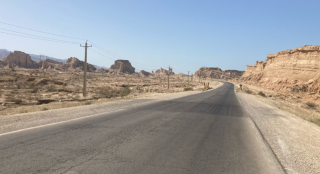 “MIDDLE EAST RECORD HEAT:
“Extreme heat continues unabated in Middle East. Today was the world hottest day so far this month with 48.2C [118.8F] at Al Ahsa, Saudi Arabia and 48.1C at Dayyer, Iran.”
[Extreme Temps]
https://x.com/extremetemps/status/2098504844390601012
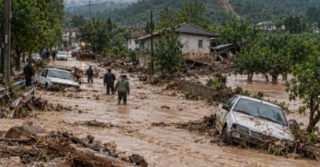 “Severe weather triggers flooding, infrastructure damage in Mazandaran [Iran].
“Torrential rains and powerful storms that swept across parts of the northern province of Mazandaran from Tuesday, September 8, caused rivers to overflow, streets to flood, and trees to fall, damaging homes, public buildings, infrastructure, and agricultural land.”
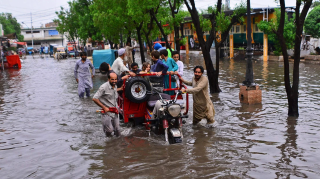 “Pakistan warns of fresh flooding, heavy rains as monsoon death toll reaches 183.
“Pakistani authorities on Friday warned of heavy rains, thunderstorms and possible flooding in parts of the country over the coming week, as official figures showed the death toll from monsoon-related incidents since late June had risen to 183, with another 515 people injured.”
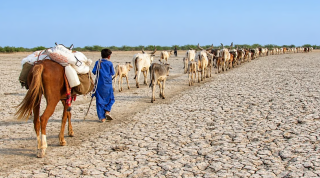 “Kutch’s drought is drying more than fields; a livelihood and pastoral crisis is unfolding [Gujarat, India].
“With 0.482 million hectares of farmland under stress, 2.1 million livestock facing fodder and water shortages, milk production declining and Maldhari families beginning to migrate, Kutch’s drought is becoming a crisis of livelihoods, food security and ecology.”
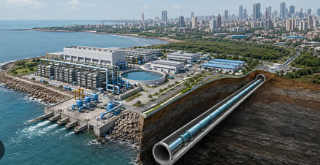 “Mumbai Turns To Sea As Water Demand Outpaces Supply.
“The plan to supply desalinated water to Mumbai was first seriously considered after the severe water shortage of 2009, when the city faced daily water cuts. The civic body had proposed desalination to reduce the city’s dependence on the monsoon.”
https://www.ndtv.com/india-news/mumbai-turns-to-sea-as-water-demand-outpaces-supply-12036016
 “INDIA RECORD HEAT:
“Persistent Record heat in Southern India. Tonight the city of Nellore had a MINIMUM of 30.0 [86F], which is the highest Minimum ever recorded in September.”
https://x.com/extremetemps/status/2098342593973068135
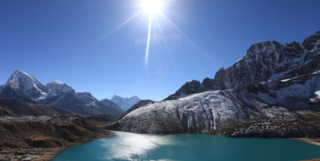 “Himalayan glacial lakes are growing at an alarming rate, study warns.
“Glacial lakes in India’s northern Himalayas are expanding at an alarming rate, with dozens of new ones forming in just the past two decades, according to a new study. Researchers warn that many of these lakes could burst without warning, flooding valleys where thousands of people live.”
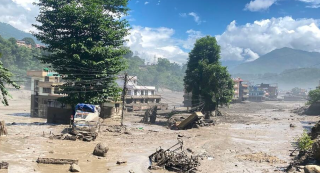 “Cop31: Forget climate pledges, countries like Nepal need actual cash.
“A fund that cannot send US$20 million to a grieving country in the time it takes to hold three high-level meetings is not yet a fund. It is a promise with a letterhead… The cost of getting this wrong is not hypothetical. Pakistan rebuilt from its 2022 floods largely by borrowing, and now services debt on a catastrophe it did not cause.”
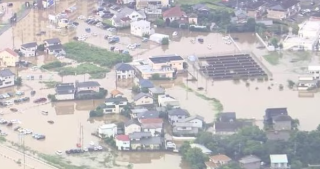 “Record rain in Chiba [Japan] caused by unusually slow storm system, experts say.
““I was honestly surprised,” Toru Adachi, a senior researcher at the institute’s typhoon and severe weather research department, said at a news conference Thursday. “It was shocking that a phenomenon occurred for which we have not yet accumulated sufficient knowledge, and that it led to a disaster like this. We need to properly understand what happened.”
https://www.japantimes.co.jp/environment/2026/09/11/climate-change/chiba-rain-analysis/
 “THAILAND RECORD HEAT:
“Record heat never ends in Thailand. So far this month 9 days out of 10 exceeded the previous National record of September Highest Minimum. Tonight The Minimum at Koh Sichang was again a record: Min 29.4C [84.9F].” [Extreme Temps]
https://x.com/extremetemps/status/2098027943222002017
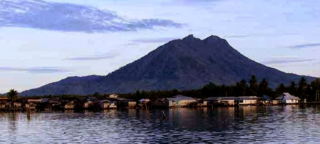 “Another record in INDONESIA:
“The Minimum of 27.6C [81.7F] at Ranai is a new September record of Highest Minimum temperature. Cool season hasn’ t existed at all this year.” [Extreme Temps]
https://x.com/extremetemps/status/2098326210212159900
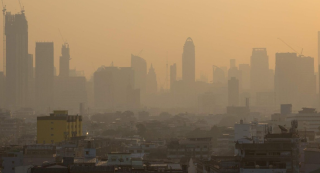 “Up in smoke: why Southeast Asia failed to halt the haze. Asean was going to eliminate transboundary haze by 2020. What happened?
“…Borneo is once again belching out dangerous emissions, as fires in the peatlands and forests of Kalimantan – Indonesia’s section of the island – send a wall of pollutants across Malaysia’s Sarawak and on to the wider region.”
 “Six more orangutans rescued from wildfires raging in Indonesia’s Borneo.
“The apes were saved from plantations in rural West Kalimantan province, where they had become trapped after fires cut off access to their forest habitat, according to Indonesia’s forestry ministry and the wildlife rehabilitation foundation YIARI.”
https://www.independent.co.uk/asia/southeast-asia/orangutans-rescued-borneo-wildfires-b3048348.html
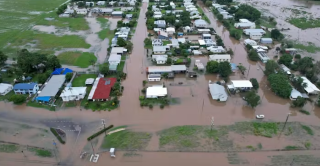 “Melioidosis outbreak after record rainfall reinforces emergency care guidance [Australia].
“Analysis of the surge in melioidosis cases during Townsville’s record rainfall in the 2024–25 wet season has reinforced recommendations for emergency care staff… He said melioidosis is a potentially life-threatening infection caused by bacteria in the soil in tropical and subtropical regions.”
https://medicalxpress.com/news/2026-09-melioidosis-outbreak-rainfall-emergency-guidance.html
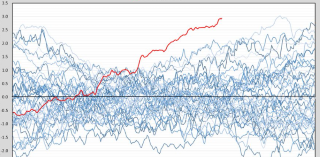 “As of September 10th, the Nino 3.4 anomaly is now 2.94°C (preliminary) above the 1991-2020 baseline, setting the 104th consecutive daily record, a full 1.09°C above the previous record for the day, set in 1997.
“The Climate 8-ball is gobsmacked.” [Prof Eliot Jacobson]
https://x.com/EliotJacobson/status/2098450007297060976
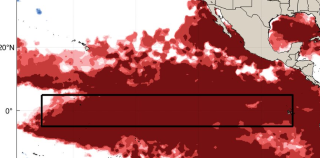 “Wow. 9 out of 10 of the world’s best climate models now predict that this year’s El Niño will peak at or above 4°C.
“It’s hard to say for sure, but this might not happen again for hundreds of years.” [Ben Noll]
https://x.com/BenNollWeather/status/2098437661707141529
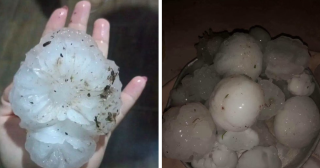 “Paraguay | Yuty – Caazapa. Hail from the size of an orange to a full handful!
“A severe hailstorm struck the Yuty area at dawn today, Friday, with massive hailstones of varying sizes falling; some were as big as oranges, while larger ice chunks appeared that nearly covered the entire palm of the hand, causing material damage in the region.” [Arab Storms]
https://x.com/Arab_Storms/status/2098487945040921056
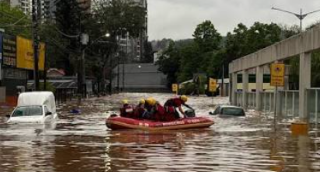 “More than 100 people are left homeless after heavy rains in Santa Catarina [Brazil].
“According to the Civil Defense of Santa Catarina, so far, an emergency situation has been declared in Águas de Chapecó, Canelinha, Guatambu, Joaçaba, Lebon Régis, Luzerna and Vargem Bonita.”
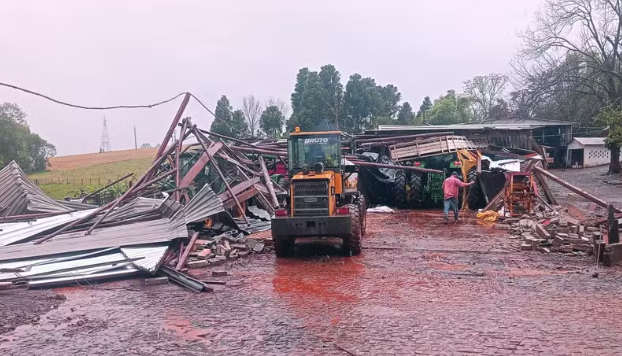 “Paraná Records the Third Tornado in Just Three Days [Brazil].
“Paraná recorded the third tornado in just three days in the afternoon of Friday (11). The new episode of the phenomenon occurred between the municipalities of Goioerê and Quarto Centenário, in the northwest of the state, and was recorded in images by residents.”
https://ground.news/article/parana-records-the-third-tornado-in-just-three-days_62d260
 “Huge AI data center project blindsides water-stressed town in Brazil…
““I just heard the data center construction will start in two months. Don’t you guys know about this either?” Alves asked someone at the mayor’s office. The answer from the other side of the call was “no”, the same received from all interviewees: Local authorities, business owners, farmers, and citizens.”
 “EXTRAORDINARY HEAT IN CARIBBEAN AND MEXICO. Records pulverized everywhere:
“SEPTEMBER HIGH MINIMUMS: 30.0C [86F] Loreto MEXICO; 27.8C Lamentin AP MARTINIQUE; 28.4 Castries ST LUCIA SEPTEMBER HOTTEST NIGHT EVER; 28.1 Vc Bird AP ANTIGUA & BARBUDA SEPTEMBER HOTTEST NIGHT.” [Extreme Temps]
https://x.com/extremetemps/status/2098546330977157122
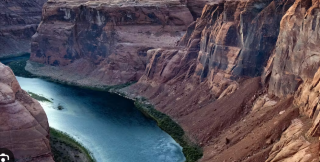 “US to reduce Colorado River water deliveries to Mexico.
“The United States and Mexico have signed a Colorado Treaty amendment under which the United States will reduce Colorado River water deliveries to Mexico by 250,000 acre feet, the International Boundary and Water Commission announced on Sept. 9. Mexico’s share of the Colorado is normally 1.5 million acre-feet.”
https://www.planetizen.com/news/2026/09/138398-us-reduce-colorado-river-water-deliveries-mexico
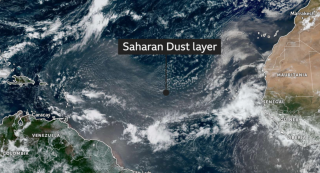 “New hurricane season record as ‘historic’ El Niño leaves Atlantic eerily quiet.
“To date, no hurricanes have formed in the basin, despite this week marking the peak of the season on average – and there’s no sign of development in the near future. It means a new record will be be set for the latest date in the satellite era (1960s onward) without an Atlantic hurricane forming.”
https://www.bbc.co.uk/weather/articles/cwyzq4538j3o
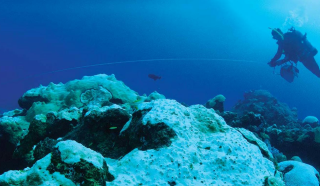 “Fertilizers and extreme heat are damaging coral reefs in the Gulf of Mexico, isotope analyses reveal.
“The reefs in the Flower Garden Banks National Marine Sanctuary in the northern Gulf of Mexico were long considered exceptionally healthy due to their high coral coverage. But rising water temperatures and an excess of nutrients are causing even these reefs to lose their resilience.”
https://phys.org/news/2026-09-fertilizers-extreme-coral-reefs-gulf.html
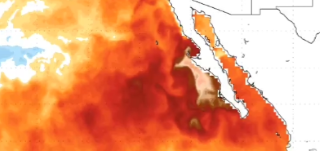 “Woah…. check out the meteoric rise in sea surface temperatures along the California/Baja California coast in the last week.
“Sea surface temperatures near San Quintín just leapt by 12°F since last Friday.” [Edgar McGregor]
https://x.com/edgarrmcgregor/status/2098583792789458959
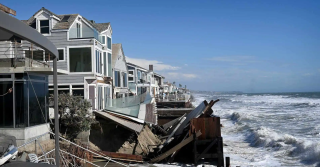 “Powerful waves erase Southern California beaches, threaten homes.
“With a powerful El Niño threatening to bring larger storms and waves through this winter, Southern California communities are already losing beaches and scrambling to protect oceanfront homes after swells from former Hurricane Marie accelerated coastal erosion.”
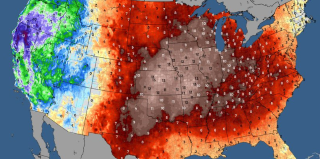 “What an incredibly hot start to the month of September [USA]!
“On this map, every location shaded burgundy and marked with a 1 just experienced its hottest first 10 days of September on record. And we’re looking exclusively at locations with long-term threaded records, typically spanning 100–150+ years.” [The Global Warmer]
https://x.com/TheGlobalWarmer/status/2098518140263026852
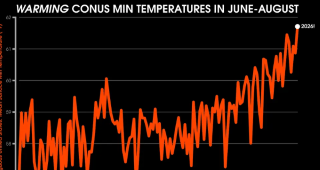 “One of the most underappreciated climate risks is dangerously warm overnight temperatures. We’re seeing an increasing frequency of nighttime lows staying at 80°F (26.67°C) or higher.
“There’s no question that 2026 was the warmest contiguous US summer for this impact.” [Zack Labe]
https://bsky.app/profile/zacklabe.com/post/3mv7dfemfmk2y
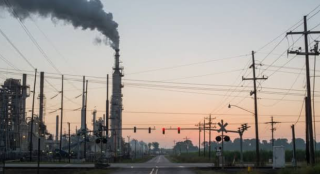 “Chemical industry backed laws in three US states to restrict use of air pollution data…
“As the US’s network for monitoring air pollution deteriorates, a Floodlight investigation has found that the chemical industry is going state-to-state to restrict one of the few options citizens have left for holding polluters accountable: low-cost air sensors.”
https://www.theguardian.com/environment/2026/sep/10/us-chemical-industry-air-pollution-monitors
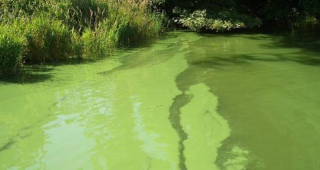 “Heatwaves are making toxic algae worse, but the real problem is what we are putting into our rivers and lakes…
“The underlying problem is usually already present: excess nutrients, particularly phosphorus and nitrogen, entering water from agricultural runoff, wastewater, septic tanks, urban drainage and other sources. Warm weather is accelerating these blooms, but nutrient pollution is providing the fuel.”
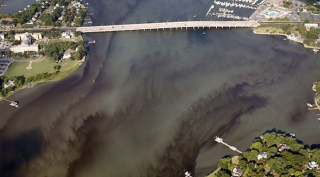 “Scientists are tracking a massive algae bloom moving through the Chesapeake Bay.
“Some produce toxins that can hurt people and marine life, Mulholland said. Others might not be inherently toxic, but as they decay, the bacteria consume oxygen, creating what are called “dead zones” in the water.”
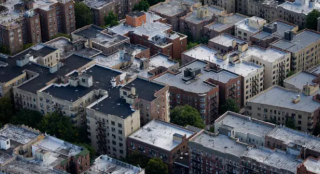 “Legionnaires’ disease outbreak kills one and infects others in the South Bronx.
“One person has died from legionnaires’ disease, and four more have been sickened in New York City amid a new cluster of cases only weeks after local health officials had declared a separate deadly Manhattan outbreak of the illness over.”
https://www.theguardian.com/us-news/2026/sep/11/legionnaires-disease-outbreak-south-bronx
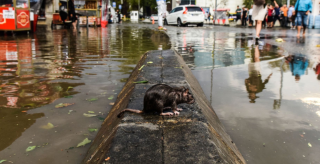 “Infectious diseases will seed new ground as the planet warms — here’s where they’ll spread.
“”We can expect to have more resistant bacteria being selected for in certain places around the globe,” said Dianne Newman, a Caltech microbiologist and co-author of the study. Increased antibiotic resistance is just one way that climate change is likely to put new populations at risk of multiple types of infections.”
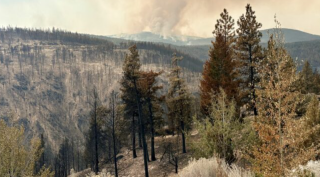 ““It’s like a moonscape”: B.C. wildlife restoration experts on the challenges of recovering from increasingly intense wildfires [Canada].
“As peak wildfire season begins to wind down, land and wildlife experts say there’s a long road to recovery from this year’s intense wildfires that forced thousands of British Columbians to evacuate their homes.”
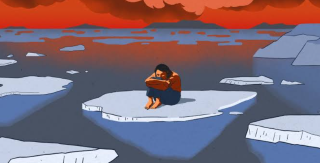 “‘Hopeless and broken’: why the world’s top climate scientists are in despair…
“77% of respondents believe global temperatures will reach at least 2.5C above preindustrial levels, a devastating degree of heating; almost half – 42% – think it will be more than 3C.”
I rely on donations and tips from my readers to keep the site running. Every little bit helps. Can you chip in even a dollar? Buy me a coffee or become a Patreon supporter. A huge thank you to those who do subscribe or donate.
You can read the previous “Climate” thread here. I’ll be back on Monday with an “Economic” thread.

“”We can expect to have more resistant bacteria being selected for in certain places around the globe,” said Dianne Newman, a Caltech microbiologist and co-author of the study. Increased antibiotic resistance is just one way that climate change is likely to put new populations at risk of multiple types of infections.”
Along with interaction between CC and resource extraction, another under-analyzed aspect of collapse is how the interesting new diseases of the future will shape the course of net energy decline, and be shaped by it in turn.
https://www.youtube.com/watch?v=-PeeDCnoG3k
Jupiviv, I don’t usually do much dooming in my leisure time, but I recently picked up a copy of the excellent “Biological War: A Scenario” by Annie Jacobsen.
In her book, a weaponised pathogen escapes from the VECTOR Lab near Novosibirsk in Siberia after a fire and takes out civilisation. There are 110 such BSL-4 laboratories worldwide (the highest containment level) and thousands of BSL-3’s, where work can involve still highly unpleasant pathogens like plague, anthrax and hantaviruses.
It doesn’t seem a stretch to suggest that these will not all remain safely contained as collapse gathers steam.
David Draiman does a good job of making Ed Sheeran’s music less painfully bland on your mash-up.
An interesting thesis fromMatthews, but I think the real problem does not lie in the meteorological extreme. The disaster emerges from the underlying system.
A society can withstand a much more extreme weather event when its electricity, water supply, food supply, healthcare, transport and communications are sufficiently robust. Conversely, a far less exceptional event can become disastrous when several systems reach their limits at the same time.
That is why the statement that our historical references come from “a climate that no longer exists” tells only half the story. Our historical damage records also come from societies that no longer exist.
Take a heatwave. Air conditioning and heat pumps can greatly reduce its impact. But they also make the electricity supply increasingly important. Heat increases electricity demand, placing additional strain on the grid. If the power supply fails, we may lose not only air conditioning and refrigeration, but also communications, payment systems, water pumps and parts of the transport system.
Infrastructure that initially mitigates an extreme weather event can therefore amplify its consequences when it fails.
This also makes our familiar measure of a “once-in-a-hundred-year event” less interesting. The essential question is not how exceptional the weather is, but how much disruption the social and technological system can absorb before essential functions are lost.
There is also an uncomfortable tension here with economic efficiency. Backup power, reserves, excess capacity and redundant connections are expensive and spend most of their time doing nothing. On a spreadsheet they look inefficient. Until the moment the system needs them.
A gas-fired power plant that sits idle 95 percent of the year can appear economically useless. During three cold and windless days, that same plant can become the most valuable installation in the entire electricity system.
The more interesting measure of climate risk is therefore not the meteorological record, but the distance between society and its breaking point.
I love your posts zip, and look forward to them. Not a critique, but today’s comment has an anthropocentric bent; meanwhile, the flora and fauna have no A.C.
Bob, that is a fair point!
Zip, thank you for those interesting thoughts.
I suppose it is the compounding interaction between extreme weather events and the declining resilience of the systems we need to ride them out that is the worry. Putting aside the lingering psychological effects, repairing the damage from catastrophic events is going to get increasingly expensive and even “wealthy” nations are drowning in debt:
“Almost €1.6 billion of EU funds will help Spain recover from Valencia’s devastating floods… the EUSF will cover a wide range of recovery efforts, such as repairing infrastructure, providing temporary accommodation, reinforcing preventive infrastructure, preserving cultural heritage sites, and conducting clean-up operations.”
https://ec.europa.eu/regional_policy/whats-new/newsroom/10-03-2025-almost-eur1-6-billion-of-eu-funds-will-help-spain-recover-from-valencia-s-devastating-floods_en
“One of the most underappreciated climate risks is dangerously warm overnight temperatures. We’re seeing an increasing frequency of nighttime lows staying at 80°F (26.67°C) or higher”
I can attest to that, our nighttime lows are increasing. At 6am it was 77 here. Yesterday I stood sweating outside talking to a fellow up on a ladder. He was asking me about scams he was experiencing. All I could focus on was the sweat dripping down my neck. It was 102. Earlier that morning my husband cut the dog walk short bc both of them couldn’t take the heat and humidity. Supposedly temps will dip to high 80s week after next. Our garden is parched. Daily we water under our deck so the hens have a place to hide from the heat. And we run a fan 24/7 in the coop. Egg production is pretty dismal. And then there are the cedar trees, many of them decades old, one by one dying. And that’s part of what we’re spending our money on- tree removal. Increasingly we spend thousands on tree removal every year. And so it goes…
TG where are you located, in general?
Texas Hill Country, an hour sw from Austin.
TG, that sounds absolutely miserable – night-time humidity spikes of 90%+ for your neck of the woods. 😕
I hope you, your husband, your chickens and your faithful hound get some relief soon.
Human activities release massive amounts of reactive nitrogen that produce nitrous oxide, a powerful greenhouse gas driving global warming. [1] (https://www.bristol.ac.uk/cabot/what-we-do/nitrogen-changing/)The Altered Nitrogen CycleNatural balance: Nitrogen gas makes up most of the air, but plants need soil bacteria to “fix” it into usable forms.Human impact: Farmers use chemical fertilizers, and factories burn fossil fuels. These actions double the amount of active nitrogen cycling through the Earth.Unused waste: Crops cannot absorb all the added fertilizer. Excess nitrogen escapes into the air and washes into rivers and oceans. [1] (https://pmc.ncbi.nlm.nih.gov/articles/PMC1247398/), [2] (https://www.youtube.com/watch?v=NHqEthRCqQ4&t=67), [3] (https://www.youtube.com/watch?v=1XvDMjokGkA&t=111), [4] (https://www.youtube.com/watch?v=Da3bUCIft_M&t=17)How Nitrogen Causes Global WarmingNitrous oxide production: Soil microbes break down excess nitrogen and release nitrous oxide (\(N_{2}O\)). [1] (https://www.unep.org/news-and-stories/story/four-reasons-why-world-needs-limit-nitrogen-pollution)Heat trapping: Nitrous oxide is a greenhouse gas. It traps heat in the atmosphere about 300 times more effectively than carbon dioxide (\(CO_{2}\)). [1] (https://www.unep.org/news-and-stories/story/four-reasons-why-world-needs-limit-nitrogen-pollution)Worsening cycles: As Yale Environment 360 notes, global warming itself increases the amount of nitrogen washing into waterways through heavier rainfall. Studies highlighted by EurekAlert! show how rising temperatures and \(CO_{2}\) continue to alter global plant growth and nitrogen uptake. [1] (https://e360.yale.edu/features/the-nitrogen-problem-why-global-warming-is-making-it-worse), [2] (https://nicholas.duke.edu/news/unprecedented-levels-nitrogen-could-pose-risks-earths-environment), [3] (https://www.eurekalert.org/news-releases/1111556)SolutionsBetter farming: Use precise amounts of fertilizer to prevent waste.Diet changes: Eat less meat, which lowers the demand for massive feed crops.Cleaner energy: Reduce fossil fuel burning.Explore how climate forces rewrite the cycle from EurekAlert!.Examine rising waterway nitrogen risks via Yale Environment 360. [1] (https://www.eurekalert.org/news-releases/1111556), [2] (https://www.youtube.com/watch?v=1XvDMjokGkA&t=111), [3] (https://e360.yale.edu/features/the-nitrogen-problem-why-global-warming-is-making-it-worse)Would you like to learn how excess nitrogen creates marine dead zones? AI overview, thank you for your attention to this matter
Not enough is mentioned regarding the nitrogen cycle in discussion.
Noticed the story today regarding toxic algae blooms in waterways.
Years ago as a tropical fish hobbyist having a balanced active water culture made the difference between a crystal clear tank or a very clouded unlivable water environment.
Vince, thank you for that cornucopia of links.
You are right that nitrous oxide is incredibly under-reported as a greenhouse gas, relative to its substantial forcing. On this side of the pond, you’re most likely to read about it in the news as a recreational drug, sold as “hippy crack”.
Yep, one of the many natural systems out of balance so to speak…
Thank you for reporting on the evidence of such here for us and to all commentators providing crucial insights.
VPK – My career for the last 10 to 15 years has been in this space. New Zealand is very reliant on export income from dairy and this industry is responsible for the most N-pollution (and methane). However, the vegetable industry is worse with respect to amount of N applied per hectare and our kiwifruit sector doesn’t even know what level of N a good crop of kiwifruit actually needs (probably quite low but growers add it anyway). $$ talks. As for science, enshitification of the entire system means there is very little funding for us pesky individuals who dare suggest our farming industries need to pull their heads in. Only the arable sector can claim to be somewhat sensible but arable doesn’t pay so a lot of land gets converted to dairy – funnily enough it hasn’t dawned on the populace that most of our calories com from the arable sector… we have no national food security policy either.
Thanks for the update, Craig, horrifying though it is. Helps round out the picture of our unfolding nightmare.
Yes, many thanks, Craig. It’s always a pleasure for this Jack-of-all-trades to hear someone hold forth on their area of expertise.
The third article by the BBC about cleaning up our air is leading to increased global warming is complete rubbish. We aren’t cleaning up our air, we are polluting more than ever. I live in rural Quebec and I can see a permant haze of pollution between me and the mountains, worse now than ever before.
The aerosol masking effect, what the BBC was referring to, is actually only contributing to the overall warming of our planet. The planet is warming DESPITE the fact we are adding MORE aerosols into our atmosphere not less.
Which, btw, ongoing geoengineering SMR programs are making far worse not better. But shhh we won’t talk about the geoengineering.
Does anyone know where the switch is located to immediately shut down all nuclear reactions when global civilization collapses? Wonder how much fun dying from nuclear radiation & burns from ka-booms will be?
What’s wrong with a species that can’t seem to learn from small fubars, much less the clusterfucks from it’s past?
It takes decades to cold shut down a nuclear reactor.