

Special sponsor for May is [you?]. Contact me here if you fancy a month atop the Climate & Economy wall of fame.
 “As of the Feb. 2026 CERES data release, the 36-month running mean for Earth albedo hit yet another new record low, now down to 28.669%.
“February’s record marks the 9th consecutive new record monthly low.
“After recording the highest monthly reading for “Net TOA Flux All-Sky” since February, 2012, the Earth Energy Imbalance is back over 13 Hiroshimas per Second as of February, 2026.”
[Prof Eliot Jacobson]
https://x.com/EliotJacobson/status/2049509847025242304
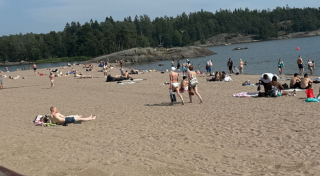 “Europe hit by record heat, glacier loss and marine extremes per climate report.
“Europe recorded its hottest year yet in 2025, with unprecedented heatwaves stretching from the Mediterranean to the Arctic, rapid glacier melt, record sea temperatures and expanding wildfires, according to a major climate report warning that the continent is warming twice as fast as the global average.”
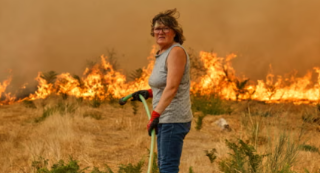 “Extreme weather in 2025 drove record wildfire emissions in Europe…
“Across Europe, wildfires emitted 47 million tonnes of carbon, a record amount. Spain, the UK, the Netherlands, Germany and Cyprus all topped their previous fire-emissions records. Soil conditions were the driest in 33 years of observations…”
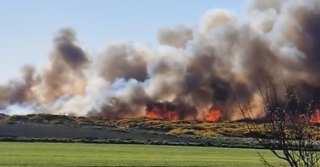 “Extreme wildfire risk warning issued across all of Scotland…
“The deputy assistant chief officer said: “Going into the May bank holiday weekend, we will be seeing an extreme risk of wildfire across the whole of Scotland. “We know people will be wanting to enjoy the good weather, but we ask they do so responsibly.”
https://www.heraldscotland.com/news/26065325.extreme-wildfire-risk-warning-issued-across-scotland/
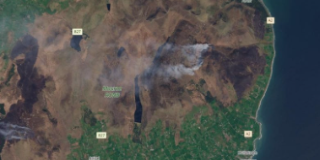 “Wildfires in pictures: Satellite images show the Mourne Mountains ablaze from space [Northern Ireland].
“Here we can reveal the extent of the current Mourne Mountain wildfires as seen from space. These images come from Copernicus, the Earth observation component of the EU’s Space Programme.”
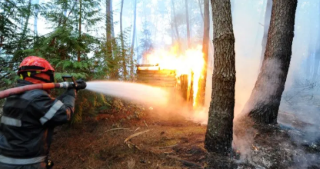 “Early wildfires break out across France.
“Emergency services have been deployed in large numbers from Normandy across northern and western France, often working through the night to contain fires, monitor hotspots, and prevent re-ignition.”
https://www.connexionfrance.com/news/early-wildfires-break-out-across-france/787213
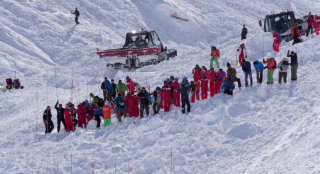 “Avalanche deaths have surged in the Alps this season. Here’s why…
“What we observed this season – long, dry, very cold spells followed by intense snowfall – is consistent with what we expect from climate change: more variability, more extremes and longer periods without precipitation, combined with short, intense snow events.”
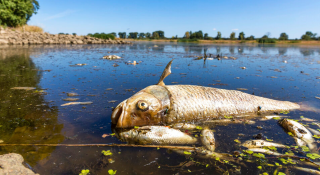 “Poland ‘not doing enough’ to restore Oder River after fish death disaster.
“On Wednesday, the EU executive formally accused Poland of “failing to fulfil its obligation” to bring the river back to health under environmental and industrial regulations, opening the door for potential legal action.”
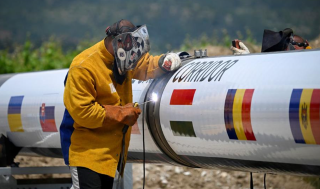 “Brussels weighs letting fossil fuel companies break EU pollution limits…
“The European Union executive is considering a “zero-penalty” option that would allow national authorities not to fine companies that break strict rules governing methane emissions scheduled to come into force next year, according to two people familiar with the matter…”
https://www.politico.eu/article/brussels-weighs-a-no-fines-holiday-for-fossil-fuel-companies/
 “HISTORIC HEAT WAVE IN NORTH AFRICA… Algeria is living an incredible hot spell with up to 40/43C for weeks and abnormally hot nights.
“UNBELIEVABLE MINIMUM TEMPERATURE – 32.7 [90.9F] ALGERIA.” [Think this is hottest April night recorded in North Africa].
https://x.com/extremetemps/status/2049520235737219093
 “How Extreme Weather Is Increasing Unplanned Pregnancies in Sub-Saharan Africa.
“Droughts in Sub-Saharan Africa are increasing unintended pregnancies by limiting access to contraception, worsening economic stress, and reducing women’s decision-making power.”
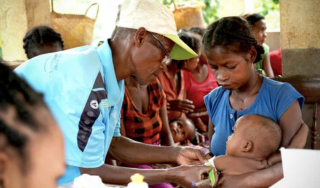 “Climate leading to malaria increase in Madagascar.
“Local doctors say the increase is likely a result of changing climate conditions, which have made the region more hospitable to the insects which carry the disease. Moreover, the country suffered a coup in 2009 and Madagascar has been in a political stalemate ever since…”
https://themercury.co.za/news/africa/2012-05-10-climate-leading-to-malaria-increase-in-madagascar/
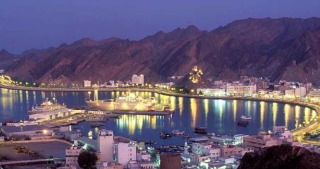 “HISTORIC HEAT IN MIDDLE EAST. Dozens of records smashed all over the area.
“MINIMUMS up to 33C in the EMIRATES and 34.5C [94.1F] in OMAN – widespread Hottest April nights in history. In IRAN 46C on the SE coast: Records all over the country.” [Extreme Temps]
https://x.com/extremetemps/status/2049114421629194522
 “INCOIS warns marine heatwaves threaten Arabian Sea corals and fisheries…
“These unusually high sea temperatures, spotted as of April 20, 2026, are putting coral reefs and marine life at risk, which could affect millions who rely on fishing and seafood. It’s all part of a bigger warming trend…”
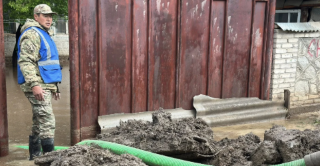 “In the Alai District, outbreaks of infections are being prevented after devastating mudflows [Kyrgyzstan].
“The prevention efforts cover the city of Gulcho, the village of Kurmanjan Datka, and the streets of Karimov and Dostuk in the Savai area. Experts are engaged in disinfecting the affected areas and monitoring the quality of drinking water in the impacted settlements.”
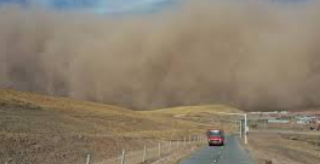 “Mudflows and dust storms expected in Tajikistan.
“According to the Agency for Hydrometeorology (Hydromet), a deterioration in air quality is expected on May 1 and 2 due to a dust storm and haze coming from the southwest and northwest in the southern and central areas of Khatlon, in some districts subordinate to the center, and in the city of Dushanbe.”
https://asiaplus.news/en/2026/04/29/mudflows-and-dust-storms-expected-in-tajikistan/
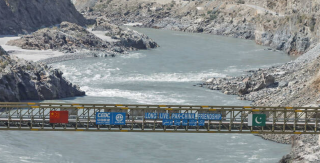 “Government says Pakistan has 90 days of water storage, far below regional benchmarks…
“The lack of adequate storage capacity poses risks to food security, economic stability and long-term growth, with the government seeking to expand reservoirs and improve water management in the country.”
https://www.arabnews.com/node/2641807/amp
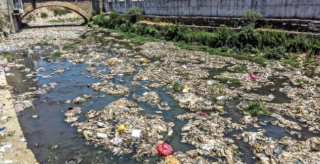 “From Crystal Waters to Toxic Flow: The Ongoing Pollution of the Swat River [Pakistan].
“‘The river was once green and clean. People came from far away to see it, but now you can’t even view it from the road because of encroachment and all the hotels, and the water is filthy,’ Taj told FairPlanet.”
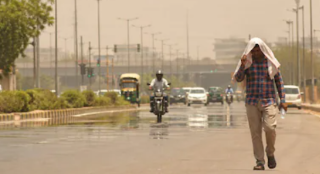 “Over 46°C [114.8F] heatwave grips northwestern, central India.
“According to the India Meteorological Department (IMD), temperatures in several regions have soared well above the seasonal normal, turning parts of the subcontinent into some of the hottest locations on Earth right now.” [Extreme Temps]
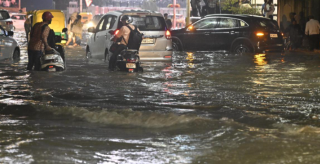 “At 111.5 mm, Bengaluru breaks record for highest single-day rainfall in April [India].
“The thundershowers, which occurred within a couple of hours on Wednesday evening, were also one of the most intense spells of rainfall in recent memory. Moreover, the 111.5 mm of rainfall was almost three times the long-term monthly average of 41 mm for April…”
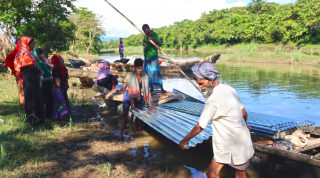 “Migration and climate pressures deepen flood risks in Bangladesh’s haors.
“In Bangladesh, people are pushed to live in flood-prone areas due to population pressures and poverty. The impacts of climate change are magnified due to the destruction of natural barriers such as forests and natural wetland vegetation.”
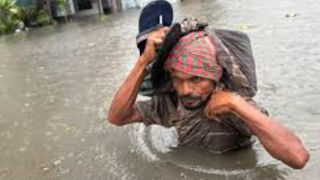 “Torrential rain submerges port city. Knee- to waist-deep water disrupts life; PM apologises to residents. [Bangladesh]
“Torrential rain, triggered by a steep pressure gradient over the North Bay, submerged low-lying areas of Chattogram for the second consecutive day yesterday, causing immense suffering to residents.”
https://www.thedailystar.net/news/bangladesh/news/torrential-rain-submerges-port-city-4164261
 “China’s weather bureau says April temperatures 2nd highest on record.
“China’s average temperature in April reached 12.8 degrees Celsius, 1.6 degrees above the historical average and the second highest for the month on record, the China Meteorological Administration said on April 29. Only April 2024 was warmer.”
https://www.sxcoal.com/en/news/detail/2049343351319314434
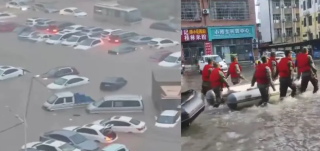 “More than 800 rescued after record rain floods southern China.
“Severe weather has battered southern China’s Guangxi Zhuang autonomous region, triggering widespread urban flooding. In the coastal city of Qinzhou, hourly rainfall reached a peak of 143.3mm (5.6in), inundating streets and forcing school closures.”
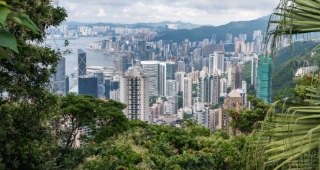 “Hong Kong’s Victoria Peak at risk from extreme weather, insurer warns…
“One primary concern is the geological instability of the northern slopes. These slopes are composed of weathered granite that becomes unstable when saturated. This threat is amplified by increasingly intense rainfall, such as the record-breaking 158.1 millimetres per hour recorded in September 2023.”
https://macaonews.org/news/greater-bay-area/hong-kong-victoria-peak-climate-change/
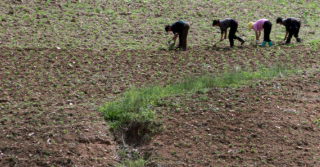 “North Korea faces ‘severe’ drought, according to state media…
“Natural disasters tend to have an outsized impact on the isolated country due to its weak infrastructure and economy. Elizabeth Salmon, the U.N. special rapporteur on human rights in North Korea, said in February that food shortages are already a key concern in the country.”
https://www.japantimes.co.jp/news/2026/04/30/asia-pacific/north-korea-severe-drought/
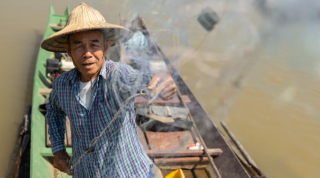 “Rare earth mining is poisoning Mekong River tributaries, threatening ‘the world’s kitchen’…
“Some days Yana earns nothing: demand for fish is falling due to worries over contamination of the Mekong River and its tributaries by toxic runoff from rare earth mines upstream that is threatening millions who rely on those waters for farms and fisheries.”
https://www.arabnews.com/node/2641673/amp
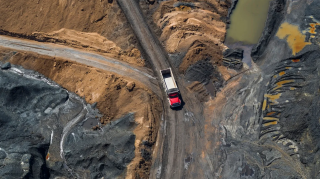 “The quiet contradiction at the heart of the energy transition…
“Renewable energy systems are often presented as clean and benign alternatives to fossil fuels. Yet their material foundations tell a more complicated story. Wind turbines, solar panels, batteries, and transmission networks depend on large-scale extraction of critical minerals such as lithium, copper, nickel, and rare earth elements.”
https://www.lowyinstitute.org/the-interpreter/quiet-contradiction-heart-energy-transition
 “THAILAND is living among the worst sustained conditions ever experienced.
“Heat indexes have routinely been 42C/52C every day for several weeks in Bangkok downtown (and expected to approach 60C / 140F). Minimums have barely ever dropped below 29C for weeks in Bangkok.” [Extreme Temps]
https://x.com/extremetemps/status/2049059347636924736
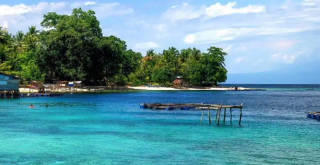 “Record again at Manokwari, INDONESIA!
“35.4C [95.7F] again today is a record of April highest Temperature. Manokwari, in West Papua, has broken the heat records of every month of 2023, re-broken them in 2024, re-re-broken all them in 2025 and it’s re-re-re breaking all them in 2026. Crazy.” [Extreme Temps]
https://x.com/extremetemps/status/2049169117169529330
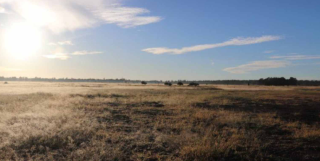 “Thousands of abandoned coal mines in Australia are once again raising concerns about potential methane leaks…
“Researchers at the University of Queensland found that a single abandoned coal exploration borehole in Queensland was releasing about 235 metric tons of methane a year, with a climate impact similar to 10,000 cars each driving 12,000 kilometers (about 7,500 miles).”
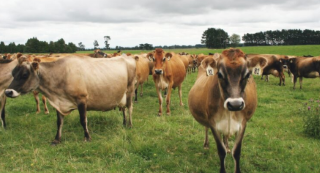 “Setback in breeding low-methane cows [NZ]…
“New results from a research programme into breeding low methane emitting cows show that this trait is not being expressed in the lactating daughters after being passed on from bulls. The results disprove the programme’s hypothesis, which was that these bulls would pass on this trait to their milking daughters.”
https://www.farmersweekly.co.nz/news/setback-in-breeding-low-methane-cows/
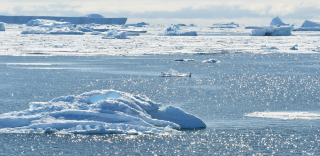 “For The Past 20 Years Antarctica’s Deep Ocean Has Been Heating Up, Scientists Reveal…
“Deep ocean heat is moving closer to Antarctica, a new decades-long study has revealed, providing clear evidence that the Southern Ocean is already experiencing shifts due to climate change. The study warns that the warming threatens the stability of Antarctic ice sheets.”
https://time.com/article/2026/04/28/antarctica-deep-ocean-warming-study/
 “HISTORIC HEAT ALL OVER OCEANIA.
“Virtually 100% of Oceania is smashing records with extreme margins. Last Nino was peanuts compared to this insanity. Some of the records of April hottest nights include: Min 27.1 [80.8F] Rarotonga COOK ISLANDS, 26.4 Tanna VANUATU. May will smash EVERY RECORD.”
https://x.com/extremetemps/status/2049414473295786219
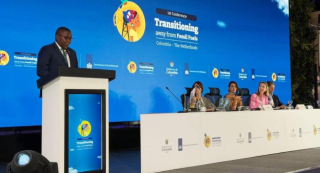 “Countries end Colombia fossil fuel summit with focus on next steps and financing.
“Countries have wrapped up a first-of-its-kind summit in Colombia on phasing out fossil fuels with no binding commitments but a growing momentum to shift from pledges to action.”
 “Ecuador starts fracking in Amazon rainforest.
“Ecuador has started fracking in the Amazon rainforest for the first time, state oil company Petroecuador said Wednesday. The new hydraulic fracturing, or fracking, project is in the Amazonian province of Sucumbios on Ecuador’s border with Colombia.”
https://amp.dw.com/en/ecuador-fracking-amazon-rainforest/a-76990028
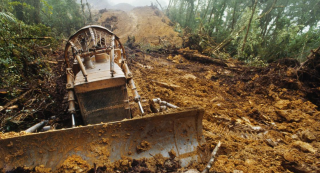 “Tropical rainforest loss eases after record year, but still ‘11 football fields a minute’…
“The pace of tropical forest destruction slowed in 2025 after record losses the year before but remained at worrying levels equivalent to 11 football fields per minute, researchers said Wednesday. The world lost 4.3 million hectares (10.6 million acres) of tropical primary rainforest last year…”
 “DEADLY HEAT WAVE IN MEXICO. WORLD RECORDS of April highest Temperatures have fallen between 1500m and 3000m.
“At low elevations extreme heat reached 46.5C/116F in Durango State. At 2000m the WORLD RECORD was smashed by full 2C. We are witnessing an event which is rewriting history.” [Extreme Temps]
https://x.com/extremetemps/status/2049607510609322253
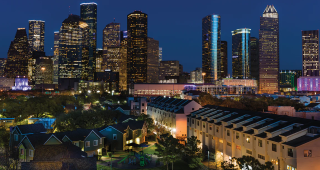 “HISTORIC HEAT WAVE IN TEXAS. Dozens of April records of Highest Minimums all over the State.
“Among the most important ones: 79 [26.1C] Brownsville, 78 Houston, 77 San Antonio, 77 Austin… Shamefully, not a single US meteorologist is mentioning this historic event.” [Extreme Temps]
https://x.com/extremetemps/status/2049542774559473753
 “El Paso has seen deadly Valley Fever cases triple in recent years. Researchers say they know what is to blame…
“Valley Fever cases in El Paso – the site of frequent migrant crossings – have more than tripled between 2013-2022, rising from under 10 to dozens, the new research shows, due to the region’s frequent and blinding dust storms.”
https://www.independent.co.uk/news/health/el-paso-texas-valley-fever-cases-dust-storms-b2967263.html
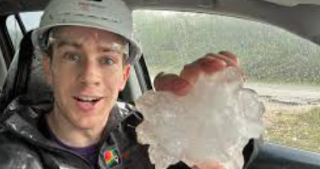 “Severe Weather Outbreak Spawns Damaging Tornadoes, Hail, Winds In Plains, Midwest, South.
“This siege of severe weather spawned damaging tornadoes near Enid, Oklahoma, and Mineral Wells, Texas, and also left damaging hail and winds in its wake. Here’s a recap of the late April 2026 outbreak.”
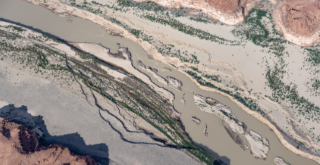 “Colorado River emergency actions buy time, not solutions…
“”The Department of Interior no longer acknowledges that the fundamental problem is climate change. We’re dealing with the symptoms of the disease. We’re not dealing with the underlying problem,” he said. “The law of the river was written for a river that no longer exists from a hydrologic standpoint.””
https://www.cpr.org/2026/04/29/colorado-river-emergency-actions-buy-time-not-solutions/
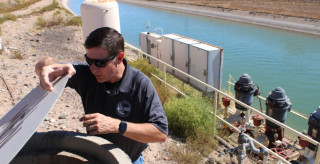 “How the city with the most to lose in the Colorado River crisis is trying to adapt…
“…the federal government has proposed steep cutbacks to protect the nation’s largest reservoirs. Cave Creek [Arizona], which gets about 95% of its water from the Colorado River, will be among the first to feel the impact of those cuts.”
 “Salmon are becoming river ‘ghosts’ as brutal droughts and violent floods cause unprecedented losses on their treacherous journey to the Pacific Ocean, scientists say… [California]
“The team described these lost fish as river “ghosts” because they die unseen, their fate hidden beneath the water.”
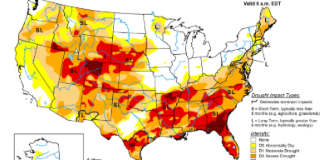 “Large swaths of the United States are in desperate need of soaking rainfall as drought continues to deepen.
“Stretching from Oregon to Florida and northward to the nation’s capital, nearly 63 percent of the country is facing drought conditions of varying intensity…”
https://www.washingtonpost.com/weather/2026/04/29/us-drought-worsens
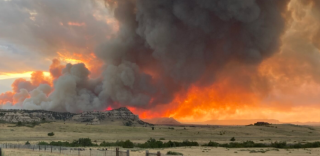 “Nebraska ranchers share hard lessons, hope after historic wildfires.
“…beyond the initial response, producers are now facing difficult decisions — where to take cattle, how to manage feed, and what the future holds. “I think that’s the big question — is it ever going to rain again?” Wilson said. “We know it’s going to … but knowing and believing is different right now.””
https://ruralradio.com/rrn/news/nebraska-ranchers-share-hard-lessons-hope-after-historic-wildfires/
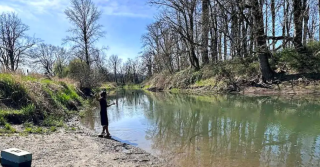 “Extremely dry April was driest in 147 years of Chilliwack weather records [British Columbia]…
“The much-needed rain in the forecast for Monday and Tuesday “evaporated,” Pannett stated in his report. “In Chilliwack there was zero rainfall, which was a repeating trend throughout the month April.””
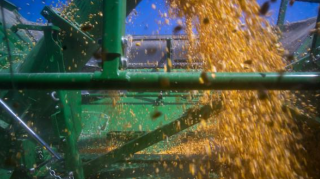 “Crop Prices Hit Highest Since 2023 as War and Bad Weather Bite.
“The extended closure of the Strait of Hormuz and extreme weather have jolted farm commodities prices to a two-year high, as fertilizer headaches and the prospect of smaller harvests drive food inflation risks.”
https://uk.finance.yahoo.com/news/crop-prices-hit-highest-since-074454641.html
 “Scientists warn it’s probably too late to save the ‘luxury crops’ that are used to make coffee, chocolate, and wine…
“Even with new ideas to cool the planet, scientists warn that these crops may not be saved. A new study reports that a proposed cooling method did not reliably protect them, with only six of eighteen major regions showing improvement.”
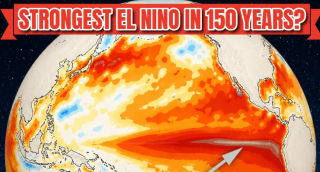 “The strongest El Niño in 150 years? That’s not hype, it’s the actual median forecast right now for the developing event later this year. [Jeff Berardelli]
“It could rival — or even surpass — the legendary 1877 El Niño, the strongest on record, which was linked to widespread drought, monsoon failure, and global food crises in parts of Asia, Africa, and South America.”
https://x.com/WeatherProf/status/2049476159482581430
I rely on donations and tips from my readers to keep the site running. Every little bit helps. Can you chip in even a dollar? Buy me a coffee or become a Patreon supporter. A huge thank you to those who do subscribe or donate.
You can read the previous “Climate” thread here. I’ll be back tomorrow with an Economic thread.

As I’m sure we’re all aware, Merz very recently told German pensioners to go frack themselves. The lefts are very upset about it, enough to issue strongly worded remarks in their capacity as junior coalition members. My word, the courage! The unmitigated bloody-minded chutzpah! The final evolution of middle-class/wealthy student radicalism is unfurling before our very eyes!
Still it’s important to remind ourselves that it’s all in a good cause – liberating Ukraine (and also Iran… but not in the unpopular Trumpian way) and saving the planet. Expect hella lot more of this. The pretense of bourgeois parliamentarism will grow more farcical by the day as the beneficiaries of capitalism/imperialism/colonialism ever more desperately attempt to exclude themselves from responsibility for its intensifying collateral damage, while passing the blame onto Otherized scapegoats.
Jupiviv, part of the problem – Germany had the lowest births on record last year:
“Low birth rates have serious financial consequences in Germany, as in many other countries: Fewer working people are paying contributions to the state pension system, while the number of retirees is rising.”
https://www.dw.com/en/germany-pensions-retirement-standard-of-living/a-76925722
Strengthening the social safety net rather than borrowing vast quantities of money to rearm would certainly be the compassionate thing to do but we do not live in sensible times.
They’re moving the goalposts on UK pensions but I dare say it’s moot for someone of my age (53).
“The age at which millions of people can claim their state pension is starting to rise to 67 from Monday, when the monthly payments also go up.”
https://www.bbc.co.uk/news/articles/cx2e7e90kneo
That CERES albedo chart is the scariest one posted here (it used to be equal to the one showing the jump in extreme drought snd rainfall events in the 2020s but it is now No. 1 alone with the hint of acceleration at the end). I don’t know how anyone can look at it and think there’s any chance of avoiding a runaway to a hothouse. However, in the shorter term, the El Nino “off the chart” chart is a strong contender to take over the top spot.
Agreed George, both the EEI (earth energy imbalance) and the El Nino charts are terrifying! I wonder how El Nino and EEI interact? This article speaks to it a bit:
https://agupubs.onlinelibrary.wiley.com/doi/10.1029/2024AV001636
Prof Jim Hansen is taking issue with Zeke Hausfather’s recent claim that 2026 will be the second hottest year on record. He says that, even if this is a moderate El Nino like 2023/4, this will be the hottest year and that 2027 will, of course, be hotter still.
I think we’re getting to the point, though, where we can say that this is going to be a very potent El Nino. This is going to mean a second stagflationary shock on top of the very large one already building courtesy of events in the Middle East.
I’m going to stick my neck out and forecast GFC 2.0 in 2027. Central banks just can’t do much with stagflation. 🤷♂️
Hansen just posted “2026 On Track for Warmest Year”: https://tinyurl.com/42h8ndz3
>>> I’m going to stick my neck out and forecast GFC 2.0 in 2027.
Well Pano, we’ll sure be missing simple problems like messed up co-op orders when GFC V2 hits. Do your kids know about this website?
Flippr, they don’t. Knowing what/how much to share with them is a tough judgement call. I don’t want to frighten them or demotivate them when the BAU game still needs playing.
I have told my youngest that food is going to get even more expensive and we’ll benefit from learning as much as we can about producing our own.
Quark has finished grocery shopping and published a new short essay called “Forget about oil, the problem is the bond market.”
https://rayonegro.substack.com/p/olvidense-del-petroleo-el-problema
Google translation:
With the consequences of the closure of the Strait of Hormuz, the rise in oil prices, and the imminent rationing we will suffer in many parts of the world, it’s hard to imagine there being a bigger problem than this.
To explain, I will use an analogy.
The world is like a patient with a degenerative disease, going through a severe crisis. The solution is a harsh treatment that will limit mobility and change habits, reducing quality of life. Furthermore, we know there is no cure and it will worsen over time, eventually killing the patient.
Meanwhile, a silent, armed assassin has entered the room. He has shot the patient in the heart. If the bullet strikes the heart, he will die instantly. If the bullet only grazes the heart, he will suffer, but his recovery will be complete, until the degenerative disease takes him from this world.
The patient with the crisis and the degenerative disease is the world and the medium- and long-term oil shortage. The silent killer who has fired its weapon is the fiat system facing a crisis as a consequence of tensions in the bond market. If the bullet hits the heart, the bond market collapses, and with it, the fiat system is destroyed. Money ceases to exist, and all transactions disappear, immediately reverting to the Stone Age. If the bullet misses the heart, the system recovers, and everything returns to the “normal” state of the degenerative disease, after the post-operative period.
Getting back to reality, the truth is that everything is very complicated.
We have “overcome” the difficulties by issuing enormous amounts of debt, leaving the system too heavily indebted to withstand a serious crisis. The closure of the Strait of Hormuz has precipitated the crisis in a cascading fashion.
The disruption to trade causes a shortage of raw materials. The market response is an aggressive price increase. Before long, this increase results in a sharp rise in the CPI, and monetary authorities, to curb this increase, must raise interest rates. But combining massive debt with very high interest rates, after a long period of zero interest rates, has very unpleasant consequences. Financial institutions incur heavy losses, loans begin to dry up, and liquidity is severely affected. Investments, facing a pressing lack of liquidity, begin to decline sharply. And here we arrive at the crux of the matter: investors refuse to buy government debt unless interest rates rise to compensate for the risk. Suddenly, bondholders, fearful of potential losses from rising market rates, flock to the sellers’ window, only to find that no one wants to buy at those prices. A bottleneck occurs, as everyone wants to sell before prices plummet and no one wants to buy hoping for discounts. The collapse is spectacular.
The buyers of last resort are the central banks, only this time, instead of contributing one trillion dollars as in 2008, or four trillion dollars as in 2020, they must buy 20-30 trillion dollars in bonds to prevent the market from shutting down due to a lack of trading. Yes, the largest bailout in history.
The system has apparently been bailed out again, but this time it’s different. The price of gold and the massive purchases by central banks in developing countries already implied a certain degree of distrust. The intervention of such a massive influx of money into the system will provoke enormous distrust and a sharp rise in prices when this loss of confidence spreads to citizens, who will quickly realize that prices are rising not once a month, but every day. Hyperinflation is inevitable, and since this time it doesn’t affect a country like Argentina, Venezuela, or Iran, but the very heart of the system, the collapse is global. The fiat system of unbacked money implodes, and the crisis ceases to be a problem because only survival matters when the financial system disappears (money loses its value).
This is the real danger in the short and medium term.
I have been warning about the need to monitor certain landmarks.
The yen’s exchange rate, and the yields on Japanese or British bonds, are currently exceeding the points of no return.
It takes a complete breakdown lasting more than a few days to cause panic and a bottleneck, but they are on their way, as the Hormuz closure drags on and oil prices continue to rise.
We still don’t know if the bullet will hit the heart or just graze it, but now it’s the point of vigilance we must keep a close eye on in the coming weeks.
Thank you, Flippr.
The energy shocks of the ’70’s saw UK inflation reach 24.5% and Bank of England base rates hitting 17% to offset. We needed a bail-out from the IMF, too. There’s no bounty of North Sea oil coming to help out the Treasury this time around.
Food and the paradox of “helping” nature
In contrast to — or perhaps better said, in addition to — Quark and others, I tend to believe less in immediate and total system collapse. After all, even the discharge of a thunderstorm can take quite some time. I think there will be a stubborn intermediate phase for the complex systems we have built layer upon layer. But we will see.
The relevance is also relative, because the outcome is more or less fixed. In the meantime, I use the time to look at specific components of this energy and resource crisis, which has been casting its shadow ahead for quite some time.
Today, a brief look at fertilizers, and more specifically nitrogen.
Modern agriculture likes to present itself as a success story. Never before has humanity produced so much food, so efficiently and on such a scale. Famines seemed to belong to the past. Nature was no longer seen as capricious, but as manageable. Even correctable. Where shortages appeared, we stepped in. With nitrogen, with irrigation, with technology. We came to nature’s aid.
But that formulation deserves a second look.
Because what is called “help” here is, in fact, a replacement. The natural cycles on which agriculture depended for centuries — nitrogen fixation in the soil, organic build-up, local nutrient flows — have largely been replaced by external inputs. Nitrogen comes from natural gas, phosphate from mines, potassium from salt deposits. What was once local and cyclical has become linear and global.
That works, as long as everything keeps functioning.
The yields of modern agriculture are not simply the result of fertile soil, but of a constant supply of concentrated nutrients. The soil is no longer a source, but a carrier. A medium into which inputs produced elsewhere are injected. Agriculture has thus become dependent on energy, logistics, and geopolitical stability.
And that is precisely where the paradox lies.
By “helping” nature, we have built a system that can no longer exist without that help. The intervention is no longer a correction, but a condition. Nitrogen must be added again every season. Not because the soil is incapable, but because the system has been designed to expect that input. It has adapted to it. And contrary to what is often assumed, this supply is not a matter of simply adding a bit later. Nitrogen only works within a narrow time window: too early and it washes away, too late and the yield is already lost. It is not a stock, but a moment.
When that supply comes under pressure, the problem immediately shifts to the government. Subsidies are used to dampen costs, emergency measures to maintain production. But here a second limit appears, less visible but just as hard: affordability. The volumes involved are enormous. A doubling of fertilizer prices translates, on a continental scale, into billions of euros in additional costs. Structural compensation means tens of billions per year. This is no longer temporary support, but a permanent obligation.
And with that, the dependency shifts again. Not only on energy and raw materials, but also on public finances. As long as governments can step in, the system keeps running. But that capacity is not unlimited. Debt, interest rates and political constraints ultimately draw a line under what can be sustained.
The idea that this dependency can be reversed through recycling or local cycles sounds appealing, but runs into a hard reality. Nutrients are indeed present everywhere, but rarely in the right form, in the right place, and at the right time. Modern agriculture runs on precision and timing. What is delayed, diluted, or dispersed does not fit easily into that system.
The result is a system that is both impressive and fragile. Impressive in its productivity, fragile in its dependencies. Any disruption — in energy, transport, raw materials, or finance — propagates directly into the food system. Not always visible, not always immediate, but inevitable.
What was seen as robust turns out to be tightly tuned.
The question is no longer just how we can continue to support nature, but what happens when that support — and its financing — begins to falter. Because a system that depends on continuous correction has no resting state. It must keep running, keep adding, keep paying.
We really are too smart for our own good, Zip, to borrow Craig Dilworth’s phrase, and, as he concludes, too dumb to change. Makes me think of the intro to “The Hitchhiker’s Guide to the Galaxy.”
“This planet [earth] has, or had, a problem, which was this. Most of the people living on it were unhappy for pretty much of the time… Many were increasingly of the opinion that they’d all made a big mistake coming down from the trees in the first place, and some said that even the trees had been a bad move, and that no-one should ever have left the oceans.”
For those interested in scavenging the waste land after the collapse you can find lots of good videos on how to cut into abandoned home safes by checking out the looting videos that IDF troops in Gaza post on tiktok. Every time I look at an IDF troops tiktok reels I think to myself “why isn’t an NCO throwing a brick at this man’s head?”
IDF is looking sloppy. Time to evacuate the non combatants. If you can find any.
“Israel Defense Forces Chief of Staff Eyal Zamir warned senior command earlier this week that the erosion of values within the military is unacceptable.
“In his remarks, Zamir pointed to the growing phenomenon of politically themed patches worn by soldiers, rather than apolitical ones, as well as incidents of looting and other breaches of the army’s ethical code.”
https://www.haaretz.com/opinion/2026-04-30/ty-article-opinion/.premium/the-idfs-discipline-crisis-needs-more-than-zamirs-words/0000019d-da7d-dc1a-a3fd-dbffd4240000
IDF and moral values are antonyms.
IDF is a rabble. Worse than bloody Chechens with the tiktok slop. Troops bringing personal smart phones on operations is bottom of the barrel. Pre op inspections are obviously a joke. I would imagine Turkey and Egypt are gathering a lot of signals intelligence.
Yep, more Historic records to come
Massive Florida wildfire shuts down Interstate 75 along part of Alligator Alley amid historic drought
According to the U.S. Drought Monitor, 98 percent of the state is experiencing some level of drought, with over 67 percent in “severe drought”, the most since 2001.
Florida has been in a prolonged dry pattern since the 2025 hurricane season.
LA NIÑA NEARLY DEAD, BREWING EL NIÑO TO ARRIVE DURING PEAK HURRICANE SEASON
Drought conditions are also worsening for other parts of the region, including Georgia, where 100 percent of the state is experiencing drought, although not quite as severe as Florida’s.
An area of low pressure will swing out of the Plains and bring a little relief to the
According to the FOX Forecast Center, West Palm Beach has yet to see a single day with rain this year, over a fifteenth of an inch. Parts of South Florida could double their rain total for the year with this one shot of rain.
FOX NEWS….always on the cutting edge of weather reports
https://www.foxweather.com/weather-news/florida-wildfire-historic-drought-rain-forecast-southeast
But I’m on the edge of my seat on what Donnie will or won’t do next..
TACO or NACHO? What’s on the menu?
Boy, this planet is hurting…
Vince, the Alligator Alley fire was a few weeks ago, wasn’t it? I’m keeping my fingers crossed Florida gets some rain this weekend – looks like it might.
Ah the old “low methane cow” – anything to sustain the unsustainable. All to maintain the export cash-cow at all costs. The entire NZ dairy industry is steadily destroying New Zealand’s lowland waterways while declaring that we produce the most milk for least emissions therefore we are awesome. Methane is the least of our concerns but is the rug under which water pollution is being swept. We simply have too many cows per hectare. My own paid work is looking into ribwort plantain as a forage and how it lowers nitrate leaching from soils (where the nitrate is derived from metabolism of urine by soil microbes) into groundwater and lowers nitrous oxide emissions (also derived from microbial metabolic processes). A silver bullet the industry desperately wants to be true but the research suggests is not what it’s cracked up to be either – works somewhat but it depends i.e. a lot of nuance. Us ‘scientists’ even came up with the idea to vaccinate the cows against methane producing bacteria in the rumen. It appears that no-one thought deeply enough to ask the microbial ecologists nor animal health specialists if this was a good idea (it’s not) and we’ve since wasted millions on it. Sigh. Another brick in the wall.
Thanks, Craig. That is an interesting academic niche you inhabit in our crazily overcomplicated world.
Pollution from livestock doesn’t get talked about much. I hadn’t realised it was such a big problem in NZ:
“The dirty dairy industry is polluting rivers and contaminating drinking water across the country. There are too many cows on farms, and the dairy industry is dumping too much synthetic nitrogen fertiliser onto pasture.”
https://www.greenpeace.org/aotearoa/story/how-new-zealand-dairy-industry-pollution-threatens-rivers-climate-and-democracy/