

 “Global sea surface temperatures just hit a new all-time high for April 14.
“A ~5,000-mile marine heatwave now stretches from Micronesia to California, highlighting the sheer scale of record-warm water across the Pacific. Earth’s oceans are exceptionally warm right now.”
[Colin McCarthy]
https://x.com/US_Stormwatch/status/2044588473458561074
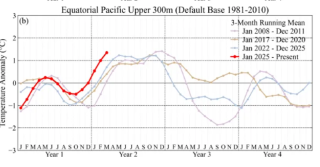 “Yes, we have an El Nino – probably Super-Duper – see the better diagnostic (Fig. 2) – comparison to ordinary and Super El Ninos…
“The heat content of the upper 300 m of the equatorial Pacific (Fig. 1) is a better measure of El Nino strength; for example, it correctly has the 1997-98 El Nino as the strongest El Nino in the past 50 years, while the Nino3.4 index has the 2015-16 El Nino as stronger.” [Prof Jim Hansen]
https://jimehansen.substack.com/p/super-duper-el-nino
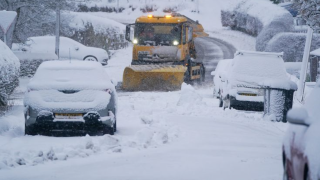 “Atlantic Ocean current collapse now ‘almost inevitable’.
“A collapse would trigger catastrophic consequences for Europe, including extreme cold winters and summer droughts, and disrupt tropical rainfall patterns globally… even a weakened Amoc is expected to cause severe economic and environmental impacts.”
https://www.independent.co.uk/bulletin/news/atlantic-ocean-current-collapse-b2959005.html
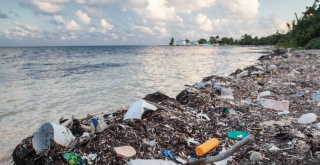 “Most endangered marine mammals face highest plastic risk.
“Estimates put the amount of plastic entering our ocean at 11million metric tons per year. This is the environmental equivalent of dumping a full garbage truck into the ocean every single minute.”
https://oceanographicmagazine.com/news/most-endangered-marine-mammals-face-highest-plastic-risk/
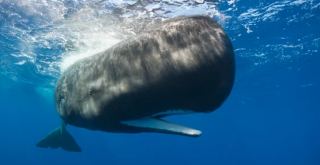 “Sperm whale ‘language’ is like human speech…
““We demonstrate that sperm whale codas not only resemble human vowels acoustically but also pattern like them,” the study said. ““Sperm whale coda vocalisations are thus highly complex and represent one of the closest parallels to human phonology of any analysed animal communication system.””
https://www.telegraph.co.uk/news/2026/04/16/sperm-whale-language-is-like-human-speech/
 “Great White Sharks Are Overheating.
“The ocean’s most iconic predators maintain warmer body temperatures than the surrounding seawater and are paying an increasingly steep price for it. As the oceans warm due to climate change, they now face the risk of potentially fatal overheating…”
https://insideclimatenews.org/news/16042026/great-white-sharks-ocean-warming/
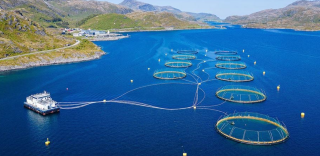 “Climate change poses growing threat to aquaculture in Norway.
“A new report warns how rising sea temperatures and changing ocean conditions are increasingly affecting fish farming operations, highlighting the urgent need for adaptation in Norway’s aquaculture sector.”
 “More than half of Britain’s butterfly species in decline, monitoring scheme shows.
“…a number of rarer, “habitat specialist” butterflies – which rely on specific plants or habitats such as wetlands, woodlands or flower-rich grasslands – have sustained serious declines, including the high brown fritillary (down 66%), pearl-bordered fritillary (down 70%) and white-letter hairstreak (down 80%).”
https://www.theguardian.com/environment/2026/apr/15/butterfly-monitoring-scheme-britain-decline
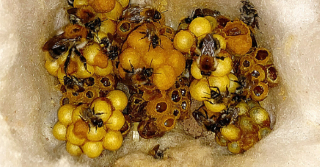 “Drought takes a heavy toll on bumblebees
“…weight loss is merely a precursor to a far more serious problem: the near-total failure of the next generation… The researchers identified the lack of pollen as the decisive bottleneck.” [German study from Uni of Würzburg]
https://phys.org/news/2026-04-drought-heavy-toll-bumblebees.html
 “Heat wave forces Kano residents to sleep outdoors [Nigeria].
“Many residents of Kano are sweltering under extreme heat as the temperature climbs above 40°C [104F] during the day. The heat wave has left residents gasping for relief in recent days, with the city’s erratic power supply compounding the situation.”
https://dailytrust.com/heat-wave-forces-kano-residents-to-sleep-outdoors/
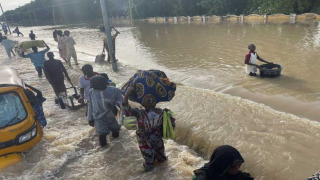 “Flood Alert 2026: Nigeria warns of widespread flooding, flags risks in 33 states…
“After witnessing the destructive catastrophic floods last year in countries like Indonesia, Sri Lanka, Thailand, Malaysia, Philippines, Vietnam, Pakistan, followed by India, Nepal, South Korea, China, United States, and Europe, now West Africa is also at risk for flash flooding in 2026.”
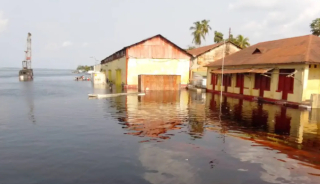 “The torrential rains that fell throughout the province of Tshopo on Wednesday, April 15, 2026, from 10 a.m. to 2 p.m., caused flooding with losses of basic necessities.
“The floods have worsened following the overflows of the Congo River and some of its tributaries, namely: the Lindi and Tshopo rivers which flow into the Congo River at Kisangani.”
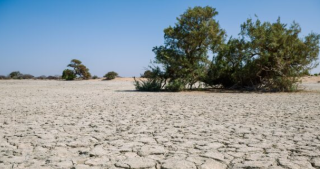 “The myrrh tree that’s key to luxury perfumes and African incomes is threatened by drought.
“The critical note in some of the world’s most well-known perfumes is myrrh, a tree resin from the Horn of Africa that is under pressure from what experts call a historic drought. Threatened by the lack of water and nibbled by starving livestock, the trees that once formed a dense forest in the Somali region of Ethiopia are in danger, locals say.”
 “Thousands of bees swarm southern Israel.
“Residents in Israel have been documenting thousands of bees swarming the southern city of Netivot, prompting authorities to urge people to stay indoors. Bee experts say the phenomenon offers insights into swarming patterns, environmental stress, and how bees adapt to urban areas.”
https://www.aljazeera.com/amp/video/newsfeed/2026/4/16/thousands-of-bees-swarm-southern-israel
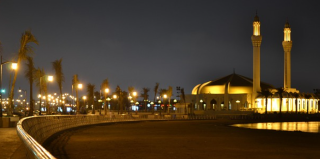 “ASIA IS BOILING. It’s getting serious:
“Heat wave in the Middle East with Minimums up to 30C [86F] on the Red Sea. 45C in INDIA, 44 Pakistan and Myanmar, 43 in Thailand. 10 days >40C in CHINA. Summerlike warmth in Koreas and Japan.” [Extreme Temps]
https://x.com/extremetemps/status/2044770173970981290
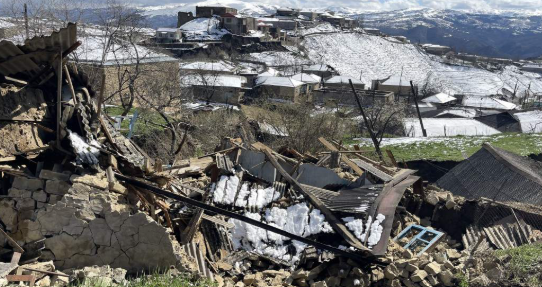 “178 people were evacuated due to landslides in a mountainous region of Dagestan…
“”Roads of national importance were seriously damaged, and Transport links with many settlements are disrupted. Bridges are destroyed, and village roads are washed out. In the village of Urkarakh, the main water pipeline is damaged, threatening the water supply.””
https://www.eng.kavkaz-uzel.eu/articles/74514
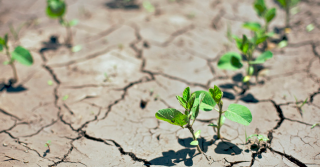 “Kyrgyzstan’s water shortage limits fruit and vegetable production…
“Climate change and glacier melt in the Tien Shan are reducing water availability. At the same time, infrastructure inefficiencies increase pressure on the sector. Water losses during transportation in the region reach up to 40%, while irrigation systems continue to degrade.”
 “Uzbekistan Wants Nuclear Energy, But Can It Afford the Water Cost?
“Uzbekistan is moving forward with its first nuclear power plant (NPP), but the project faces a critical “water cost” due to the country’s severe and worsening water scarcity.”
https://thediplomat.com/2026/04/uzbekistan-wants-nuclear-energy-but-can-it-afford-the-water-cost/
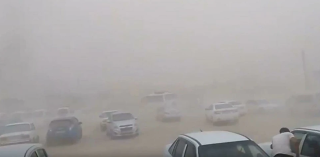 “Dust storm on its way to Kazakhstan from Uzbekistan and Tajikistan.
“Residents of the Khorazm and Bukhara regions have shared videos of a powerful dust storm. The footage shows strong winds lifting dust into a fog-like layer along the ground. The sky is completely obscured and visibility is severely reduced.”
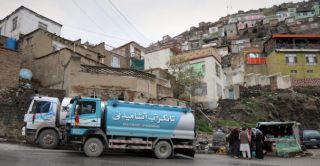 “Kabul faces deepening water crisis as supplies dwindle and demand surges…
“Kabul, situated in the Hindu Kush, depends heavily on groundwater extracted from wells. But years of overuse have caused water levels to drop sharply, with some wells now drilled as deep as 150 metres.”
https://www.ariananews.af/kabul-faces-deepening-water-crisis-as-supplies-dwindle-and-demand-surges/
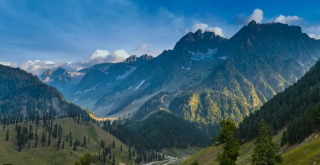 “Vegetation in six Himalayan regions shifted upwards due to warming, reduced snow depth…
““This study is the first to demonstrate vegetation line shifting patterns across the Himalayas at a 30 m spatial resolution, providing robust evidence of upward vegetation line movement under climate change and exploring underlying climatic trends,” according to the study.”
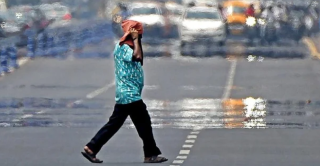 “India braces for 45°C heatwave in 2 days: What extreme heat does to your health…
“As temperatures rise, the human body comes under stress. Research from the University of Roehampton shows that once temperatures cross 35 degrees Celsius [95F], breathing becomes faster and heart rate increases.”
 “Today Koppal in Karnataka, INDIA had its hottest night in history with a Minimum Temperature of 29.8C [85.6F].
“The weekend will be exceptionally hot in most of Asia.”
https://x.com/extremetemps/status/2044395470664204711
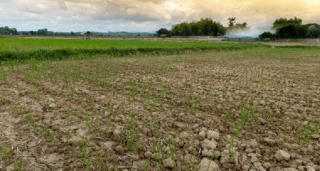 “Extreme heat is pushing rice past its breaking point.
“…rice rarely thrives when the mean annual temperature rises above about 28°C (82°F). During the growing season, problems begin when temperatures exceed 33°C (91°F). Beyond this, yields drop as pollen viability declines. At extreme heat near 40°C (104°F), the plant struggles to survive at all.”
https://www.earth.com/news/extreme-heat-is-pushing-rice-past-its-breaking-point/
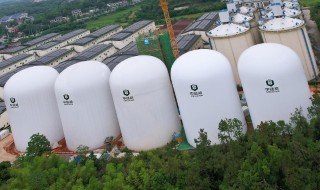 “China warns of food security risks as Iran war threatens global supplies…
“China’s food supply could be vulnerable to global price spikes triggered by extreme weather or global conflict, as international bodies warn the US-Israel war on Iran is worsening food insecurity worldwide.”
 “Golf-ball sized hail batters northern Vietnam.
“In the early hours of April 16, 2026, an unusual and intense hailstorm struck in Lao Cai province, northern Vietnam, leaving behind significant damage and concern among local residents. According to initial reports, the storm began suddenly before dawn…”
https://www.msn.com/en-gb/video/viral/golf-ball-sized-hail-batters-northern-vietnam/vi-AA212LIa
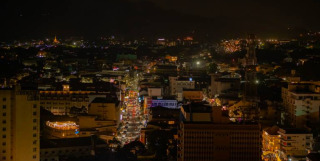 “EXTRAORDINARY HEAT WAVE IN THAILAND:
“Weeks of deadly heat with 42/43C and Mins 29/30C [86F]. Records broken every single day… Today Minimum 28.7C at Phuket Airport – Hottest April night in history.”
https://x.com/extremetemps/status/2044243435801194684
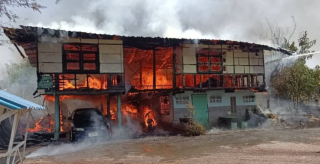 “Scorching heat sparks wave of forest and house fires [Thailand].
“As extremely hot daytime weather exceeding 40°C has been rising steadily for several consecutive days, Nakhon Ratchasima has been met with multiple incidents of forest fires and residential fires across various areas.”
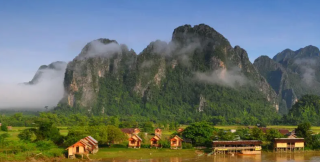 “BRUTAL HEAT IN SOUTH/EAST ASIA:
“Terrible heat worsens with up to 43C in SE Asia. RECORDS today: 41.4C [106.5F] Pakse LAOS all time record; 35.2C Tanjungpandan INDONESIA April record.”
https://x.com/extremetemps/status/2044032668166435306
 “Southeast Asia braces for scorching heat, water crisis as “Godzilla” El Niño looms…
“For Southeast Asia, El Niño is not a distant climate curiosity—it is a direct threat to food security, water supply, and public health. The region is already experiencing above-normal temperatures between March and May 2026…”
https://www.thesoutheastasiadesk.com/p/southeast-asia-braces-for-scorching
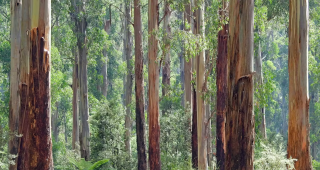 “Australia declares mainland alpine ash forests endangered…
“Alpine ash forests occur on high country slopes in the states of Victoria and New South Wales and the Australian Capital Territory, at elevations of 900-1,500 meters (about 3,000-5,000 feet). These culturally significant forests sit within the traditional lands of many First Nations peoples.”
 “Antarctica’s vanishing sea ice transforms marine life.
“The results, published in Inter-Research Marine Ecology Progress Series, were unexpected. Large and remote regions of the Southern Ocean shifted from extremely low phytoplankton levels to more moderate productivity. On average, nearly 70% of the region now supports higher summer phytoplankton concentrations than before the sea-ice decline began…”
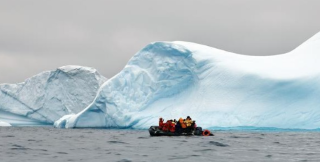 “Ocean warming drives acceleration of glacier flow in Antarctica: study…
“”That year [2018] may serve as a critical turning point,” said Kang Yulong, the first author of the research article. The widespread and sustained acceleration of glacier flow velocities was likely a signal of a critical regime shift in the climate system.”
https://www.chinadaily.com.cn/a/202604/17/WS69e18a68a310d6866eb43f1d.html
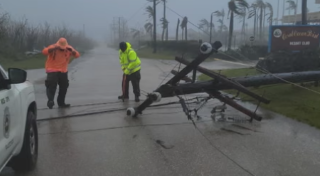 “Sinlaku rips through Northern Mariana Islands as strongest tropical cyclone this year…
“Super Typhoon Sinlaku hammered the Northern Mariana Islands, flipping over cars, toppling utility poles and ripping away tin roofs. The typhoon – the strongest tropical cyclone on Earth this year – was packing sustained winds of up to 150mph (240km/h) when it made landfall on the islands, the National Weather Service said.”
https://www.theguardian.com/world/2026/apr/15/sinlaku-typhoon-guam-mariana-islands
 “OCEANIA RECORD HEAT:
“More record heat in Oceania, it never misses a day! 34.5C [94.1F] yesterday at Pohnpei, capital of MICRONESIA hottest April day in history. Imagine [how it will be] in a year with a strong Nino.” [Extreme Temps]
https://x.com/extremetemps/status/2044580635017449855
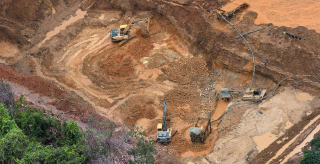 “Brazil: Satellites expose rampant gold mining expansion on Indigenous Kayapó land.
“The Kayapó Indigenous Territory has emerged as a major hotspot for illegal gold mining in the Brazilian Amazon’s Xingu River Basin, a major Amazon tributary. That’s according to a new report from the watchdog Monitoring of the Andes Amazon Program (MAAP).”
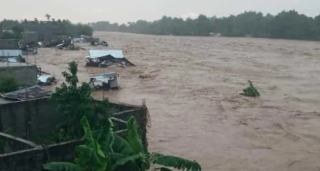 “Heavy rains and flooding in the Dominican Republic and Haiti have killed at least 19 people and displaced thousands more, according to the latest toll by officials and the Red Cross.
“Powerful storms that began April 7 have continued dumping rain on the neigboring Caribbean nations…”
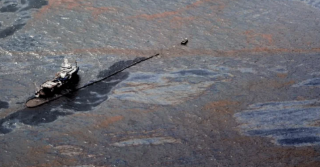 “Pemex Undersea Pipeline Found to Cause Gulf Oil Spill.
“A government investigation determined that an undersea pipeline near the Abkatun offshore platform was the cause of the leak, Pemex Chief Executive Officer Victor Rodriguez said at a press briefing on Thursday evening… The amount of crude that spilled into the Gulf is still being determined…”
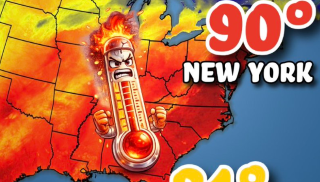 “Upside down day… New York, Philly and DC were all hotter than Florida today!!
“The Big NE cities were in the low 90s, while most of Florida was chilling in the 80s. There were dozens of daily high temp records set today in the Mid-Atlantic, Northeast and New England.”
[Jeff Berardelli]
https://x.com/WeatherProf/status/2044593455108653079
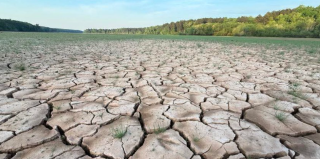 “I don’t think people understand how bad the drought has gotten here in North Carolina.
“One of WRAL reporters took this picture at Falls Lake, which is the main drinking water source for the city of Raleigh.”
[Kyle Noël]
https://x.com/KyleNoelWx/status/2044587446868771311
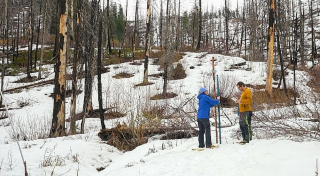 “Weak Snowpack Signals Tight Water Supplies for Western Agriculture.
“Western agriculture plays an outsized role in the production of fruits, vegetables and tree nuts while maintaining a substantial share of dairy, cattle and wheat output. Farmers and ranchers face difficult decisions this year amid ongoing uncertainty around water availability across the West.”
https://www.fb.org/market-intel/weak-snowpack-signals-tight-water-supplies-for-western-agriculture
 “Dust storms have overtaken Coachella. Researchers say it’s a sign of what’s to come…
“Scientists say global warming is causing warmer temperatures and more intense droughts, paving the way for more dust emissions. Feng said that could require more innovative solution, more action and more money.”
https://www.latimes.com/environment/newsletter/2026-04-16/coachella-dust-storms-economic-impact
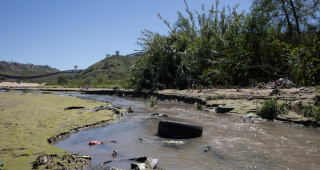 “Stench and toxins from polluted California river linked to health issues for thousands.
“The pervasive stench of rotten eggs has become an unwelcome constant in Steve Egger’s Southern California home, particularly at night, as the nearby Tijuana River churns with raw sewage from Mexico before emptying into the Pacific Ocean.”
https://www.independent.co.uk/news/tijuana-river-california-stench-smell-bad-sewage-b2959390.html
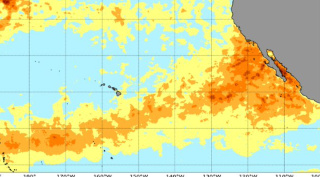 “California’s coastal waters are the warmest ever recorded for April.
“A severe to extreme marine heatwave is underway off the coasts of California and Baja California, locally reaching Category 5 intensity… Expect a very humid summer in Southern California, along with major impacts on marine ecosystems.” [Colin McCarthy]
https://x.com/US_Stormwatch/status/2044231321858519306
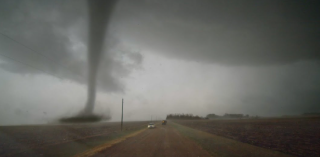 “Severe storms continue to produce heavy rain, lightning and tornadoes across parts of US.
“Storms barreling across the heart of the United States continued to pose tornado risks Thursday after causing at least one death when a man apparently was struck by lightning in Wisconsin.”
https://www.independent.co.uk/news/wisconsin-police-waukesha-michigan-milwaukee-b2959216.html
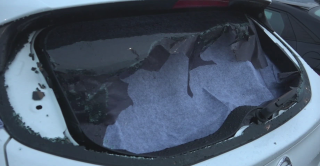 “Hundreds of vehicles at local dealerships damaged by hailstorm.
“BEDFORD, Ohio (WJW) – The most costly damage from the powerful storm that swept across the region on Wednesday, will likely be at car dealerships across Northeast Ohio that were pounded by the unforgiving hail.”
https://fox8.com/news/hundreds-of-vehicles-at-local-dealerships-damaged-by-hailstorm/
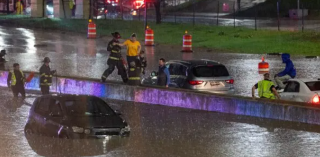 “Storms Swamp Milwaukee Streets, Trapping Drivers.
“The Milwaukee County Sheriff’s Office begged drivers to stay off the streets in southeast Wisconsin Wednesday night. Dozens of drivers had to be rescued after their cars, trucks and minivans got stuck in rising floodwaters. Even a tow truck driver said it was “really bad.””
https://weather.com/news/weather/video/milwaukee-drivers-trapped-storms-flood-streets
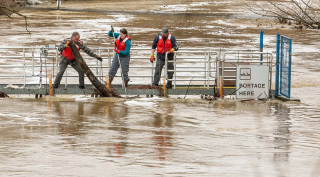 “Residents living in the area below a Michigan dam have been urged to “evacuate now!” as water levels are rapidly rising.
“Newaygo County Emergency Services warned residents living in the Muskegon River floodplain below Croton Dam on Thursday morning to quickly evacuate as water levels continue to rise.”
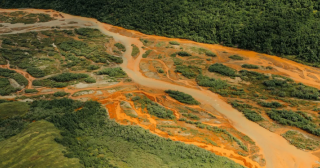 “Rusting Rivers: Alarm Grows Over Uptick in Acidic Arctic Waters.
“Climate change has thawed permafrost and increased rainfall in the Far North, producing sulfuric acid that is turning rivers and lakes yellow or rusty orange. Scientists are scrambling to parse the impacts on wildlife, fish, and the drinking water of Indigenous communities.”
https://e360.yale.edu/features/rusting-rivers
 “Study: One in five soil species face extinction…
“These hidden microbial worlds are the building blocks of nature. They keep our farmland healthy, fuel our food systems, help hold climate-altering carbon and make life as we know it possible. Now, scientists warn, that world is in danger of collapsing before we even fully understand it.”
https://www.conservation.org/news/study-one-in-five-soil-species-face-extinction
I rely on donations and tips from my readers to keep the site running. Every little bit helps. Can you chip in even a dollar? Buy me a coffee or become a Patreon supporter. A huge thank you to those who do subscribe or donate.
You can read the previous “Climate” thread here. I’ll be back tomorrow with an “Economic” thread.

Here’s the latest infectious disease tracker. The World Cup could provide some “interesting” mixing:
https://tinyurl.com/ytekjz72
That link’s enough to turn you into a Howard Hughes-style germaphobe, Flippr. 😅
The candida auris outbreaks in various US states caught my eye.
“Why scientists are nervous about fungi… It’s a topic that doesn’t get discussed much — and that worries Paul Verweij, professor of clinical mycology at Radboud University Medical Center in Nijmegen, the Netherlands. He says there’s a “silence surge” in drug-resistant fungi and that it’s mostly happening under-the-radar.”
https://www.npr.org/2026/04/17/g-s1-117632/fungi-drug-resistant-yeast-infection
“We demonstrate that sperm whale codas not only resemble human vowels acoustically but also pattern like them,” the study said. ““Sperm whale coda vocalisations are thus highly complex and represent one of the closest parallels to human phonology of any analysed animal communication system.”
We have accumulated even more interesting insights into the language of songbirds, also similar to human language in many ways including how they learn it or, as the excerpt describes, fail to learn it properly due to genetic/environmental factors stunting the process.
https://pmc.ncbi.nlm.nih.gov/articles/PMC4547995/
From a comparative point of view, song syllable repetitions of the zebra finch resemble part-word repetitions, a common feature of stuttering [18]. Song syllable repetitions can be induced by delays or disruptions in auditory feedback during vocalization [19, 36], similar to those that can occur in humans [21]. Furthermore, auditory input is crucial for the acquisition of birdsong and human speech and can influence epigenetic factors contributing to sensorimotor learning [33, 59].
And yet the above paper does not claim songbirds might be intelligent by virtue of these similarities in and of themselves. It reports the findings objectively which are interesting in their own right, without having to be speculated upon for public consumption. Maybe if 20 years ago climate science had adopted the former approach instead of the latter there wouldn’t be so much performative shock at acceleration happening now. Cochabamba set 1C as the point of no return, after all. NGOs/orgs would have to denounce their own patrons and seriously think about how they can win the support of the masses, not the middle-class or wealthy. On the other hand clean green ca$h money is awesome. Everyone likes awesome things. Awesome is good, good is God.
Jupiviv, I guess we’ll have to wait for Elizabeth Kolbert and friends to converse with (and apologise to) these creatures via AI, as per the article Kali posted a few days ago, before we can understand whether this is just sophisticated cognition or something more.
Not songbirds, but we have a murder of crows in our locale and you can just see in their faces and interactions how damn smart they are.
“Crows Perform Yet Another Skill Once Thought Distinctively Human… Recursion is a key feature of language. It enables us to build elaborate sentences from simple ones. Take the sentence “The mouse the cat chased ran.” Here the clause “the cat chased” is enclosed within the clause “the mouse ran.” For decades, psychologists thought that recursion was a trait of humans alone…
“The discovery that crows can grasp center-embedded structures and that they are better at doing so than monkeys “is fascinating,” says Giorgio Vallortigara, a professor of neuroscience at the University of Trento in Italy.”
https://www.scientificamerican.com/article/crows-perform-yet-another-skill-once-thought-distinctively-human/
What a thread!! Dire. Too many things to comment on.
Don’t despair, it’s nothing that more solar farms, data centers, mining, and pavement can’t fix!
Thank you for bringing me back to earth! I can be such a Debbie Downer. All those things you mention are the result of our supreme weapon: HUMAN INGENUITY!! RAH RAH RAH! High five, baby!
😜
We’ve gone from outside chance to inevitable for the AMOC collapse seemingly faster than we went from unlikely to Godzilla for the coming El Nino. It also looks like there isn’t going to be a dribble of places gradually hitting unliveable wet bulb temperatures or running out of water for a day or two and then recovering, but several places are suddenly going to switch and stay switched, probably some time in the next eighteen months. After which I think the twenty year average for having crossed 1.5 will have been pushed into 2022/2023 and the debate will be if 2 degrees average will be hit before the end of 2030. And as for the Flippr link – Plague in Arizona – wtf?
George, at least bubonic plague is treatable with antibiotics if you catch it early.
Ocean temps are already spiking up close to all-time record levels. There is a non-negligible possibility a “Godzilla” El Nino on top of the warming we have could cause a global “Climate Regime Shift”.
https://climatereanalyzer.org/clim/sst_daily/?dm_id=world2
George, a co- worker was tired of living in South Florida and just transferred to Phoenix this past month. Natural he and like everyone else I know are totally unaware of what is posted here and being a “”nice guy” just wish the best of everything on his last day.
Who knows the future? I watch in horror the regular network nightly news on the 3xtreme weather events we currently are seeing, never mind what Pan has graciously provides for us all here. I’m an old boomer and can’t whine, seeing in my lifetime my generation gobbled down at least 80% that is available. So, some unfounded quilt, but we did it because we could and it felt good….
Vince, Phoenix would not be high on my list of places to move to, although he might conceivably benefit from cooler, wetter weather during the El Nino.
France, Uzbekistan, and the Price of Water
During a recent visit to the Élysée Palace, Uzbekistan was presented as a promising partner in the future of nuclear energy. For France, this is no minor development. The country is seeking to maintain its position as a leading nuclear power and is increasingly looking abroad for both markets and resources.
On paper, Uzbekistan appears to be a logical fit. It has a growing demand for electricity, significant uranium reserves, and a political system capable of advancing large-scale infrastructure projects with relative speed. For the French nuclear industry, this opens a wide field of opportunity—from reactor construction to long-term fuel supply and maintenance contracts.
Yet beneath this strategic alignment lies a less visible constraint: water.
Nuclear power is often framed as a stable and relatively clean source of energy. What is less frequently emphasized is that a nuclear plant is, at its core, a thermal system requiring continuous cooling. This demands vast quantities of water. In France, with its extensive river systems and established infrastructure, this challenge is manageable, although even there, heatwaves and droughts have begun to test operational limits.
In Uzbekistan, the situation is fundamentally different. The country lies in a region where water has long been scarce and politically sensitive. Rivers such as the Amu Darya and Syr Darya are heavily exploited for irrigation, while climate change is further tightening supply. In this context, the introduction of nuclear power does not only mean additional electricity generation—it also represents a permanent new demand on already strained water resources.
The issue extends beyond the reactor itself. The nuclear supply chain begins with uranium extraction, and in Uzbekistan this is largely carried out through in-situ leaching. This technique involves injecting water mixed with chemicals into underground formations to dissolve uranium, which is then pumped back to the surface. While efficient and cost-effective, it places additional pressure on groundwater and carries risks of contamination.
Taken together, these factors transform the France–Uzbekistan partnership into more than an energy project. It becomes, in part, a reallocation of scarce natural resources.
For France, there is a clear strategic dimension. Access to uranium has become increasingly important amid geopolitical tensions and disruptions in traditional supply chains. Diversifying sources is now a priority, and Uzbekistan offers both resource potential and a new market for French nuclear technology.
For Uzbekistan, the calculus is more complex. The country seeks to stabilize its energy system and support economic growth. Nuclear power offers an appealing solution. At the same time, it introduces new dependencies—on foreign technology, on external financing, and on water, a resource that is locally constrained and increasingly uncertain.
The key question, therefore, is not only whether this partnership is technically or economically viable. It is whether it is ecologically sustainable over the long term.
What is framed in Paris as a strategic partnership may, in Central Asia, evolve into a new layer of pressure on water systems. Energy and water are deeply intertwined here.
And that shifts the perspective.
In the end, it may not be the reactor that defines the limits of this project, but the river.
Zip, thank you – that is fascinating. I actually had not known that Uzbekistan is such a significant uranium producer.
Looks like they are blowing some cash on green hydrogen:
“A $6bn green hydrogen-based fuels project approved in Uzbekistan is testing whether Central Asia can leap from the sidelines of hydrogen straight into industrial-scale production.”
https://www.gasworld.com/story/uzbekistans-6bn-project-tests-regions-leap-into-industrial-scale-hydrogen-fuels/2246844.article/
Iran war live: Tehran reopens Strait of Hormuz, Trump says US naval blockade to remain
O frabjous day callooh callay! We are .00001% less fracked beyond redemption.
Jupiviv, as your tiny percentage suggests, there are a whole heap of asterisks alongside this frabjous revelation and its potential benefits, not least of which is that this is not a full opening but the opening of a “coordinated route as already announced by Ports and Maritime Organisation of the Islamic Rep. of Iran” for the remainder of the ceasefire.
I’ll take it though, when good news is so thin on the ground.
I wonder whether our energy-constrained system has reached the point where it can no longer remain geopolitically stable enough to return global total liquid fuels production to its pre-Iran-war level of roughly 105 million barrels per day. In other words, have we quietly passed peak oil by all practical definitions?
Not to be nitpicking, but 35degrees Celsius is 95degrees Fahrenheit; it’s 45C that = 113F, even in India. To paraphrase Sonny & Cher, “The Heat Goes On”.
Rob, good catch – that’s amended.
“The Heat Goes On” is also a rather overblown, early-80’s soft rock song by Asia:
https://www.youtube.com/watch?v=ck-5JThZRP4&list=RDck-5JThZRP4&start_radio=1
I currently work in wildfire. The next two years are going to be off the charts. One of the ways in which I sooth myself during these times of collapse is to be an advocate for a higher standard within the public service. The public service is liable to budgeting volatility and lack of succession planning, so there’s usually a few shtbirds about that need stick handling.
Good for you still having the vim to fight a few battles, Survivalist. El Nino is certainly going to keep your department on its toes.