

Many thanks to my friend Barry Smiler for being October’s sponsor. Do take a look at his climate site, which nicely complements mine. He recently added some nifty enhancements to his Research page. And for your climate listening pleasure, he suggests this little song.
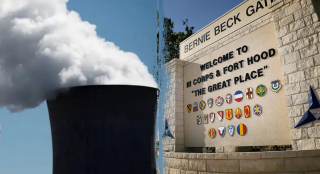 “Inside the Pentagon’s doomsday plan to keep America fighting if global war erupts…
“The Pentagon is preparing U.S. military bases to keep operating for at least 90 days without outside support as it prepares for the possibility of a major war that could cripple power grids, disrupt supply chains and threaten critical infrastructure on American soil.”
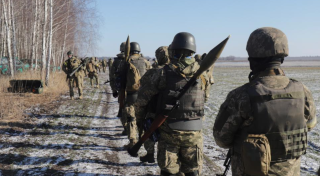 “Are we sleepwalking into World War III?
“As regional conflicts rage and revisionist powers challenge the established order, warnings of a new global conflagration are growing louder… Bleak warnings are being issued against the backdrop of a steady increase in warfare and battle deaths around the world.”
https://www.ft.com/content/3a56575e-ecfb-4fa9-af70-01aebd869729
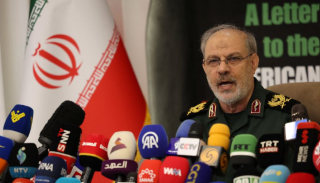 “A New Level of Threat and Fear Risks Pushing the U.S. and Iran Back to Full War…
“Inside the Trump administration, officials are expressing fears that Iran is in the “advanced stages” of planning attacks against U.S. officials. More than 6,000 miles away, the Iranians appear convinced that Israel and the United States are preparing to unleash their third major attack in 16 months…”
https://www.nytimes.com/2026/10/24/us/politics/trump-netanyahu-iran-new-phase-of-war.html
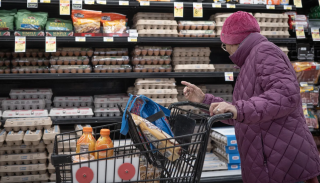 “Trump says the economy is better than ever but voters are being crushed.
“GDP is strong yet inflation is squeezing Americans, driving up the price of fuel, food and borrowing… A Telegraph analysis suggests that Mr Trump’s war with Iran is costing the average American household an additional $3,073, as fuel, food and interest rates batter finances.”
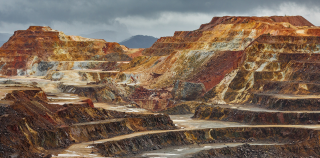 “EU weighs mirroring Donald Trump in securing critical minerals.
“Members of the European parliament last week voted to create an agency with the power to take stakes in raw materials companies when needed “to safeguard the union’s security of supply”, create EU stockpiles and to monitor supplies across the bloc.”
https://www.ft.com/content/cfb2e934-0000-42e6-93a4-4dffa56f11a8?syn-25a6b1a6=1
 “European governments need to ‘prepare systematically’ for scorching summers ahead.
““Europe needs to implement its climate commitments faster, prepare our cities and rural areas for extreme weather and ensure that people can afford to keep their homes cool. Protecting people, cutting energy bills and strengthening Europe’s energy security must go hand in hand.””
 “How the next eurozone crisis happens – French collapse is contagious…
“Once interest rates exceed a certain threshold, a doom loop sets in. Higher interest rates raise debt servicing costs, which drives up the budget deficit, which drives up borrowing, and which again drives up interest rates… Debt serves as collateral for the money the banking system gets from the ECB. If a country defaults on its debt, the banking system inevitably freezes up.”
https://unherd.com/2026/10/how-the-next-eurozone-crisis-happens/
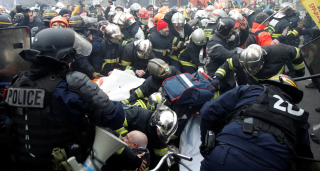 “More than 1,300 arrested as clashes follow another day of mass protests across France…
“After largely peaceful demonstrations, police fired tear gas and water cannon to disperse protesters in a number of cities including Paris, while barricades were set alight in Marseille and people ripped boards from a shop in Bordeaux.”
https://www.bbc.co.uk/news/articles/c95ynd587ynzo
 “Portuguese police with dogs and batons dismantle housing protest camps…
“The raids were the latest incident in days of clashes between police and campaigners who – inspired by similar camps in Spain – had sought to pitch tents in central squares to protest against the country’s deepening housing crisis.”
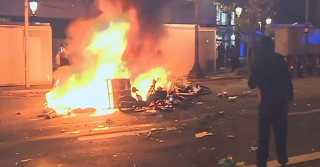 “Spanish youths storm Barcelona as violent protests sweep Europe…
“Riot police arrived in the Catalan capital on Saturday after groups of young people, many dressed in black and wearing hoods, began vandalising street furniture.
More than 30 fires were started in the streets, while 14 shops were looted. Footage shared on social media showed customers trapped inside a department store…”
 “Thousands march across Italy as protests bring isolated clashes with police.
“Thousands of people took to the streets on Saturday across Italy’s main cities to protest over a range of issues, including the rising cost of living, Giorgia Meloni’s government and the wars in the Middle East.”
 “Serbia’s long-standing leader Aleksandar Vučić has admitted defeat to a student-led protest movement in snap parliamentary elections.
“Celebrations erupted as crowds descended on the centre of Belgrade, Novi Sad and other cities. The student movement was formed less than two years ago in response to a railway station disaster blamed on corruption…”
https://www.bbc.co.uk/news/articles/cw5yn3xlprpmo
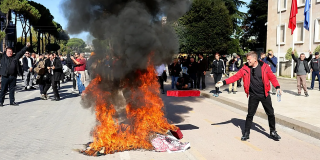 “Albania protests: unrest across Tirana as violence spreads.
“Albania has also seen a repeat of violent protests this weekend. Demonstrators have been throwing stones and setting fire to government buildings in the capital, Tirana. The country is in advanced talks to join the EU, but many Albanians are frustrated by what they see as corruption and incompetence…”
https://www.channel4.com/news/albania-protests-unrest-across-tirana-as-violence-spreads
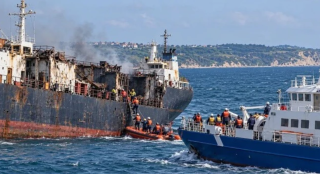 “The Black Sea is now the world’s deadliest shipping route…
“More sailors died in the Black Sea than in any other body of water this year, outstripping fatalities in the Gulf, which has garnered more attention worldwide. A critical corridor for global grain supplies and Russian oil, the Black Sea is riskier for vessels than the Middle East…”
https://www.ft.com/content/8c874f60-0041-476d-9c53-8524c374443f?syn-25a6b1a6=1
 “Russia’s War on Ukraine Is Straining [Global] Food and Fuel Supply…
“Russia and Ukraine have stepped up assaults on each others’ export industries over the past year. The Kremlin is targeting ports, elevators, warehouses, ships and other infrastructure critical to Ukrainian agriculture. Kyiv is striking refineries, oil terminals and tankers as well as Russian grain hubs on the Black Sea and ships.”
https://www.bloomberg.com/graphics/2026-ukraine-russia-strikes-exports/
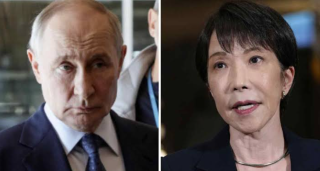 “Russia likely to harden posture on Japan at least until Ukraine war ends.
“Russia’s detention of a Japanese journalist for spying allegation marks a fresh low in bilateral ties, and Moscow’s hardline stance toward Tokyo is set to continue at least until the Ukraine war ends, according to foreign policy analysts.”
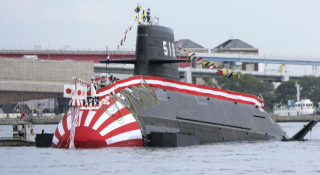 “Japan reopens taboo debate over nuclear-powered submarines.
“With China flexing its naval power across the Pacific and bilateral tensions running high, Japanese Prime Minister Sanae Takaichi is weighing a move long viewed as taboo – nuclear-powered submarines for the Maritime Self-Defence Force fleet.”
 “North Korea-South Korea tensions high as letters lodged with UN, howitzer spotted.
“Tensions between North Korea and South Korea are running high this week after Pyongyang sent a letter to the UN Security Council, repeating accusations that Seoul fabricated a September landmine incident, and after a North Korean howitzer was spotted close to the border.”
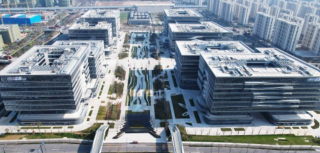 “Why China’s stimulus keeps missing the mark.
“China has developed a highly uneven, “K-shaped” economy where high-tech manufacturing and exports are booming, while domestic consumption, the property market, and job creation remain severely depressed.”
 “China’s consumer slump demands a Japan-style stimulus response…
“Alpine Macro’s Chen Zhao says China’s near-stagnant retail sales and persistent deflation bear striking similarities to Japan’s post-bubble economic slump. He criticises Beijing’s reluctance to deploy aggressive fiscal and monetary stimulus, warning that prolonged inaction risks inflicting structural damage on the economy.”
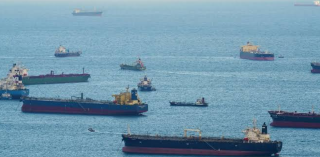 “Fuel Oil Becomes Asia’s Next Cost Shock.
“Singapore’s shipping-fuel market is adding another layer of cost to Asian trade. Disrupted supplies from the Middle East and Russia, resilient bunker demand and prohibitive freight rates have pushed high-sulphur fuel oil above the price of the crude used to produce it.”
https://oilprice.com/Energy/Crude-Oil/Fuel-Oil-Becomes-Asias-Next-Cost-Shock.html
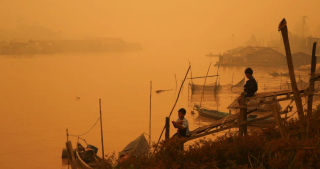 “Indonesia cuts gas exports to Singapore amid row over haze.
“The cut began on Saturday and totals 31 million standard cubic feet a day, with 15 million from the Natuna field in the Riau Islands and 16 million from Sumatra, the head of the state agency that supervises the oil and gas sector said in a statement.”
 “Thailand hits back at Cambodia over 2 temples on Oct 25.
“Thailand’s Culture Minister rejected Cambodia’s demand for the return of artefacts, asserting Thai ownership of two border temples: Prasat Ta Kwai and Prasat Khana. Thailand justifies its claim by stating both temples have been registered as ancient monuments under Thai law…”
https://www.nationthailand.com/news/general/40072733
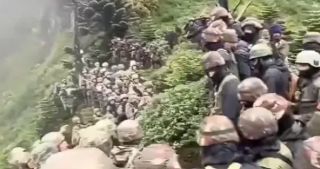 “Arunachal Congress chief alleges Chinese troops entered 40-50 km into India, claims soldiers fought with sticks…
““During the last week of July, residents informed us about such clashes. There were reports of soldiers from both sides attacking each other with sticks and engaging in physical fights. The Indian Army also countered the alleged aggressive activities of Chinese troops,” he said.”
 “Violence Escalates In Arunachal Over Siang Dam Project.
“Protests against the proposed Siang dam in Arunachal Pradesh’s East Siang district turned violent late on 23 October 2026, leading to a heavy security deployment in Pasighat and the imposition of restrictions on public gatherings.”
https://www.thequint.com/news/breaking-news/arunachal-siang-dam-protest-violence-escalates-security
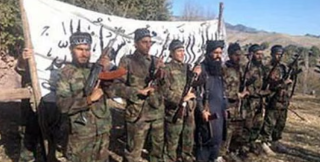 “Islamabad warns of further action if Afghan soil continues to be used for militancy in Pakistan.
“Relations between Pakistan and Afghanistan have deteriorated over a rise in militant attacks in Pakistan, particularly in Khyber Pakhtunkhwa (KP) and Balochistan provinces that border Afghanistan. Islamabad has repeatedly accused the Tehreek-e-Taliban Pakistan (TTP) and other groups of using Afghan territory…”
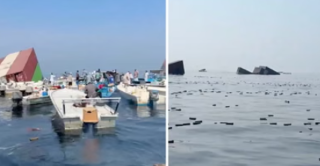 “Inside the worst month for ships in the Strait of Hormuz…
“More than 120 ships attacked at sea since conflict erupted… Attacks on shipping have risen since the US reimposed its blockade in July. With 29 ships hit so far, October is already the worst month of the war, ahead of the 20 attacks recorded in March.”
https://interactive.aljazeera.com/aje/2026/hormuz-journey-seafarer/
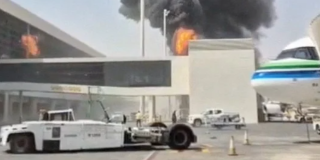 “Gulf economies accelerate diversification as recession looms over Iran war…
“With Trump weighing his options, including both another military escalation and a politically inconclusive end to the war with Iran after midterm congressional elections on November 5, uncertainty reigns in the Gulf region.”
 “Beirut’s $13 chicken sandwich becomes symbol of Lebanon divide.
“The Glow Paradise restaurant introduced the $13 ‘Chich Taouk’ sandwich, sparking outrage for its high price amid widespread poverty… Seven years after Lebanon’s devastating financial meltdown, a debate over a chicken sandwich has exposed an increasingly stark divide between those who can still spend freely and those struggling…”
 “Thousands mourn victims of deadly Jordan church attack…
“Nine people were killed and dozens wounded in a rare attack on Jordan’s Christian minority, prompting three days of national mourning. The ninth victim, Mohammed al-Qasous, is due to be buried on Monday, his family told the AFP news agency.”
https://www.aljazeera.com/news/2026/10/25/thousands-mourn-victims-of-deadly-jordan-church-attack
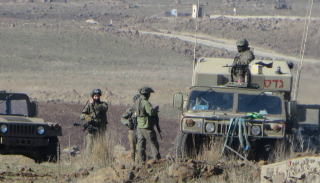 “Israel extends military barrier through farmland in southern Syria.
“Israeli forces continued bulldozing farmland in southern Syria on Sunday to extend a military barrier that Damascus has condemned as a violation of the 1974 disengagement agreement, the official SANA news agency reported.”
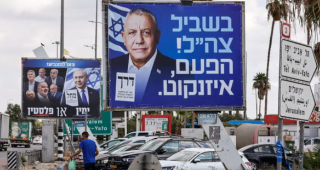 “Deeply divided Israel braces for pivotal election…
“Polls published on Friday put the governing coalition and the main opposition bloc almost neck-and-neck, with half a million first-time voters due to cast their ballot and some 70,000 Israelis reportedly flying in from abroad specifically to vote.”
https://www.bbc.co.uk/news/articles/ckpdgy6pl7xlo
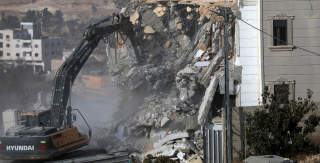 “‘It’s collective punishment’: nearly 2,000 Palestinians in Hebron displaced as Israeli forces take over homes.
“Hebron, the biggest city in the West Bank, had paid little attention to Israel’s looming elections until it found itself suddenly in the midst of them, a proving ground for Benjamin Netanyahu’s security credentials in the run-up to Tuesday’s vote.”
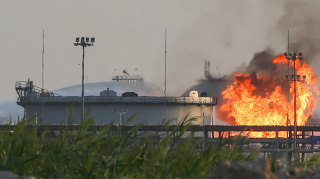 “Yemen’s Iran-aligned Houthis said on Monday they had attacked Saudi Arabia’s East-West crude oil pumping stations and Riyadh airport, as rising hostilities choke oil supplies and threaten to erupt into a larger conflict…
“The Houthis have been firing ballistic missiles and drones at Saudi airports, ports and oil installations, turning US ally Saudi Arabia into a pressure point in the wider war.”
https://theedgemalaysia.com/node/823230
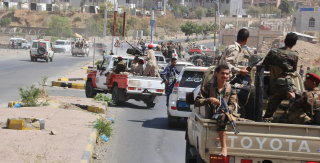 “Escalating Clashes in Yemen Leave Hundreds Dead.
“Yemen has experienced a significant escalation in hostilities over the past five days, resulting in hundreds of fatalities. According to reports from the region, the surge in violence has been characterized by intense direct combat between government-aligned forces and Houthi insurgents, as well as a series of targeted airstrikes.”
https://english.globalarabnetwork.com/2026/10/24/escalating-clashes-in-yemen-leave-hundreds-dead/
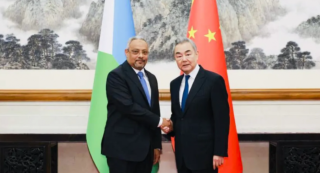 “China, Djibouti oppose recognition of Somaliland, backs Somalia’s territorial integrity.
“Israel became the first country to recognise Somaliland as an independent state last December, prompting condemnation from Somalia and numerous countries around the world…. Somalia regards Somaliland as an integral part of its territory and considers direct agreements with its authorities that bypass the federal government a violation of its sovereignty.”
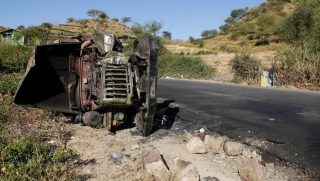 “Several dead in clashes between rival Ethiopian regional armies.
“Several people have died during clashes between the armies of southern Ethiopia’s Somali and Oromia regions in recent days, against a backdrop of territorial disputes, sources told AFP on Saturday. Fighting erupted on Tuesday after a Somali regional flag was hoisted in Moyale, a city near the border with Kenya…”
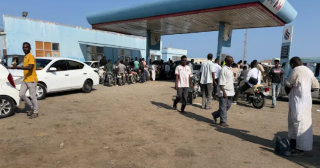 “Sudan’s soaring fuel prices make getting by harder for workers.
“Azhari’s minibus uses three gallons (11 litres) of petrol a day, costing him about 105,000 Sudanese pounds ($11.30 a day, according to Sudan’s parallel-market exchange rate). With fuel increasingly difficult to obtain, he now spends two days on the road and a third day queuing for fuel.”
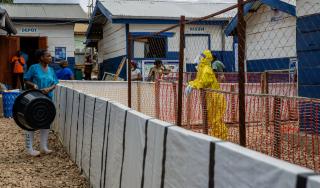 “A nurse has been killed and another health worker severely injured after they were attacked while responding to an Ebola alert in the Democratic Republic of the Congo, according to the World Health Organization.
“It was the latest in a series of attacks on health workers and responders that authorities say is hampering efforts to slow the fastest-growing Ebola outbreak in the world.”
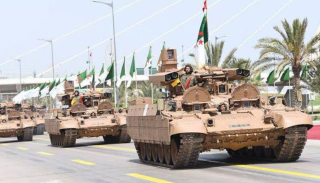 “Algeria approves army deployment to Niger in major shift in ties.
“Algeria’s parliament approved a resolution on Sunday authorising the deployment of army units to Niger, a parliamentary statement said, in what would mark Algeria’s first foreign troop deployment since it sent forces to support Egypt in the 1973 war.”
https://middle-east-online.com/en/algeria-approves-army-deployment-niger-major-shift-ties
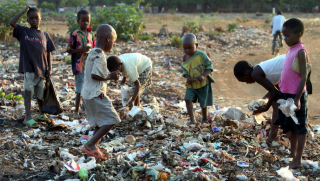 “Africa’s Debt Crisis Deepens as AFRODAD Demands Overhaul of Global Financial System.
“As governments devote larger portions of their revenue to creditors, fewer resources remain available for health care, education, social protection, infrastructure and productive investment. For countries already struggling with limited fiscal space, the growing cost of debt servicing threatens their ability to finance long-term development.”
https://africabrief.substack.com/p/africas-debt-crisis-deepens-as-afrodad
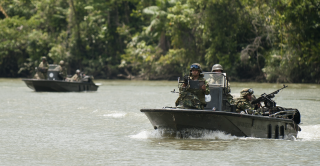 “One Marine Dead, Four Wounded as FARC Dissidents Deploy Grenade-Dropping Drones Against the Colombian Navy.
“A FARC dissident cell dropped a grenade from a drone onto a Colombian Navy patrol boat in Cauca, killing one marine and wounding four — the latest blow in a widening aerial war on the Pacific coast.”
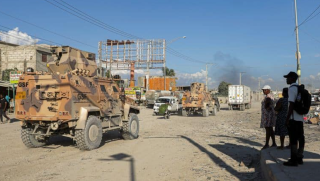 “El Salvador’s Bukele says bodies found in Haiti are not those of missing Salvadorans…
“El Salvador deployed more than 100 special forces troops to Haiti on Oct. 22 to help rescue the Salvadorans, a day after announcing a military operation and warning the criminals of a more forceful response if the Salvadorans are not released alive and unharmed.”
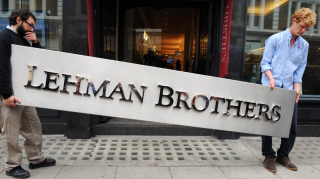 “This A.I. Boom Looks an Awful Lot Like the Housing Bubble.
“Artificial intelligence is fast becoming the largest investment in U.S. history. As the money pours in, the companies involved are resurrecting bad old habits eerily reminiscent of the shenanigans deployed in the run-up to the financial crisis.”
https://www.nytimes.com/2026/10/25/opinion/ai-bubble-financial-crisis-lehman.html
 “AI euphoria meets rising global debt as bond yields threaten technology investment boom…
“The risks are interconnected. A bond-market sell-off could raise borrowing costs for technology companies, while a sharp correction in AI stocks could hit household wealth, weaken economic growth and leave indebted governments with little room to respond.”
 “‘Ticking time bomb’: The world’s pension funds face an ageing crisis…
“The problem is “huge, and it’s gotten more pronounced over time,” said Sebastien Betermier, executive director at the International Centre for Pension Management, noting that some pension funds have members who have been retired for nearly half a century, aged aged 107 or 108.”
https://www.cnbc.com/2026/10/26/pension-funds-ageing-crisis-risk-investment.html
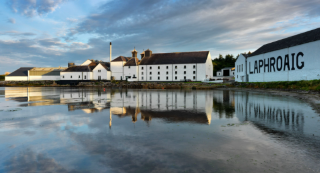 “Are we in a global whisky recession?
“I’ve just returned from a trip to Islay in Scotland, which has more whisky distilleries per square mile than anywhere else in the UK, and several of its famous single malts are struggling.. Global Scotch exports fell by 4.3 per cent in 2025, with single malts hit even harder.”
https://spectator.com/article/are-we-in-a-global-whisky-recession/
As a reader-funded publication, your one time and regular donations help keep this site going. If you value this work, please share it far and wide and consider a Patreon subscription or a one time Paypal donation. You can also support this work by buying a virtual coffee. Thank you!
You can read the previous “Economic” thead here. I’ll be back tomorrow with a “Climate” thread.

I love AI when I use it to do stuff I consider useful, like making audiobooks, shortening the process of software QA or shortening what would have been a ten minute google search five years ago to a two minute one now.
I hate AI it when people use it for other stuff that I think are wasteful, like the usual youtube AI slop. Or senile boomers who have been tricked into believing the AIs can actually talk to them like the polite friendly customer service representative of their dreams, and who consequently squander their ill-accumulated wealth on trying to do so thereby laying claims on limited resources that could have been put to more productive uses.
And that last point is what makes AI very different from dotcom. For the first time since perhaps the 70s, access to the cutting edge of technology is physically limited. What held back digital revolution back then was not the “format wars” but a net energy crisis which was suppressed in the first world by intensifying neocolonial rapine, which is still the world we live in now and the world that is soon going to be our end.
https://www.youtube.com/watch?v=v8VYeetOPuM
Jupiviv, I try not to use AI much because a.) I don’t want to weaken my own cognitive abilities by habitually outsourcing them, and b.) My youngest hates it with a passion and does not like me using it. Many of his peers feel the same way. It’s like his generation intuits what a foolish gamble it all is…
That being said, I have found it very useful for practical stuff, like figuring out what is wrong with the washing machine. I wouldn’t pay for it though.
Gulf economies accelerate diversification as recession looms over Iran war:
Yet the only specific project mentioned is a “planned cross-GCC oil pipeline bypassing the Strait of Hormuz to be co-funded by all six members” – that is the exact opposite of diversification. Everything else is arm waving about infrastructure, AI, defence. None of which is going to do anything for the general population who are also increasingly facing unliveable weather extremes and overwhelming food inflation.
I think a lot of the news released from GCC is as a sop to the alternative elites who can no longer be bought off as there is not enough money and because they see the external threats as being more serious to their personal wellbeing. Also not going to work out as planned – see Turchin.
A general thought about renewables – if they are anything other than really not vey good as energy sources then industrial civilisation would have been bootstrapped from Roman or Han empire waterwheels or Dutch / Protestant Reformation windmills.
A thought on 2027 – the psychopaths in positions of power are going to feel completely unfettered as they see there wealth draining away. There’s going to be a bigger push towards Techno-Marxism, although nobody will call it that. The popular uprisings at the moment will turn to proper rebellions as the overproduced elites, that have less power and wealth than they think they are entitled to, become more involved and their opponents’ power weaken with economic contraction and failure of unsupportably complex institutions, infrastructure, delivery chains and the social contract.
All the above would be happening anyway because of LtG and accelerating drop in EORI, but now multiplied by a large factor because we are being hit by the largest climate event, possibly since 536 AD, the worst year in human history (so far), but certainly since the second half of the 17th century in Europe.
There has been a push for Techno-Marxism since at least the Enlightenment – the notion that scientific progress in itself will make everything abundant, therefore freely and equally accessible. Ironically its biggest proponent in recent months has been Elon Musk, but not so ironic because glib acceptance of the inherent power of innovation can fit into almost every flavor of politics. With the possible exception of zealous religious orthodoxy, but Afghanistan begs to differ. Why not Techno-Degrowth?
George, I noticed that disconnect, too. Diversifying oil-dependent economies away from oil/gas in the context of a world that needs that oil production is a dicey proposition.
Saudi’s NEOM is already hitting the skids. Tourism is often mentioned as an area of potential growth but I can’t see vistors flocking to the Gulf States in a world of inflated jet fuel costs and geopolitical strife.
The IMF makes is clear that any bounce-back in 2027 is contingent on peace and the resumption of oil/gas production:
“The IMF outlook forecasts that GCC economies will contract by 4.8 percent in 2026, compared with the 2 percent growth expected in April, before rebounding by 9.1 percent in 2027…
!The Director of the Middle East and Central Asia Department Jihad Azour said the projections rest on the assumption that the conflict will gradually end by the first quarter of 2027, with normalization by mid-2027. “The big reason for this rebound is the normalization of exports of oil and gas,” he said. “Therefore, it’s a rebound that is mainly driven by the oil and gas sector.””
https://www.arabnews.com/business/from-war-shock-to-comeback-imf-maps-gulf-recovery-3007761
India’s Fertilizer Imbalance Could Hit Yields in the Coming Crops!
Nitrogen deficit: 6%
Phosphorus deficit: 22%
Potassium deficit: 72%
Farmers apply just 9 kg of potash per hectare against the required 32 kg. The NPK consumption ratio stands at 10.5:4:1, far from the desired 2.8:1.5:1.
https://x.com/gaurav_kochar/status/2114656503647072653
A Few Thoughts on the ‘Diaspora Economy’ and the Illusion of ‘Techno-Marxism’
The global economy is generally described in terms of countries, trade balances, national production figures, and international investment flows. We know how much China exports, how much Germany produces, and how much capital the United States attracts. But these national accounts conceal a substantial part of reality.
Modern production is dispersed across a worldwide network of companies, specialized workshops, ports, research centers, and financial institutions that are economically interdependent, yet increasingly separated geographically and politically.
We might call this a diaspora economy. Not in the conventional sense of communities living outside their countries of origin, but as an economy in which the various components of production have spread across the globe. The final product may still carry a national identity, but its actual creation is the result of an international industrial community.
An LNG tanker provides a striking example. The vessel may be owned by a Russian company, built at a South Korean shipyard, equipped with European propulsion technology, dependent on specialized cryogenic systems, and financed by banks and investors from several countries. The gas it transports is extracted in the Russian Arctic and eventually sold to a Chinese customer. No single national economy controls the entire chain.
This system is productive as long as all its components remain connected. The international division of labor makes it possible to develop specialized knowledge and production facilities on a scale that would scarcely be economically viable within a single country. But that same specialization creates growing vulnerability. A missing component, a financial blockade, or a broken contract can render investments worth billions almost worthless.
Arctic LNG 2 illustrates this problem. Russia possesses the gas and has invested heavily in the facilities needed to liquefy it. South Korean shipyards have the industrial capacity to build specialized LNG carriers. The vessels have been built, but payments and deliveries have become entangled in sanctions and contractual disputes. They remain at the South Korean shipyards, while the Russian LNG facilities lack the transport capacity needed to achieve their planned output.
It is tempting to attribute these problems entirely to sanctions. But sanctions primarily expose how the international economy is now organized.
The diaspora economy also has a particular relationship with time. Investments are made on the assumption that international connections will remain available for decades. An LNG plant, a shipyard, or a pipeline cannot recover its investment in a matter of months.
This creates a fundamental contradiction. The physical economy requires continuity, maintenance, and long-term cooperation. The political economy can sever those connections almost overnight.
The result is not necessarily the destruction of productive capacity. More often, that capacity continues to exist but can no longer be used efficiently.
This is an exceptionally costly form of economic disruption. A ship that cannot be delivered still requires maintenance and financing. A factory that cannot export continues to consume labor and energy. A port with insufficient shipping traffic still needs dredging, inspections, and infrastructure maintenance. The invested capital does not disappear, but its ability to generate new economic value diminishes.
These losses appear only partially in national statistics. One company writes down an investment, another restructures a loan, and a third reports lower capacity utilization.
The global economy is not simply a collection of national economies trading with one another. And as the components of production become more widely dispersed, maintaining the connections between them becomes an increasingly important economic activity in its own right.
And all of this, with or without ‘techno-Marxism’. 🙂
Zip, this is very well said: “The physical economy requires continuity, maintenance, and long-term cooperation. The political economy can sever those connections almost overnight.”
And as energy-constraints worsen within the physical economy, the political economy becomes ever more febrile and fractious. David Korowicz has been pointing out the extent of our delocalisation for many years now:
“Our identification with national or inter-national political economy and the psycho-drama therein obscures our real dependencies. So while national economies may have an individual character, they have no autonomous existence in anything like their present form outside the globalised economy, just as an arm, lung or heart cannot declare independence from the human body.
“Continuing the analogy, our global economy’s metabolism has become increasingly complex and high speed. The globalised economy is more than the sum of its parts, but without the contributions of each, the whole would be diminished or fatally compromised. Because of this we might say that our local welfare is embedded within a high-speed de-localised fabric of exchange.”
https://www.feasta.org/2011/05/14/in-the-world-at-the-limits-to-growth/
Flurry of Diplomacy in Iran as Regional Countries Try to Stave Off War
Saudi Arabia, Turkey and Pakistan made a rare joint visit to Tehran amid reports that the U.S. and Israel were drawing up plans to renew their attacks on Iran.
https://www.nytimes.com/2026/10/26/world/middleeast/iran-war-new-attacks-diplomacy.html
Newspeak from the New York Times..
“The visit is the latest in a flurry of diplomatic efforts by regional mediators to stave off further turmoil in the Middle East. American and Israeli officials are said to be drawing up plans to potentially attack Iran after the U.S. midterm elections next week, according to U.S. officials and others briefed on the deliberations.
Saudi Arabia’s conflict with the Iranian-backed Houthi militia in Yemen has also escalated rapidly in recent weeks as the two sides have exchanged deadly attacks, including on airports and oil sites around the kingdom.
…The main stumbling block to that agreement has been determining when each side would make its concessions, the diplomats said. They added that the mediators have been pushing for Iran to offer a concession on its nuclear program in the initial phase of the agreement.”
Seriously, do we expect them to work things out? “You first, no YOU first!”
Children, please….
Vince, it is Groundhog Day with these talks. The US simply does not have the means to bring about a favourable end to this war but the Trump administration will not accept that, so we seem stuck with a messy stalemate punctuated by strikes.
There is virtually no sulfur coming out of the Persian Gulf. The world’s above-ground sulfur supply is dwindling as a result (Canada has massive stockpiles but they are not infinite).
Without sulfur, you can’t make rubber tires for cares because sulfur is the critical element in VULCANIZATION which does not refer to Spock from planet Vulcan, but rather the process by which liquid rubber is formed into a stiff, durable polymer with tough chemical cross-links. This makes rubber (a latex liquid from trees) turn into tires, essentially.
No sulfur = no tires.
No tires = total global collapse of industry and transportation and farming, and so on. Mass global collapse of human civilization at nearly an Extinction Level Event scale.
The Persian Gulf isn’t the only place to get sulfur (Venezuela is another), but it’s the primary source and it has been almost completely cut off.
The Fertilizer Crisis Has a New Chokepoint: SULFUR — And India Could Pay the Price!
Fertilizer shipments through the Strait of Hormuz reportedly fell to ZERO in September and October. Before the war, the strait handled around 20% of globally traded nitrogen fertilizer, while the Gulf supplies roughly half of the world’s traded sulfur.
But here’s the twist: urea may not be the biggest problem anymore. Sulfur is emerging as the more dangerous bottleneck.
The numbers are alarming:
• Sulfur prices have more than doubled to above $1,000/tonne.
• Phosphate fertilizer prices are up 25–30%.
• China increased nitrogen fertilizer exports by around 47%, while US exports rose about 60%.
• Urea prices had returned to January levels by the end of August, according to IFPRI data.
• Mosaic has idled two Louisiana plants.
• India’s fertilizer subsidy bill could exceed ₹3 trillion, against a budget allocation of ₹1.71 trillion.
Why does sulfur matter so much?
Sulfur is a critical raw material for producing phosphoric acid, which is used to manufacture phosphate fertilizers such as DAP. Even if urea supplies recover, a sulfur shortage can disrupt phosphate production and keep fertilizer costs elevated.
What this means for India:
India’s exposure goes beyond nitrogen. Higher sulfur and phosphate costs could increase import bills, intensify pressure on fertilizer subsidies and complicate the economics of DAP and other phosphate fertilizers.
For agriculture, the risk is serious: expensive or delayed fertilizer supplies can squeeze farm margins and potentially affect nutrient application decisions and crop yields.
Oil found alternative routes out of the Gulf. Sulfur has proved much harder to replace.
The real question now: if this disruption persists, how will global phosphate supply—and India’s fertilizer economics—cope?
Source: World Visualized; figures attributed in the original post to Fertilizer Daily and IFPRI.
https://x.com/gaurav_kochar/status/2114620310565851599/photo/1
Ravi, thank you for those updates. Obviously, this problem is not just restricted to India:
“Agricultural train wreck and the 2027 global food crisis. Richard Mills examines how rising fertilizer and diesel costs, a Super El Nino and the Iran war are setting up a global food crisis in 2027.”
https://www.investorideas.com/news/2026/main/10261-agricultural-train-wreck-and-the-2027-global-food-crisis.asp
Pan ;
2026 The year of the oil crisis
2027 The year of the food crisis .
” “Only when the last tree has died and the last river has been poisoned and the last fish has been caught will we realise that we can not eat money.”
— Chief Seattle
What was the iconic commercial way back several decades ago
“Chemicals are the building blocks of life”
AI
The Core Elements of Life
• Carbon (C): The primary backbone of organic molecules, capable of forming up to four strong covalent bonds to create complex chains and rings.
• Hydrogen (H) & Oxygen (O): Combine to form water, the universal solvent that makes up the majority of living tissue and drives cellular chemistry.
• Nitrogen (N) & Phosphorus (P): Essential components of amino acids, proteins, and genetic material (DNA and RNA).
• Sulfur (S): Found in specific amino acids that stabilize protein structures.
The phrase you are referring to is part of a famous, highly controversial advertising campaign launched by Monsanto in the late 1970s. The exact slogan used in the print ads and commercials was:
“Without chemicals, life itself would be impossible.”
Yes,I remember it very well and they weren’t joking, were they?
https://www.cnbc.com/2026/10/26/neocloud-stocks-today-coreweave-nebius-iren-elon-musk.html
Yeah the whole thing is gonna fail but musk is insane with the rest of silcon valley
Thanks, Heather. Growing caution in debt markets …but Meta is borrowing big:
“Meta eyes record $95 billion equity raise to fund AI expansion.”
“The owner of Facebook, Instagram and WhatsApp is a leading investor in AI and is ploughing multibillion-dollar sums into datacentres, the central nervous systems of the technology.”
https://www.reuters.com/legal/transactional/meta-launches-35-billion-stock-offering-fund-ai-expansion-2026-10-26/
There is a good deal of research in this psychopathy.
Being very rich increases a number of symptoms. Sone billionaires are fully aware of the problem and keep working to raise awareness.
QE begets Counterfeit Money begets Artificial Intelligence begets currency debasement begets “Right makes Might” Neocolonial plundereconomics of the Pirate-ocracy begets the maelstrom of forever whirled wars.
QE enabled what pretends to replace what it never can, diluting reality into monetary and intellectual slop, enabling bad investments to pretend they are viable and bad ideas to masquerade as intelligence.
ZIRP existed in a world where literally half of the GDP of the nation whose monetary units holds reserve currency status was simply made up (counterfeit): half of it was created by the US central Bank ad nihil, so “The House” covered all the bad bets that were placed, decided which ventures collapsed, and which ones failed: AI companies were favored while sovereign debt’s “countries never default” replaced the chimera of “home prices never go down” as the new basis for safe haven capital allocation, sardonically referred to as investment.
Thus did Capitolism, in which the central government decides which “investments” will pan out, replace Capitalism right under our noses while we, mesmerized by our “for your IOS only” techtoys, pretended not to notice.
Capitolism is communism for the Epstein class: all property & wealth is held by a single class, the Noah’s Ark is their Arc of the broken Covenant; the Arc of Instability, where the hapless build the very Ship of State that will haul in the gangway the minute the financial tsunami of debt breaks against the seaWall of the Street’s Wallpaper promises of unplayable loans while their bettors float alone in the boat of bloat across the choppy seas they created, leaving the proles to fend for themselves amid the flotsam & jetsam of an industrial wasteland replete with polluted water, poisoned air, depleted soil and forever chemicals.
What a Brave New World, the Fremen tossed onto the sandy dunes while Idaho Duncan donuts in the parking lot of the Imperium.
Two AI Chipmakers Make Up 34% of America’s (phony) Earnings Boom
https://archive.is/DKFDE#selection-539.0-539.56
Leaving the rest of the economy to take it in the chin when the Bust in the mouth ensues.
Warren Buffet declared war some years ago.
We missed it.
https://www.snopes.com/fact-check/warren-buffett-class-warfare-quote/
“Dressed in black and wearing hoods.”
Wonder if the oligarch support corps bought them in bulk across Europe?
Our lot (UK) are Farage Foot Soldiers, used to terrorise people who live in areas down south where lifeboats, manned by human beings, rescue asylum seekers.
Very heartening to see deminstrations against this global economic system, there are alternatives and I am not referring to oligarch fiefdoms.
Might as well live out our human existence in a global movement towards kindness.
https://youtube.com/watch?v=jAV2v60GgBw
Name any country’s leader & one is talking:
“The art or science of government or governing, especially the governing of a political entity, such as a nation, and the administration and control of its internal and external affairs.”
Governments are contained in a burst proof bubble, so it’s good to know that the p-word & voters have no affects on our personal livelihood. However, one might be aware of our abstract economics, printing money out of thin air.