

Special sponsor for September 2025 is [you?]. Contact me here if you fancy helping me out and spending a month atop the C&E wall of fame.
 “Is Earth’s climate in a state of ‘termination shock’?
“…Global action to improve air quality – by shutting down coal-fired power stations and cleaning up shipping fuels – has saved millions of lives in recent decades. But on the flip side, air pollution can also cool the planet. Removing it has released a surge of warming that has warped the weather around the world.”
https://www.newscientist.com/article/2494279-is-earths-climate-in-a-state-of-termination-shock/
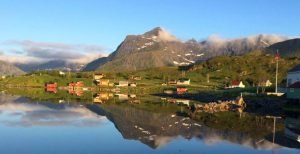 “Absolutely insane warm spell in SCANDINAVIA. Hundreds of records broken since Sept 1st.
“More records: In NORWAY: 21.6 [71F] Sula, 19.5 Nordøyan, 19.4 Sklinna Fyr, SWEDEN Some High Minimums records these days: 18.9 Nidingen,18.1 Vaderoarna, 17.4 Harstena. More records on the way!”
https://x.com/extremetemps/status/1965874665509064880
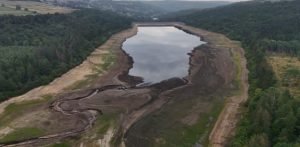 “Sheffield drought: Reservoirs at ‘record low’ despite rain and hosepipe ban [UK].
“Yorkshire Water says stocks have decreased by two per cent this week to 30.6 per cent, despite some recent heavy rain. BBC weatherman Paul Hudson said they were at a record low for early September after the warmest summer on record.”
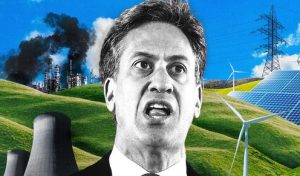 “Revealed: Global warming exaggerated, say soaring number of Britons…
“One in four voters now believe that concerns over climate change are not as real as scientists have said, amid growing public concern at the cost of the government’s net zero policies… Only 16 per cent of voters said they would be prepared to pay higher gas bills to encourage the switch to electricity.”
https://www.thetimes.com/uk/environment/article/climate-change-global-warming-net-zero-pxznms29q
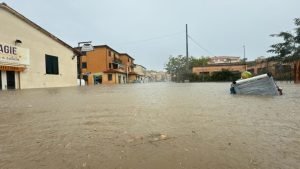 “Severe weather in Italy, damage and flooding in Tuscany and Veneto, and heavy rains in Lombardy.
“A wave of severe weather hit Italy today, September 10, causing flooding, landslides, and disruption. Elba Island and Tuscany were affected, as were Bibione, Veneto, and Friuli Venezia Giulia. Firefighters also responded to dozens of calls in Lombardy, Lazio, and Liguria.”
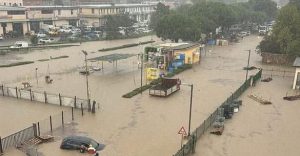 “Heavy rain and flooding in eastern Veneto. State of emergency declared.
“…according to data from the Eastern Veneto Land Reclamation Consortium, 100-150 millimeters of rain fell. These are hours of intense work for firefighters and civil defense volunteers, supported by municipal technicians, with about twenty interventions using motor pumps and water pumps to drain the water.”
https://www.veneziatoday.it/cronaca/allagamenti-caorle-bibione-eraclea-10-settembre-2025.html
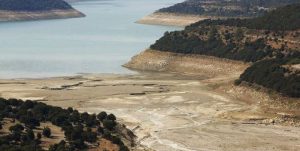 “Experts warn of rising drought impacts nationwide [Greece].
“Experts warn of worsening impacts. “First of all, agricultural production is reduced,” said Konstantinos Voudouris, hydrogeology professor at Aristotle University. “There is rainfall, less than before, but much is from torrential storms that cannot be stored.””
 “Frost, drought slash pistachio yield by 80 pct [Turkey].
“Farmers in southeastern Türkiye face a grim season for Antep pistachios, dubbed the region’s “green gold,” as unrelenting drought and agricultural frost have slashed yields by nearly 80 percent.”
https://www.hurriyetdailynews.com/frost-drought-slash-pistachio-yield-by-80-pct-213418
 “Four in ten reptile species in Israel at risk of extinction, rare audit finds.
“Among the species whose ranking worsened by two or three levels are the javelin sand boa, Olivier’s sand lizard, the false smooth snake, the black desert cobra, the crowned dwarf racer snake, Blanford’s ground gecko, and the European glass lizard.”
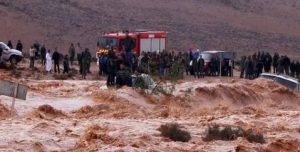 “Flash floods wash away crops, roads in Morocco.
“On Tuesday evening, the provinces of Agouatim and Moulay Brahim in Al Haouz were hit by severe thunderstorms and heavy rains that caused flash floods in valleys such as Ghghaya and Bahja. The floods swept away cars, submerged homes…”
https://www.africanews.com/2025/09/10/flash-floods-wash-away-crops-roads-in-morocco/
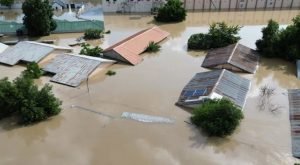 “‘We are still waiting, still suffering’: The legacy of a deadly Nigerian dam collapse.
“The threat of flooding once again looms over the city of Maiduguri, in north-eastern Nigeria, a year after torrential rains and the collapse of a dam left entire neighbourhoods submerged in water. For many residents who are still bearing the scars of last year’s floods, the possibility of a repeat has created huge unease.”
https://www.bbc.co.uk/news/articles/c1kwepevkzxo
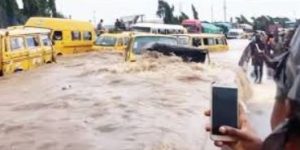 “Gridlock as flash floods take over Lagos roads, paralyse business activities…
“The flooding brought commercial and other business activities to a temporary halt, while several vehicles broke down on waterlogged roads, worsening the traffic situation. Business complexes were seen under lock and keys as many owners stayed-off in the early morning but later reopened for business in the afternoon.”
 “SOUTH AFRICA ENDLESS RECORD HEAT:
“Absolute insanity going on in South Africa, with mid summer temperatures for weeks. Many tropical nights and records: Min 20.7C Sezela: warmest September night on record. Hundreds of records will fall during the next 3 weeks with many >40C [104F]!
https://x.com/extremetemps/status/1965429993397539090
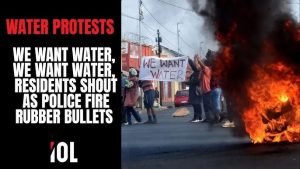 “Police fire rubber bullets as Westbury protests over water shortage [Jo’burg, South Africa].
“The demonstration, which began as a peaceful march in Coronationville, quickly turned violent after police moved in to disperse protesters. Residents retaliated by throwing stones and glass bottles, forcing officers to deploy in large numbers to control the situation.”
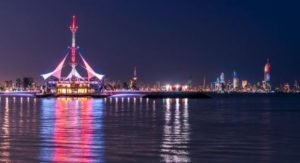 “HISTORIC: WORLD CLIMATIC HISTORY REWRITTEN:
“MINIMUM temperature of 36.0C [96.8F]! at Salmiya – HOTTEST SEPTEMBER NIGHT IN KUWAIT HISTORY and WORLD RECORD HOTTEST NIGHT in the 2nd week of September onward.”
https://x.com/extremetemps/status/1965454928320889241
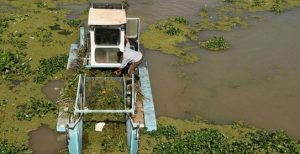 “Invasive plants and bacteria threaten Iraq’s Euphrates.
“Iraq’s Euphrates River is running at historically low levels as the drought-stricken country faces its worst water scarcity in living memory. Its 46 million people face rising temperatures, chronic water shortages and year-on-year droughts, in a country intensely impacted by climate change.”
https://phys.org/news/2025-09-invasive-bacteria-threaten-iraq-euphrates.htm
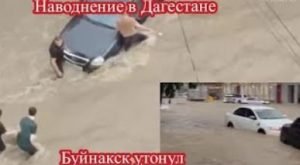 “In Dagestan it’s going under water! In Buinaksk, streets have turned into rivers, cars are going…
“Dagestan’s Buinaksk was covered by heavy rains. On the afternoon of September 10, a powerful downpour passed through the city, flooding several central streets at once. Local residents are sharing footage of floating cars on social networks. As users write, the water level on the central streets of the city reaches 30-40 centimeters.”
https://www.youtube.com/watch?v=G8lCV4p_rHY
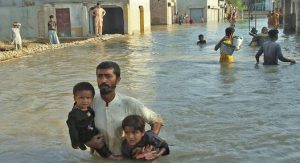 “Heavy rains have broken a 30-year-old record in Faisalabad [Pakistan].
“The highest rainfall of 184mm [7.2 inches] was witnessed in Ghulam Muhammadabad locality, while 175mm was recorded in Allama Iqbal Colony and 170mm in Gulistan Colony, 167mm on Jail Road and adjacent areas and 154mm of rain was recorded in Dogar Basti and Madina Town localities.”
https://www.dawn.com/news/1940722
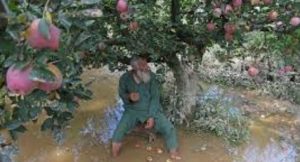 “Jammu and Kashmir Floods Wipe Out Paddy Crops, Apple Orchards, Leaving Growers Devastated.
“The situation in Kashmir has worsened due to a shortage of cold storage facilities for stocking fruits, which prevents their transportation outside Jammu and Kashmir during inclement weather. Agriculture remains a mainstay of J&K’s economy, with nearly 70 per cent of the population dependent on the sector…”
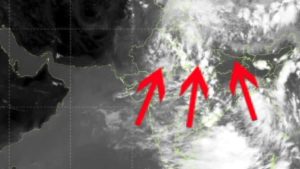 “Himalayan Shield Weakening? Monsoon Winds Crossing Into Tibet Worrying Signs For India, Say Experts.
“Amid the havoc caused by heavy rains across states in the Himalayan belt, scientists have claimed that this year the monsoon winds may have crossed the Himalayas into Tibet… If the winds are indeed moving into Tibet, experts said, it is a serious concern for the future.”
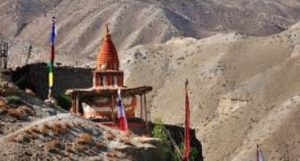 “Tourism surge and climate change threaten Nepal’s Mustang.
“Since the completion of an all-weather road eight years ago, Nepal’s remote Mustang region has become a mass tourism destination, reports Mongabay’s Abhaya Raj Joshi. The surge in tourists, combined with the impacts of climate change, could put the fragile Himalayan region at greater risk of future disasters.”
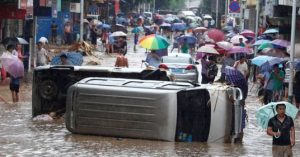 “North China posts longest rainy season since [records began in] 1961, country faces hottest summer.
“The summer ‘Plum Rains’ – named for their timing coinciding with plums ripening along China’s Yangtze River during the East Asia Monsoon – began one week earlier than usual, Huang Zhou, deputy director of the China Meteorological Administration, told a news conference.”
https://www.reuters.com/sustainability/climate-energy/north-china-posts-longest-rainy-season-since-1961-country-faces-hottest-summer-2025-09-09/
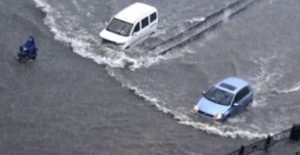 “Zhengzhou schools suspended on Sept 11 amid torrential rain alert.
“The decision comes as the Zhengzhou Flood Control and Drought Relief Headquarters has required all relevant departments and units to implement preventive and response measures in accordance with emergency plans. They are also urged to closely monitor the development of rainfall and water conditions…”
https://www.chinadaily.com.cn/a/202509/11/WS68c26ee2a3108622abca03e4.html
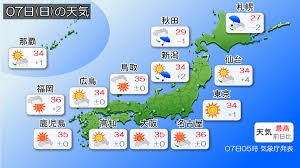 “NEVER ENDING RECORD HEAT IN JAPAN – another scorching hot and humid night with more records of September Highest Minimums:
“26.5 [79.7F] Kiryu; 26.0 Hachioji; 23.7 Nishinomaki; 21.5 Tajima… Much hotter next days with tons of records coming!”
https://x.com/extremetemps/status/1965936069372981325
 “Road events at world championships to start 30 minutes earlier to beat Tokyo heat.
“Record-high temperatures and debilitating humidity have prompted World Athletics Championships organisers to move up the start times for the race walk and marathon events this weekend by 30 minutes to 7:30 a.m. (22:30 GMT) in a bid to beat the Tokyo heat.”
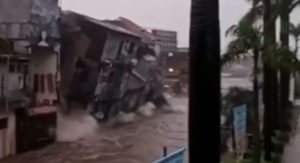 “Floods triggered by days of heavy rains have killed at least 19 people and left 10 others missing on Indonesia’s Bali Island and in East Nusa Tenggara province [this is not their rainy season].
“Gusti Ayu Ketut Wijayanti, spokesperson for the Bali office of the National Search and Rescue Agency, told Xinhua on Thursday that flash floods have killed 13 people and left six missing on the island.”
https://english.news.cn/20250911/12f8f6878beb48d79de901913b416175/c.html
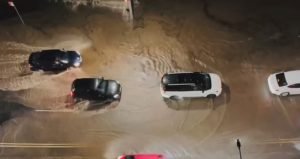 “Sydney records wettest September day in 146 years as NSW inundated with heavy rain, tornadoes.
“A total of 122mm fell on Sydney in the 24 hours to 9am on Thursday – marking the capital’s heaviest daily rainfall total for September since 1879. In the span of 24 hours, the NSW SES received 854 calls and 34 rescue calls – most originating from the metro and southeastern zones.”
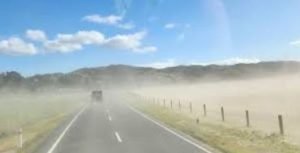 “Esk Valley dust after Cyclone Gabrielle still a battle for residents as windy season arrives [NZ].
“An Eskdale resident who outlasted Cyclone Gabrielle and its aftermath says the remaining homes in the valley are now choking on dust whipped up by dry spring winds. Lynn Noanoa said springtime was no longer the blossom season in Eskdale, but the dust one.”
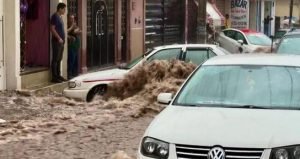 “Sahuayo, La Piedad, and Yurécuaro suffer flooding and damage after heavy rains [Mexico].
“The water currents were so strong that they swept trash into the sewers , toppled trees, and caused cars to crash . Some buildings were also left without power. The hardest hit neighborhoods were El Ranchito, La Vasco, Centro, and Ciudad Sol…”
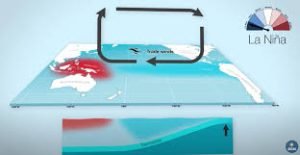 “The [Australian] Bureau of Meteorology (BOM) is making a major change to how they assess El Niño and La Niña, the world’s most dominant drivers of weather variability.
“Thanks to climate change and a rapid warming trend in our oceans, the historical record and current analysis of the two Pacific phases has become contaminated.”
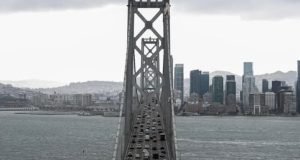 “One of the largest marine heat waves in decades is impacting California weather.
“Sea-surface temperatures are as much as 7 degrees above normal in parts of the northeast Pacific. It’s the fourth-largest marine heat wave since 1982 in a region extending from just north of Hawaii to California and Alaska…”
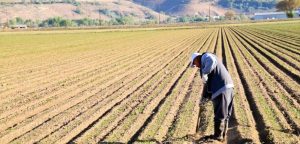 “More than half of Northwest in severe, extreme drought, Oregon in historic dry period.
“Nearly 80% of the Northwest is in a drought this summer, with more than half in a severe or extreme drought, according to a July analysis and September data from the U.S. Drought Monitor at the National Oceanic and Atmospheric Administration.”
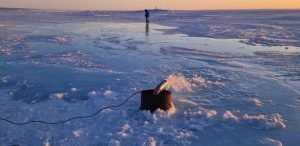 “Scientists warn polar ice-fixing plans are ‘flawed and dangerous’…
“…a new peer-reviewed study by an international team of scientists has concluded that five of the main ideas are not feasible because of technological constraints, logistics, cost, potential environmental damage and the inability to build them at a large scale.”
I rely on donations and tips from my readers to to keep the site running. Every little bit helps. Can you chip in even a dollar? Buy me a coffee or become a Patreon supporter. A huge thank you to those who do subscribe or donate.
You can read the previous “Climate” thread here. I’ll be back tomorrow with an “Economic” thread.

Big one: Himalayan Shield weakening. As Pan and many other others have been pointing out we are also losing the third pole. Buh bye, southeast Asia.
And RIP Palestinian reptiles. Too bad we can’t drive only homo sapiens to extinction!
Cassandra, the “Third Pole” is warming at two to three times the global average but this year’s heatwaves in Central Asia stood out as particularly extreme and protracted. We saw 48.5C (119.3F) at 1,200m elevation in Pakistan’s Gilgit-Baltistan. Climbers venturing far higher than that were unsettled by what they found, for example:
“Polish writer and adventurer Łukasz Supergan has been attempting to climb the Karakoram’s Broad Peak, the world’s 12th highest mountain at 26,414ft (8,051m) and one of K2’s neighbors. On July 5, he took to Instagram to post: “The weather this year is strange”.
“His photo shows tents perched above the Baltoro Glacier at conspicuously snow-free Camp II. He goes on to say: “Since I arrived, hardly any snow has fallen. There was hardly any precipitation in spring either. This means that parts of the route I would normally take through snow are now rocky and very unstable. Climbing there is unpleasant and risky.””
https://www.advnture.com/climbing-mountaineering/the-savage-mountain-is-becoming-the-scorched-mountain-soaring-heat-is-changing-the-game-for-climbers-in-the-karakoram
Nice, isn’t it — a poll showing British voters think global warming is exaggerated. But if we take a look inside the fossil storeroom, we really don’t need to worry about all those heated debates over net zero anymore.
Fossil Fuels Are the Only True Climate Activists!
Not because politicians will finally agree at some COP, or because citizens suddenly decide to pay more on their energy bills, but because physics itself has taken over. Oil is simply running out. Whether Greta Thunberg and Extinction Rebellion will be cheering at that moment is far from certain.
The world’s proven reserves will last, at current consumption levels, about fourteen more years. That means that somewhere between 2032 and 2040 the taps will slowly, and then ever more rapidly, turn off.
The real activists are the molecules themselves. They decide when the reserves are gone, regardless of what the British voter, the EU, or the US thinks — or what election promise gets made in Westminster or by Trump.
Net zero will be achieved — with or without wind turbines. New discoveries appear on spreadsheets, but they don’t exist “in the real world.” The replacement rate of what we pump is around ten percent. We extract nine barrels and find one back. In geology that isn’t called transition, it’s called depletion. The fossil sector can mask it for a while with fancy PowerPoints and glossy graphs, but the net effect won’t be there. Net zero, so passionately proclaimed by the EU, will arrive faster than any climate conference ever dared to dream.
The irony is complete: fossil fuels themselves are the most consistent climate activists. While we keep debating, geology is executing an unshakable action plan.
By then the debates won’t be about opinion polls, but about empty supermarket shelves, shuttered refineries, and endless queues and fistfights at the last petrol stations with a few drops left.
Parliaments will be screaming for the reopening of old coal mines, scraping out the last dried lumps of anthracite under military supervision.
The fossil age won’t end with a grand agreement or triumphant climate summit, but with a desperate search for scraps of fuel. That is the irony of history: not mankind, but depletion itself decides when “net zero” becomes reality.
About eight years to go…
https://dieselnet.com/news/2025/08rystad.php
Zip, I regard Art Berman as the guru when it comes to oil and I think he predicts about 60 years left at current prices. You are right about coal, but there is a VAST amount of the stuff underneath the US – centuries worth. And we will be burning ALL of it, if we don’t make ourselves functionally extinct before then.
https://www.artberman.com/blog/peak-oil-requiem-for-a-failed-paradigm/
https://www.eia.gov/energyexplained/coal/how-much-coal-is-left.php
I wouldn’t put too much trust in Berman.
He waves around the idea that there are still “60 years of proven reserves,” but never specifies what and where those supposedly recoverable volumes are.
A big chunk of that sits on paper in Venezuela’s Orinoco, where without upgraders, diluent, and political stability you won’t get a barrel of diesel out.
Canada’s 170 billion are mostly oil sands that demand enormous amounts of water and gas and are hardly scalable economically.
Russia points to Arctic resources where infrastructure is absent and sanctions have frozen any development.
And Libya? In theory high-quality crude, in practice completely unreliable under permanent instability.
What remains are a handful of conventional fields in Saudi Arabia, Iran, and Iraq that have been propped up for decades with water injection, and a shrinking stream of U.S. shale that is heavily price- and capital-dependent. Strip away the layers, and “proven reserves” look more like a statistical category than a guarantee of deliverable flow.
The only thing that truly matters is what comes fresh to market each year compared to what is already in production and inevitably lost to natural decline. And on that balance, the industry has been structurally falling behind for years.
Zip,
Interested in your sources, not to disagree or anything, but just so I can learn more.
Cost of extracting oil from more and more difficult sources is very interesting to me.
Nat,
I think the most useful “source” here isn’t a single report but a way of looking at the whole system. That’s why I’ve been working on a global oil & gas depletion atlas. The atlas doesn’t just tally reserves; it looks country by country at the balance between what is left, how fast fields are depleting, what the fiscal break-even is, and whether the political and social context even allows those reserves to be developed.
On paper, the world has “60 years of proven reserves.” But once you break it down, the picture changes. Take Saudi Arabia: about 300 billion barrels officially “proven.” Sounds like wealth for generations. Yet at today’s prices they sell far below their fiscal break-even of $80–90/bbl. That means every barrel widens their budget hole. Multiply that across their stated reserves and you get a notional multi-trillion dollar deficit if they were ever to pump it all. That’s not wealth, that’s a liability.
The same pattern repeats elsewhere. Much of Venezuela’s Orinoco is ultra-heavy crude, economically stranded without massive investment. Russia has Arctic resources, but sanctions and lack of capital mean most of that oil will never reach the market. Even Nigeria and Iraq, with lower technical costs, are fiscally underwater because domestic subsidies and weak governance erode revenues.
So the real issue isn’t whether reserves exist. It’s whether they can be turned into affordable, steady supply. The replacement ratio tells the story: for every nine barrels we pump, only one is discovered. That’s not transition; that’s depletion. Majors are exiting frontier plays, NOCs can’t borrow freely on capital markets, and subsidies keep producers locked into loss-making models.
That’s why the atlas approach matters. It shows that the headline “60 years left” narrative is a mirage. The system is far more fragile, and the cost of extracting the next barrel isn’t just geological – it’s financial, political, and social.
“So the real issue isn’t whether reserves exist. It’s whether they can be turned into affordable, steady supply.”
Zip, Amen to that. And then you have the added headache of getting the right refined products where they are needed. Diesel supplies are looking especially vulnerable; this the latest constraint:
“Russian exports of petroleum products have shrunk in early September, led by steep declines in diesel and naphtha shipments, as drone attacks curb refining output.”
https://www.bloomberg.com/news/articles/2025-09-11/russian-diesel-naphtha-exports-slump-as-attacks-cur
thank you for this
JP, Art also points out elsewhere that the real constraints on production will be financial overshoot (under the duress of stagnant or declining net energy per capita), geopolitical friction and eco-climate collapse.
Reserves are very notional in that context. We won’t be burning anything like 60-years’ worth of oil.
We’ll get are act together…sure we will….
From the NYTIMES
https://www.nytimes.com/2025/09/10/climate/belem-cop30-amazon-hotels-united-nations.html
Brazil Invited the World to the Amazon. It’s Become a Big Headache.
This year’s U.N. climate conference, on the edge of the rainforest, is fueling criticism of the host nation and the entire process of global diplomacy on climate change.
Brazil, self-described champion of developing nations, invited the world’s dignitaries into the Amazon rainforest to showcase solutions to the global crisis of climate change.
Now, with just eight weeks before negotiations begin, Brazil faces a diplomatic migraine.
History’s biggest polluter, the United States, is likely to be a no-show. The billions of dollars that poor countries need to cope with climate catastrophes have not materialized. Activists accuse Brazil of hypocrisy by authorizing more oil drilling.
And pressure is mounting to overhaul the entire system of climate diplomacy, established by the Paris Agreement 10 years ago, because the countries that pollute the most aren’t cutting their emissions nearly fast enough to stave off irreversible damage to the planet.
Amid all this, Brazil hasn’t found a way to resolve a basic problem threatening the coming talks. Many diplomats are complaining of an acute scarcity of affordable rooms in Belém, the host city. Two-thirds of countries have yet to book a room.
Who was it that said, “Never underestimate the stupidity of an individual, especially when they group together”😭…
Really tragic how we behave…but it makes TR happy…just kidding
Why not just cancel the whole event, no one pays attention to it anymore
Vince, as I’ve probably said before, I prefer these COP charades to the alternative, which is, in effect, the world throwing up its hands and admitting to the reality that we can’t do anything about climate change.
Such a shift in mentality would augur ill for financial markets, social cohesion etc.
Your post wraps right around to Pan’s 1’st entry claiming the world has stopped burning coal, despite the fact that it has burned through more coal in the 1’st quarter of the 21’st century than during the entirety of the 20’th. Transition is as phony as transgender: both deny reality despite the glaring physical evidence of the truths they deny.
As Jean-Baptiste Fressoz highlights in “More and more and More” humanity’s history of energy resource exploitation is all-consuming.
PS Thanx for your Russian history post. The Naked Capitalism ‘s editor, like many others, whitewashes Russian hegemony as though it is simply Western propaganda, as though the post-Soviet adolescent triumphalism of the USAUSA! makes it okay for Russia to steamroll over Ukraine, and once they’ve won, they’ll be done. And she;s an economist! Like the US after WW2, once you’ve tooled your entire economy for War, the end of the war means economic dislocation, the only way out of which is more War (as Kimmie can testify, Korea being the first of the new hegemon’s target and excuse for maintaining its military Keynesian economic structure). Good post👍
“Transition is as phony as transgender: both deny reality despite the glaring physical evidence of the truths they deny.”
Rob, let’s steer clear of this topic, as I am not equipped to moderate it well, and we may end up with hurt feelings all round and little achieved.
Jean-Baptiste Fressoz is such a wonderfully Gallic name. I shall be rolling it around my mouth all evening. Sounds like a man who relishes cutting through the BS:
“You hear very often that we just need to organise ‘a new industrial revolution’, most recently by US climate envoy John Kerry. You cannot take this kind of historical analogy seriously, this is really stupid.
“The idea of an energy transition is actually a very bizarre form of future thinking, as if we would transform from one energy system to another over a 30-year period and stop emitting CO2. If it were to come across as credible, it is because we do not understand the history of energy.”
https://www.resilience.org/stories/2024-12-05/historian-jean-baptiste-fressoz-forget-the-energy-transition-there-never-was-one-and-there-never-will-be-one/
I am surprised they have not said the arctic ice is fake now to. We have plenty of ice in the Antarctic too. If you have Netflix there is an update documentary by Spike Lee about the 25th anniversary of hurricane Katerina. It worth watching. I was working at the usgs in the research department when it hit. The main geologist i worked under told me that they had done a study about this very scenario and it was ignored. No one listened to them. I have stories about our infrastructure and in tge state of Nevada to with the mining corruption too. No surprise.
Heather, thanks for the heads up on that documentary. I recall being shocked at the time, as most observers were, by how sluggish and indifferent the disaster response was. You could hardly believe that this was the world’s pre-eminent power.
If you do follow up with the documentary, I recommend watching his 2006 series on Katrina, “When the Levees Broke” on HBO. He follows up with many of the same people and provides a true “twenty years later” look at the people impacted. There is also the book After the Deluge by Douglas Brinkley, a Louisiana native and journalist/historian. The Gulf Coast region was in shambles.
Finally, here is Phish playing their song “Twenty Years Later” which has the very fitting lyric “Twenty years later/I’m still upside down.”
https://youtu.be/bw7UzmA7KKk?si=YAafKICY1X7yZ7RP
Thanks, John. I have never heard of Phish, so you have opened me up to a new world there!
I’ll return you some Supertramp, in honour of founding member, Rick Davies, who died this week:
https://www.youtube.com/watch?v=LPRrHyXchEY&list=RDLPRrHyXchEY&start_radio=1
Some consequences have surprise endings.